
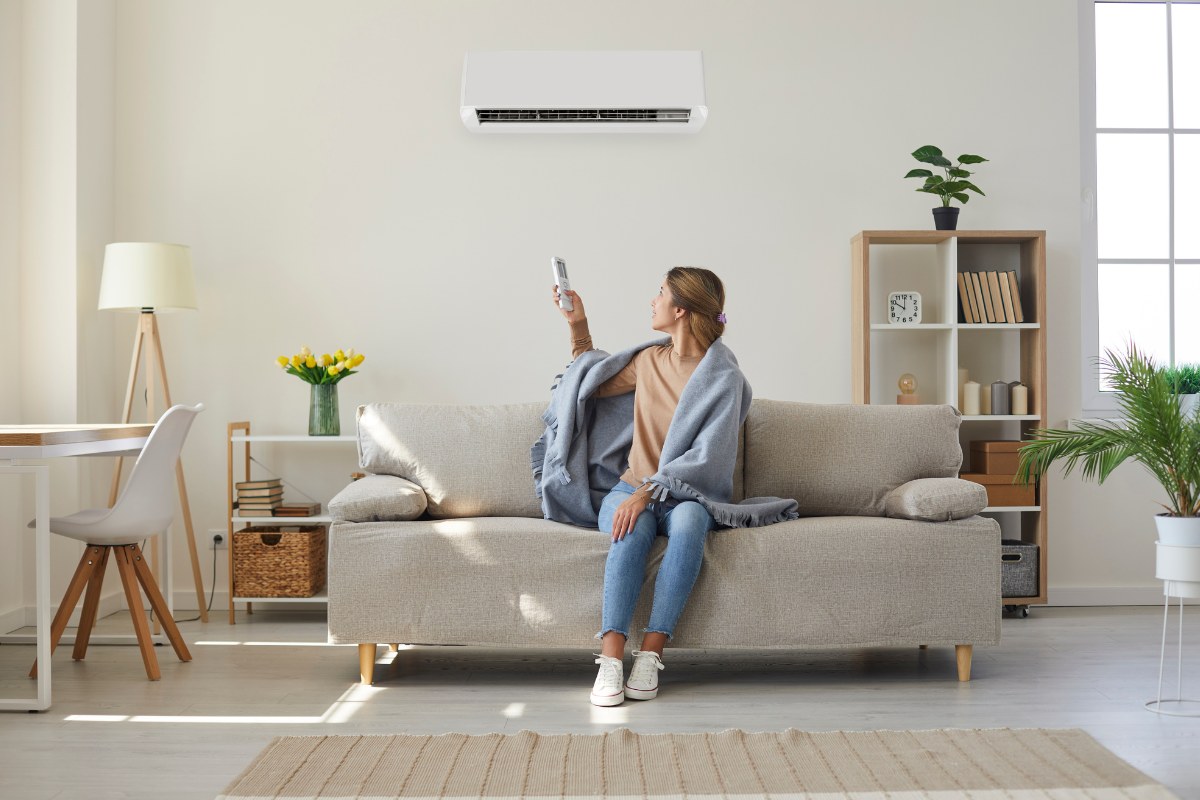
Isn’t finding the right balance between comfort and energy efficiency in air conditioning crucial for reducing utility bills and environmental impact? This guide explores ideal AC temperature settings, advanced thermostat technologies, complementary energy-saving strategies, and the importance of regular maintenance. By implementing these approaches, you can considerably reduce energy consumption while maintaining a comfortable living space.
Recommended AC Temperature Settings for Maximum Energy Savings
Setting your air conditioner for optimal energy efficiency involves finding the right balance between comfort and conservation. Ideal temperature settings can make a real difference.
Optimal Daytime Settings
Based on extensive research, the U.S. Department of Energy recommends 78°F (25.5°C) when you’re home and awake. This temperature is considered the sweet spot for energy efficiency without significantly compromising comfort. This is a general guideline, though, and individual preferences may vary.
Why 78°F? This temperature maintains a comfortable indoor environment while minimizing energy use. At this setting, the temperature difference between indoors and outdoors is usually small enough to reduce strain on your AC unit, yet still provides noticeable cooling.
Away-from-Home Settings
When you’re away for extended periods, adjusting your thermostat can lead to considerable energy savings. The Department of Energy suggests increasing the temperature 7-10 degrees Fahrenheit—up to 85°F (29.4°C)—when you’re away. This adjustment saves substantial energy. Your home won’t overheat.
Won’t it take more energy to cool my home back down when I return? Your AC will initially work harder, but the energy saved during the extended off period typically outweighs this. For even greater savings while you’re away, consider a smart solution like the Rayzeek RZ050 AC motion sensor. It learns your AC remote’s OFF signal and automatically powers down your unit when the house is empty, preventing energy waste during your absence. You’ll return to a comfortable temperature without the guilt of an inflated energy bill.
Nighttime Recommendations
For optimal sleep and energy savings, the nighttime temperature should be between 70-72°F, or 21-22°C. This slightly cooler temperature aligns with the body’s natural circadian rhythms, potentially improving sleep quality while maintaining energy efficiency.
The Impact of Temperature Adjustments
Even small temperature adjustments can have a remarkably significant impact on energy consumption. Each degree increase can result in 1-3% energy savings. Raising your thermostat from 72°F to 78°F could save up to 18% on cooling costs.
Strategies for Adapting to Energy-Efficient Settings
While transitioning to energy-efficient settings may take some adjustment, the long-term benefits are substantial. So, try a gradual approach by increasing your typical temperature setting by 1 degree each week. This allows your body to acclimate over time. Use fans strategically to create a wind-chill effect, making a room feel 4°F cooler. Adjusting your clothing and bedding to lighter, more breathable options can also help. Staying well-hydrated aids your body in regulating its temperature. Lastly, take advantage of cooler morning and evening temperatures by opening windows for natural ventilation. Beyond these strategies, automating your AC usage with a device like the Rayzeek RZ050 can further enhance your savings. This motion sensor ensures your AC isn’t running in empty rooms, maximizing your energy efficiency efforts. Its adjustable time delay and light sensor allow personalized control, ensuring comfort without compromising efficiency.
Implementing these recommended temperature settings and adaptation strategies can considerably reduce energy consumption without sacrificing comfort. The goal is to find the balance that works best for your household while prioritizing energy efficiency.
Leveraging Programmable and Smart Thermostats for Energy Efficiency
Programmable and smart thermostats are powerful tools for optimal energy efficiency. How do these devices contribute to energy savings, and what makes them so effective?
Introduction to Programmable Thermostats
Programmable thermostats are a significant upgrade from traditional manual thermostats. They allow you to set specific temperature schedules based on your daily routines, ensuring efficient AC operation without constant manual adjustments.
Custom Temperature Schedules
Program different temperatures for various times of day and week. For example, set a higher temperature during work hours and a cooler temperature before you return home.
Multiple Programming Periods
Most offer at least four programming periods per day, allowing precise temperature control.
Override Function
Easily override programmed settings without disrupting the overall schedule if plans change.
Energy Usage Reports
Some models provide energy usage reports, helping you identify patterns and savings opportunities.
Advanced Capabilities of Smart Thermostats
Smart thermostats dramatically enhance energy efficiency with advanced technologies and connectivity. These devices learn from your behaviors, allow remote access, and can integrate with other smart home systems.
Wi-Fi Connectivity
Connect to your home’s Wi-Fi to control your HVAC system from anywhere using a smartphone app or web interface.
Learning Capabilities
Many learn your preferences and routines, automatically adjusting temperatures for optimal comfort and efficiency.
Occupancy Detection
Some use sensors or geofencing to detect when you’re home or away, adjusting temperatures accordingly.
Integration with Smart Home Ecosystems
Integrate with other smart home devices, such as voice assistants or smart lighting systems, for comprehensive home energy management.
Energy Usage Insights
Advanced analytics provide detailed energy consumption insights, often with suggestions for improvement.
Setting Up Energy-Saving Schedules
Creating custom schedules is a powerful feature of both programmable and smart thermostats. Here’s a general guide:
Weekday Schedule:
- Wake-up time: 78°F about 30 minutes before you wake up.
- Work hours: Increase to 85°F if the house is empty.
- Evening: Return to 78°F about 30 minutes before you arrive home.
- Sleep: 70-72°F about an hour before bedtime.
Weekend Schedule:
Adjust to match your weekend routines.
Now, these are just general guidelines. Adjust the schedule to fit your routines and preferences.
Remote Access and Control Features
Remote thermostat control is a game-changer for energy efficiency. With smart thermostats:
- Adjust settings on-the-go. Plans change. Smart thermostats adapt.
- Monitor your home’s temperature and energy use from anywhere.
- Receive alerts about unusual temperature changes or system issues.
- Use geofencing to automatically adjust temperatures based on your location.
Learning Capabilities and Automation
Perhaps the most impressive feature of smart thermostats is their ability to learn and adapt. Over time, these devices can:
- Learn your temperature preferences.
- Understand your home’s heating and cooling patterns.
- Factor in local weather to optimize settings.
- Provide energy-saving suggestions.
Potential Energy Savings
Although the exact savings vary depending on individual usage and local energy costs, both programmable and smart thermostats can significantly reduce energy consumption. The EPA estimates that a programmable thermostat could save about $180 annually on energy costs.
Smart thermostats may offer even greater savings. Some manufacturers claim savings of up to 10-15% on heating and cooling costs. These savings depend on various factors, including your previous thermostat settings and habits, local climate, the efficiency of your HVAC system, your home’s size and insulation, and your willingness to adapt to recommended temperature settings.
Complementary Strategies to Maximize AC Energy Savings
Optimizing your thermostat settings is essential for energy efficiency, but numerous complementary strategies can further enhance your AC’s performance and reduce energy consumption. Let’s explore these methods.
İlginizi Çekebilecek Diğer Ürünler

- Voltaj: 2 Adet AAA Pil
- Gündüz/Gece Modu
- Zaman gecikmesi: 15dk, 30dk, 1sa (varsayılan), 2sa

- Kuru kontak röle çıkışlı, tavan tipi PIR varlık sensörü
- 12/24VDC veya 12/24VAC düşük voltaj güç beslemesi
- EMS, HVAC ve bina kontrol girdileri için COM, NO ve NC izole röle kontakları

- Düşük voltaj DC sıva altı tavan tipi mikrodalga hareket sensörlü anahtar
- 10-30 VDC aralığına sahip 12 VDC / 24 VDC giriş
- Ayarlanabilir zaman gecikmesi, Lüks eşiği ve hassasiyet özelliklerine sahip maks. 10A çalışma akımı
- Yüksek yük kapasiteli sıva altı tavan tipi mikrodalga hareket sensörlü anahtar
- 100-265 VAC şebeke voltajı girişi, 10A model
- Ayarlanabilir zaman gecikmesi, Lüks eşiği ve hassasiyete sahip 5,8 GHz mikrodalga algılama
- Sıva altı tavana monte mikrodalga hareket sensörlü anahtar
- 100-265 VAC şebeke gerilimi girişi, 5A model
- Ayarlanabilir zaman gecikmesi, Lüks eşiği ve hassasiyete sahip 5,8 GHz mikrodalga algılama
- 220V güç için tavana monte RZ037 PIR varlık sensörlü dimmer
- 660W nominal yük ile 3A maksimum çalışma akımı
- LUX düğmesi, ışık sensörünün AÇIK/KAPALI konumunu ve kullanıcı tarafından ayarlanan dimmer parlaklığını kontrol eder
- 110V güç için tavana monte RZ037 PIR varlık sensörlü dimmer
- 330W nominal yük ile 3A maksimum çalışma akımı
- LUX düğmesi, ışık sensörünün AÇIK/KAPALI konumunu ve kullanıcı tarafından ayarlanan dimmer parlaklığını kontrol eder

- Düşük voltajlı DC tavan montajlı mikrodalga hareket sensörlü anahtar
- 10-30 VDC aralığına sahip 12 VDC / 24 VDC giriş
- Ayarlanabilir zaman gecikmesi, Lüks eşiği ve hassasiyet özelliklerine sahip maks. 10A çalışma akımı
- Yüksek yüklü tavan montajlı mikrodalga hareket sensörlü anahtar
- 100-265 VAC şebeke voltajı girişi, 10A model
- Ayarlanabilir zaman gecikmesi, Lüks eşiği ve hassasiyete sahip 5,8 GHz mikrodalga algılama
- Tavan montajlı mikrodalga hareket sensörlü anahtar
- 100-265 VAC şebeke gerilimi girişi, 5A model
- Ayarlanabilir zaman gecikmesi, Lüks eşiği ve hassasiyete sahip 5,8 GHz mikrodalga algılama

- Düşük voltajlı DC sıva altı tavan montajlı PIR hareket sensörlü anahtar
- 10-30 VDC aralığına sahip 12 VDC / 24 VDC giriş
- Ayarlanabilir zaman gecikmesi, Lüks eşiği ve hassasiyet ile maks. 10A çalışma akımı

- Yüksek yüklü sıva altı tavan montajlı PIR hareket sensörlü anahtar
- 100-265 VAC şebeke voltajı girişi, 10A model
- Ayarlanabilir zaman gecikmesi, Lüks eşiği ve hassasiyet ile 360 derece algılama
- Sıva altı tavan montajlı PIR hareket sensörlü anahtar
- 100-265 VAC şebeke gerilimi girişi, 5A model
- Ayarlanabilir zaman gecikmesi, Lüks eşiği ve hassasiyet ile 360 derece algılama

- İç mekan AÇMA/KAPAMA aydınlatma kontrolü için kablosuz anahtar ve alıcı seti
- 5A nominal akımlı 100-230VAC, 50/60Hz alıcı
- 2.4GHz haberleşmeli CR2032 pille çalışan kablosuz anahtar
- Varlık (Otomatik AÇMA/Otomatik KAPATMA)
- 12–24V DC (10–30VDC), 10A'e kadar
- 360° kapsama alanı, 8–12 m çap
- Zaman gecikmesi 15 sn–30 dk
- Işık sensörü Kapalı/15/25/35 Lux
- Yüksek/Düşük hassasiyet
- Otomatik AÇMA/Otomatik KAPATMA varlık modu
- 100–265V AC, 10A (nötr hattı gereklidir)
- 360° kapsama alanı; 8–12 m algılama çapı
- Zaman gecikmesi 15 sn–30 dk; Lux KAPALI/15/25/35; Hassasiyet Yüksek/Düşük
- Otomatik AÇMA/Otomatik KAPATMA varlık modu
- 100–265V AC, 5A (nötr hattı gereklidir)
- 360° kapsama alanı; 8–12 m algılama çapı
- Zaman gecikmesi 15 sn–30 dk; Lux KAPALI/15/25/35; Hassasiyet Yüksek/Düşük
Enhancing Cooling Efficiency with Fans
Fans are a powerful ally in your quest for energy efficiency. How do they contribute to cooling, and what’s the best way to use them?
Ceiling Fans
Ceiling fans create a wind-chill effect, making a room feel up to 4°F cooler. In summer, ensure your ceiling fans rotate counterclockwise to push air downward.
Portable Fans
Strategically placed portable fans circulate cool air throughout your home. Consider placing a fan across from a window to draw in cooler air during the evening or early morning.
Whole House Fans
These powerful fans, typically installed in the attic, quickly pull cool air in through open windows and expel hot air through the attic. They are particularly effective during cooler evenings.
Fans cool people, not the air itself. Turn them off when you leave a room.
Managing Sunlight and Heat Gain
Sunlight significantly impacts your home’s temperature. How can you manage sunlight to your advantage?
Window Treatments
Use blinds, curtains, or shades to block sunlight during the hottest parts of the day. Light-colored backings on curtains can reflect heat back outside.
Reflective Window Films
These films can block up to 70% of solar heat gain while still allowing natural light in.
External Shading
Awnings, solar screens, or even strategically planted trees can provide shade and reduce heat gain.
Smart Glass
Consider smart glass or electrochromic windows that automatically change their tint based on sunlight intensity.
Leveraging Natural Ventilation
Though it may seem counterintuitive, opening windows strategically can indeed improve energy efficiency.
Cross-Ventilation
Open windows on opposite sides of your home to create natural airflow. This works best during cooler periods.
Stack Effect
In multi-story homes, open windows on the lowest and highest floors to create a chimney effect, drawing cool air in and expelling warm air.
Night Flushing
Open windows at night when it’s cooler, then close them and draw shades in the morning to trap the cool air.
Minimizing Internal Heat Generation
Many everyday activities generate heat inside your home, making your AC work harder. How can you reduce this?
Appliance Usage
Use heat-generating appliances like ovens, dryers, and dishwashers during cooler parts of the day, preferably in the evening.
Energy-Efficient Lighting
Switch to LED bulbs, which generate less heat.
Electronics Management
Turn off and unplug electronics when not in use, as they generate heat even in standby mode.
Cooking Alternatives
Use outdoor grills or microwave ovens when possible.
Improving Home Insulation and Sealing
A well-insulated and sealed home can demonstrably reduce the workload on your AC. What areas should you focus on?
Çatı Katı Yalıtımı
Ensure your attic is properly insulated to prevent heat from radiating down.
Duvar Yalıtımı
If possible, add insulation to your walls, especially in older homes.
Hava Sızdırmazlığı
Seal air leaks around windows, doors, and utility entry points. Even small leaks can significantly impact efficiency.
Duct Sealing
Ensure your HVAC ducts are properly sealed to prevent cooled air from escaping.
Enhancing Humidity Control
Humidity plays a crucial role in how we perceive temperature. How can you manage humidity levels?
Dehumidifiers
In humid climates, a dehumidifier used with your AC can allow you to set your thermostat a few degrees higher while maintaining comfort.
Bathroom and Kitchen Ventilation
Use exhaust fans in these high-humidity areas.
Indoor Plants
Plants can add humidity, but they also absorb heat. Place them strategically.
Implementing Landscaping Strategies
Your home’s surroundings can significantly impact its temperature. How can you use landscaping to your advantage?
Shade Trees
Plant deciduous trees on the south and west sides of your home for summer shade.
Green Roofs or Reflective Roofing
These can significantly reduce heat absorption through your roof.
Windbreaks
Strategically planted trees or shrubs can create windbreaks.
Ground Cover
Replace heat-absorbing pavement near your home with ground cover plants or light-colored gravel.
Maintaining Your AC System for Optimal Energy Efficiency
Of course, regular maintenance is crucial for peak AC efficiency. What does proper maintenance entail, and how does it contribute to energy savings?
Regular Air Filter Maintenance
Air filters are vital for your AC’s efficiency. How often should you change them, and why is this so important?
Rayzeek Hareket Sensörü Portföylerinden İlham Alın.
Aradığınızı bulamadınız mı? Endişelenmeyin. Sorunlarınızı çözmenin her zaman alternatif yolları vardır. Portföylerimizden biri size yardımcı olabilir.
Frequency
Check your air filter monthly and replace it every 1-3 months, or more often if needed.
Impact on Efficiency
Clean filters mean better airflow. Less strain on your AC. 5-15% energy savings.
DIY Maintenance
Replacing air filters is a simple DIY task. Ensure you use the correct size and type.
Professional Annual Maintenance
While many maintenance tasks are DIY, an annual professional inspection is essential. What does this typically involve?
Comprehensive Inspection
A technician will check all system components.
Refrigerant Check
Proper refrigerant levels are crucial for efficiency. Low levels can increase energy consumption by 20% or more.
Calibration
The technician will ensure accurate thermostat calibration.
Cleaning
Professional cleaning can significantly improve efficiency.
Ensuring Proper Airflow
Adequate airflow is essential for your AC’s performance. How can you maintain it?
Clear Obstructions
Ensure vents and registers are not blocked.
Outdoor Unit Clearance
Keep the area around your outdoor unit clear.
Duct Inspection
Have your ducts inspected for blockages or leaks.
Cleaning Critical Components
Certain AC components require regular cleaning. What should you focus on?
Evaporator and Condenser Coils
These should be cleaned annually. Dirty coils can reduce efficiency by up to 30%.
Condensate Drain
Clean the condensate drain annually or as needed.
Fan Blades
Clean fan blades ensure proper air circulation.
Refrigerant Level Management
Proper refrigerant levels are crucial for your AC’s efficiency. What should you know?
Professional Check
Only certified technicians should handle refrigerant.
Signs of Low Refrigerant
If your AC is running constantly but not cooling effectively, or if you notice ice on the refrigerant lines, you may have a leak.
Environmental Considerations
Proper refrigerant management is environmentally important.
Ductwork Inspection and Sealing
Your ductwork can be a significant source of energy loss. How can you address this?
Professional Inspection
Have your ducts inspected.
Sealing
Properly sealed ducts can improve efficiency by 20% or more.
Insulation
Insulating ducts in unconditioned spaces can further improve efficiency.
Considering System Upgrades
If your system is over 10-15 years old, consider upgrading. Newer models often offer significant efficiency improvements.
Age
Consider upgrading if your system is over 10-15 years old.
SEER Rating
Look for systems with higher SEER ratings. The minimum is 13, but some high-efficiency models have ratings of 20 or higher.
Smart Features
Consider a system compatible with smart thermostats.
Long-term Benefits of Regular Maintenance
What are the long-term advantages for you?
Energy Savings
Regular maintenance can reduce your cooling costs by 15-20% or more.
Extended Lifespan
A well-maintained system can last 15-20 years, compared to 10-12 years for a neglected system.
Improved Air Quality
Regular filter changes and cleaning improve air quality.
Hareket Algılamalı Enerji Tasarrufu Çözümleri Mi Arıyorsunuz?
Eksiksiz PIR hareket sensörleri, hareket algılamalı enerji tasarruflu ürünler, hareket sensörlü anahtarlar ve ticari Varlık/Yokluk (Occupancy/Vacancy) çözümleri için bizimle iletişime geçin.
Reduced Repair Costs
Catching small issues early prevents costly breakdowns later.
Consistent Comfort
A well-maintained system provides more consistent cooling and better humidity control.







