
EMS Focado em Aplicações · Eletrônicos de Detecção e Controle
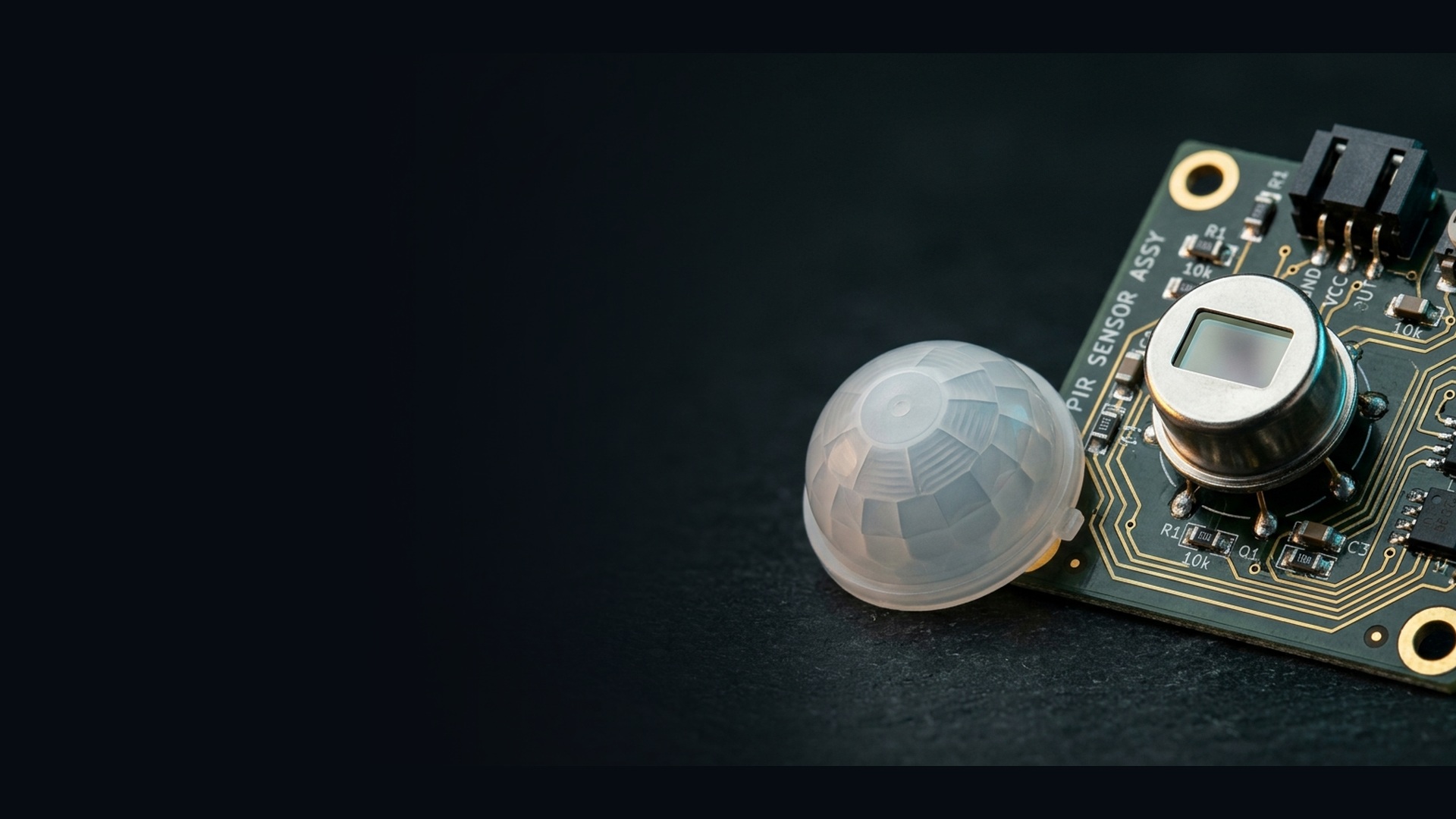
Sensor PIR e de Movimento
Montagem de PCB.
Montagem de tecnologia de montagem de superfície (SMT), através de furo (PTH) e mista para módulos de detectores infravermelhos passivos, placas de controle de ocupação e eletrônicos de comutação ativados por movimento.
Projetado para detecção.
Configurado para a sua montagem.
Como fabricamos eletrônicos de detecção de movimento e controle de ocupação diariamente, nossas linhas de produção e cadeia de suprimentos já estão estruturadas para módulos detectores PIR personalizados, placas de sensores de ocupação para interruptores de parede e subconjuntos de sensores sem fio — desde amostras iniciais de engenharia e lotes piloto até produções em série recorrentes.
Sua equipe de hardware trabalha diretamente com nossos engenheiros de manufatura em DFM, aquisição de componentes e planejamento de montagem. Opte pela aquisição completa turnkey, envie em consignação seus próprios sensores piroelétricos e MCUs pré-gravados ou estenda a montagem da placa para um box-build completo com integração de lente Fresnel e invólucro.
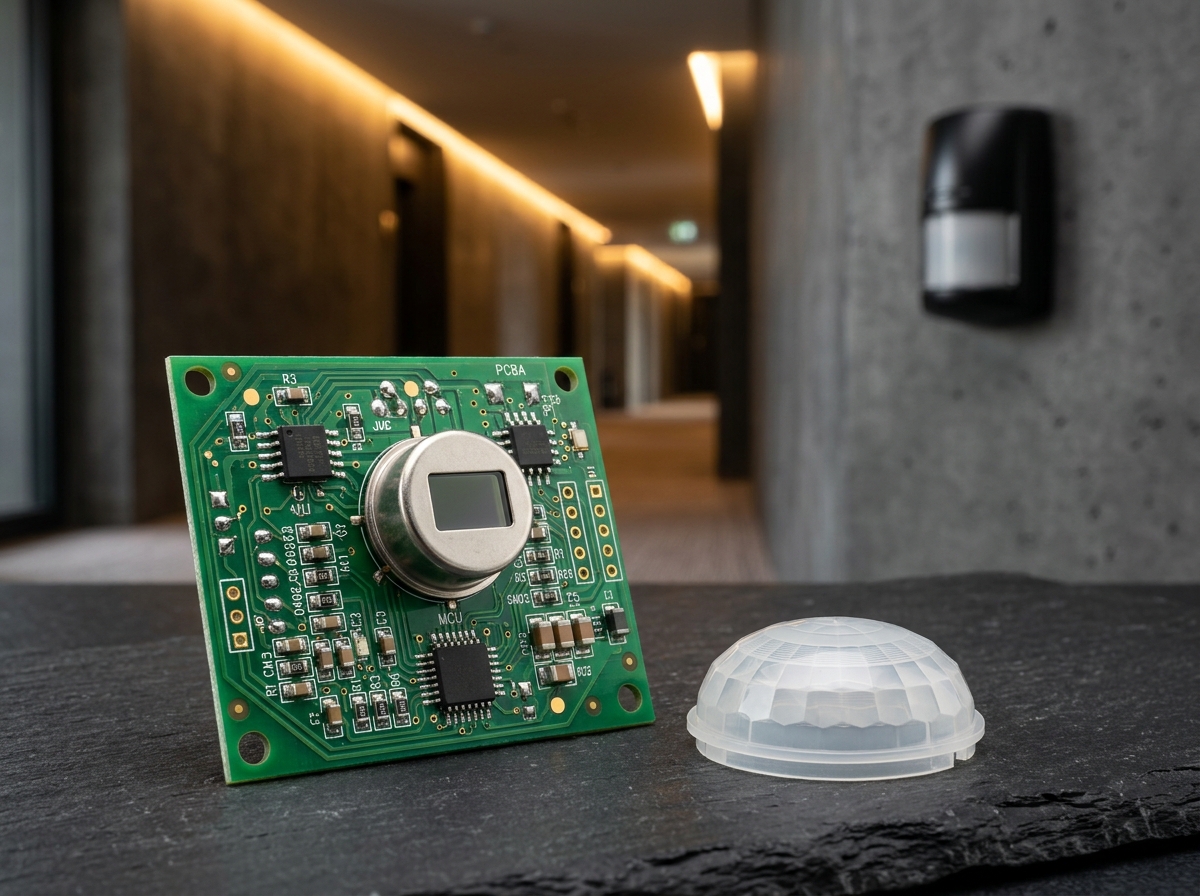
Arquitetura da placa PIR
Por dentro de uma montagem
de sensor PIR de produção.
Uma placa de sensor de movimento confiável reúne quatro zonas funcionais distintas em um único formato compacto — combinando detecção óptica infravermelha e sensoriamento de luz natural com condicionamento de sinal de baixo ruído e comutação de potência.
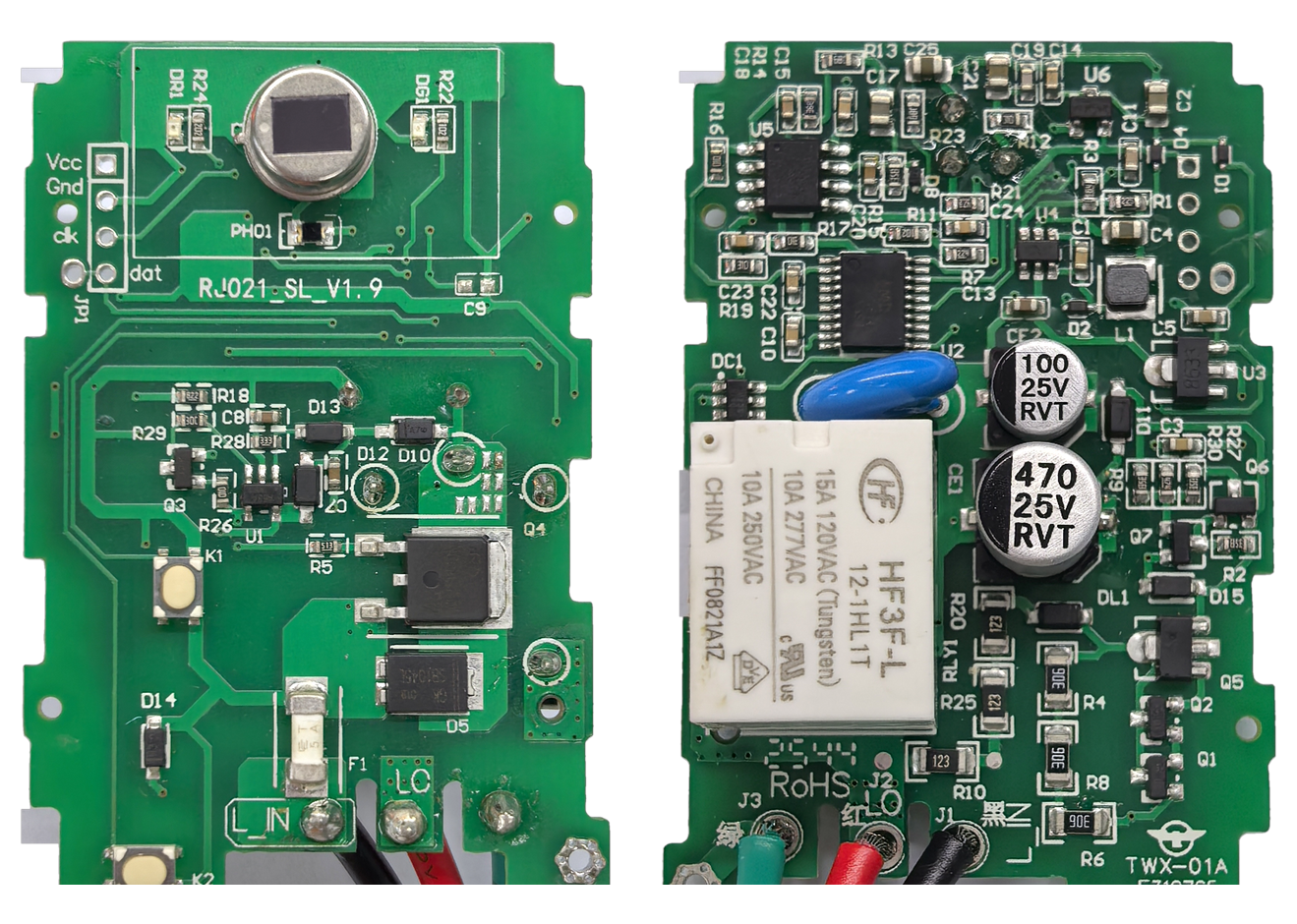
01Cabeçote detector piroelétrico
Ajustado ao plano focal da sua lente Fresnel.
Invólucros through-hole TO-5 de elemento simples, duplo ou quádruplo e detectores PIR digitais de montagem em superfície ficam posicionados no centro óptico da placa, alinhados com a distância focal e as zonas de detecção do domo da sua lente.
Detectores TO-5 e SMD · Referência focal óptica
02Sensor de luz ambiente e lux
Controle por luz natural ao lado da janela óptica.
Fotodiodos, fototransistores ou CIs de luz ambiente medem a iluminação do ambiente para que os controles de ocupação acionem a iluminação apenas quando a luz natural cair abaixo do limite de lux definido.
Fotodiodo e CIs ALS · Controle por limiar de luz natural
03Condicionamento de sinal e lógica de MCU
Amplificação de transições infravermelhas na faixa de microvolts.
Low-noise operational amplifiers, RC bandpass filters, and microcontrollers or dedicated PIR ASICs amplify the raw pyroelectric signal, filter out thermal drift, and manage time-delay and sensitivity settings.
Dual op-amp AFE · MCU timing & sensitivity logic
04Power regulation & load switching
Mains relay drive or ultra-low-power sleep.
Depending on the product format, the power stage integrates AC/DC step-down converters, relays, zero-cross triacs, and MOV surge protection for wired switches—or microamp LDO regulators for battery-powered wireless nodes.
Single-live / neutral AC · Relay & low-power LDO stages
Production Floor & Quality Execution
How We Build & Test PIR Sensor Boards
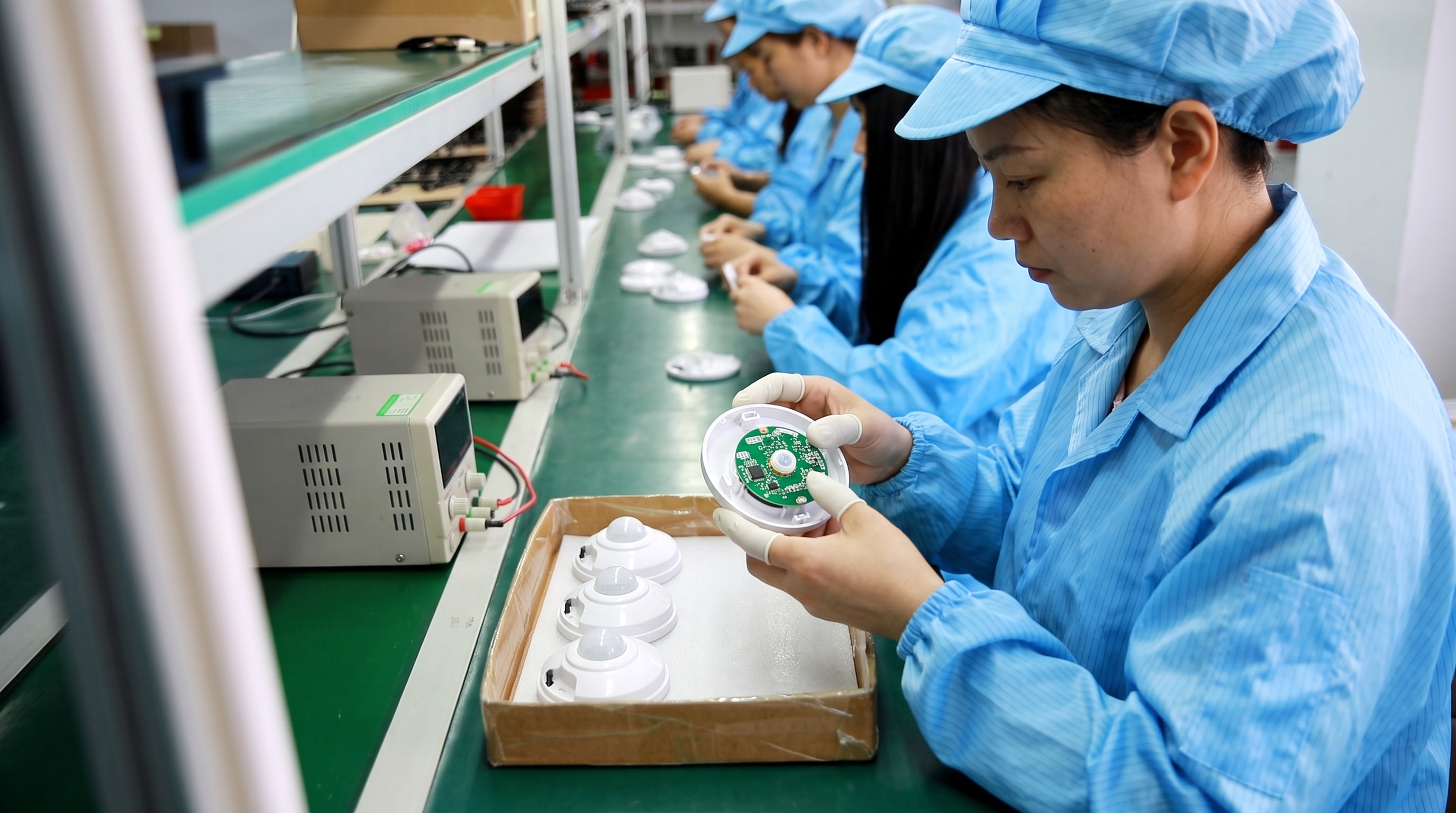
From automated SMT placement and controlled reflow to fixture-guided sensor seating, optical inspection, and live trigger testing, our production lines are organized around sensor assembly discipline.

Automated SMT Placement on Panelized Arrays
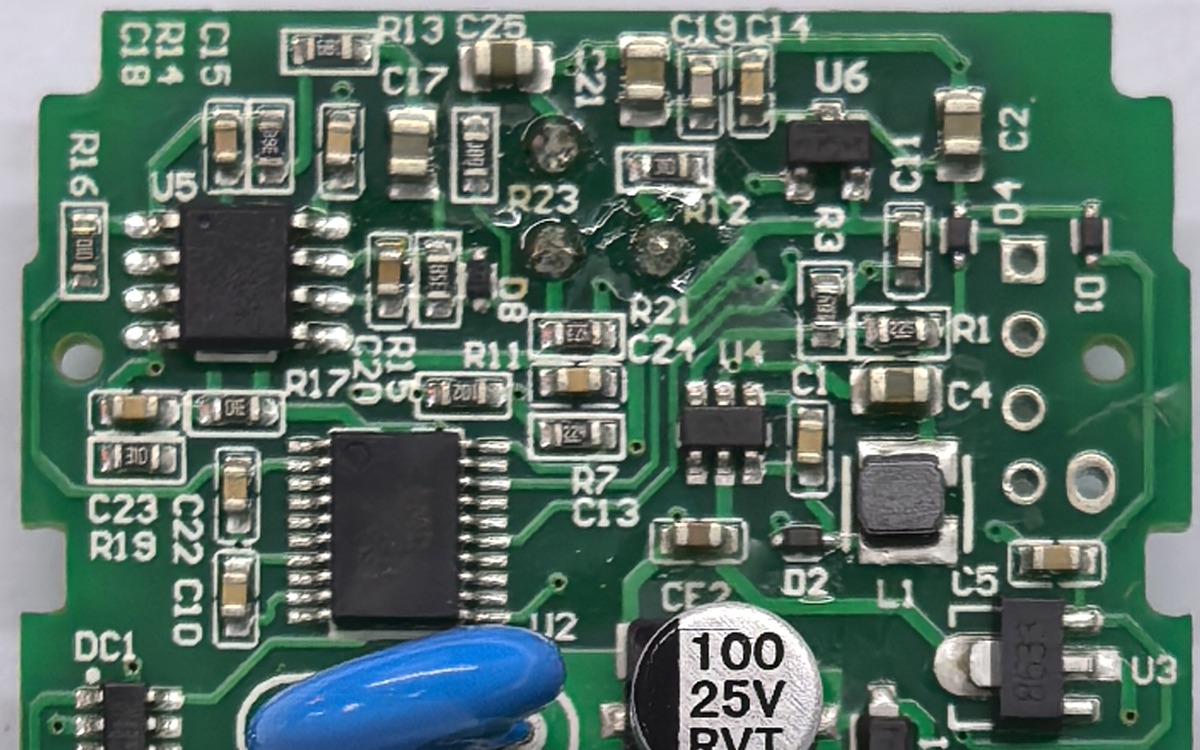
Enclosed pick-and-place lines populate panelized sensor boards—placing surface-mount passives, op-amps, microcontrollers, voltage regulators, and SMD detectors with consistent repeatability across prototype and volume runs.
Multi-Zone Lead-Free Reflow Profiling
Multi-zone lead-free reflow ovens provide controlled heating across surface-mount sensor assemblies. Thermal profiles are matched to the board mass and component temperature ratings to ensure clean wetting without overheating optical parts.
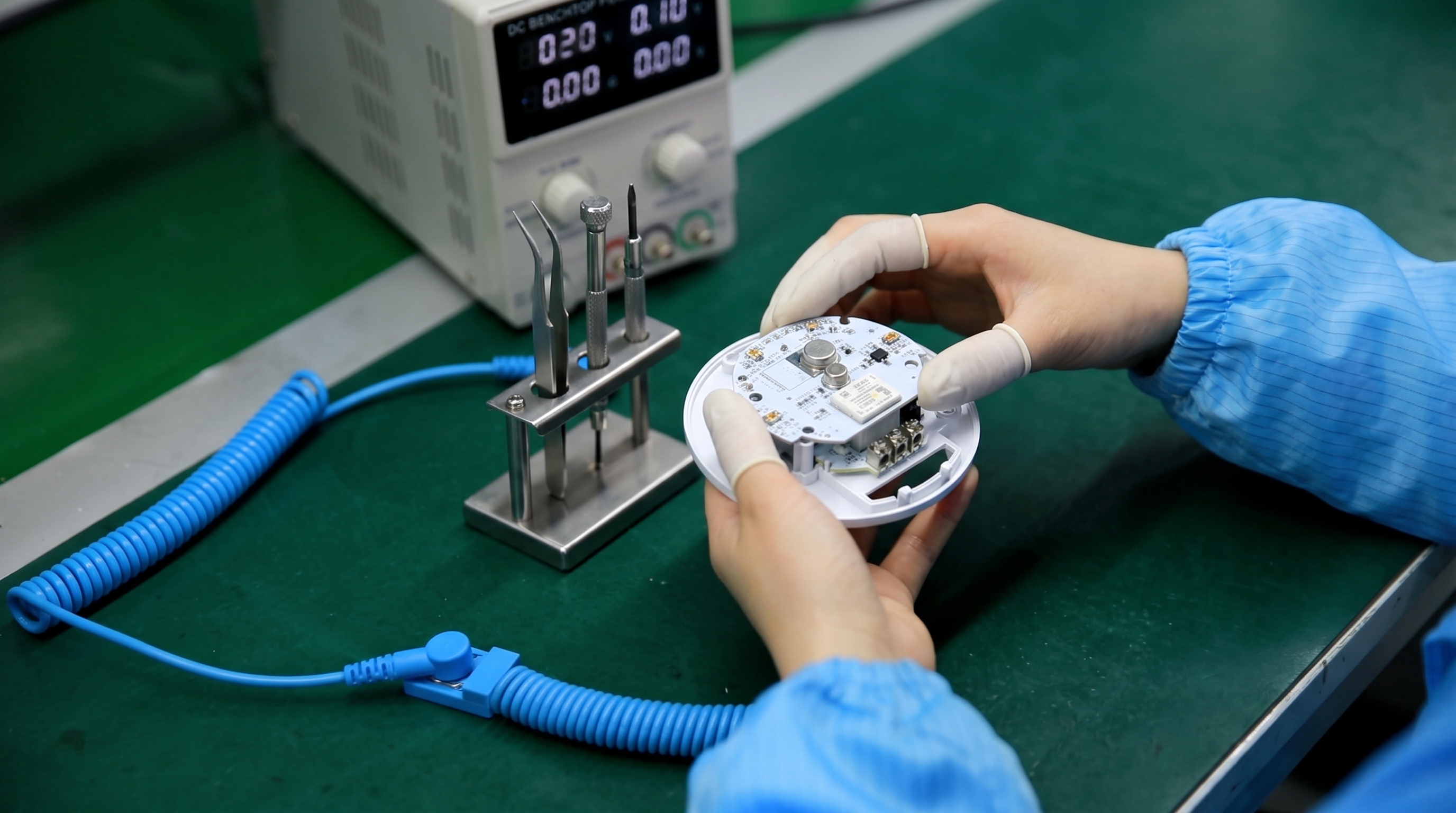
Fixture-Guided Through-Hole & Sensor Seating
Staffed ESD workstations handle post-SMT through-hole insertion and soldering for TO-5 pyroelectric cans, through-hole photodiodes, relays, and terminal blocks—keeping sensor seating height and window cleanliness controlled.
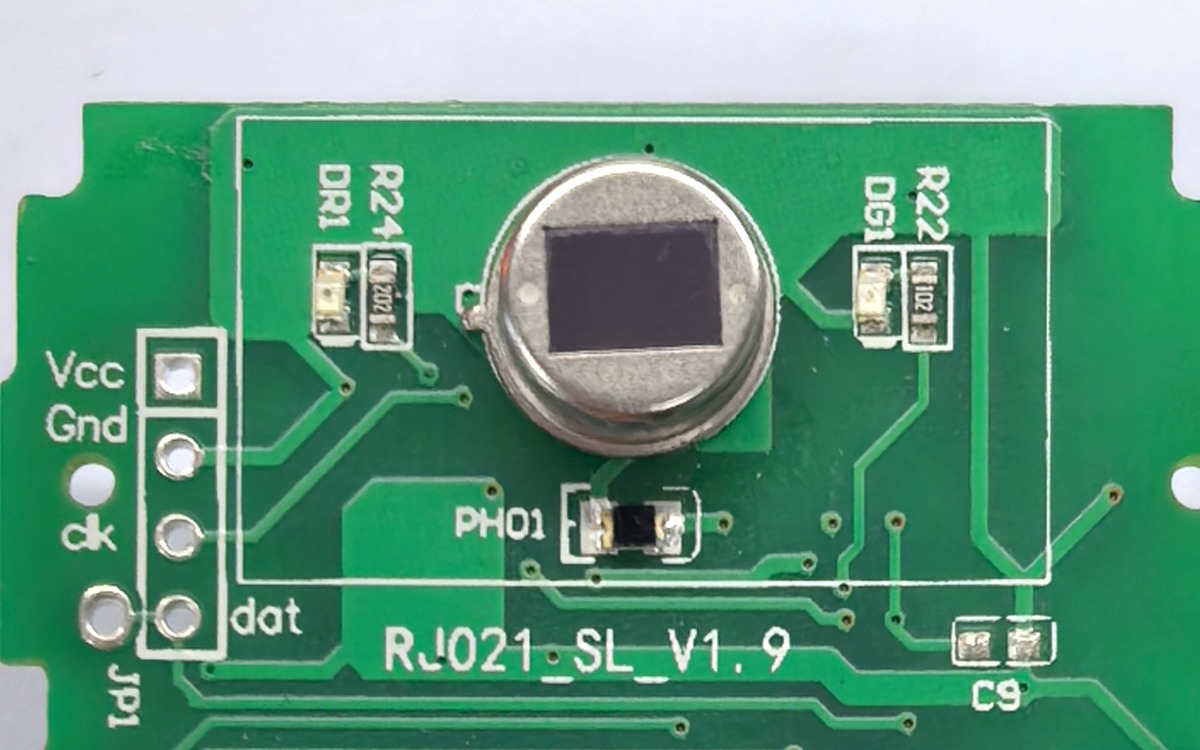
Low-Residue Soldering & High-Impedance Care
Because high-gain PIR amplifier nodes are sensitive to surface contamination, we apply agreed no-clean or residue-removal practices around detector pins and feedback networks, combined with pre-build DFM checks on pad clearances.
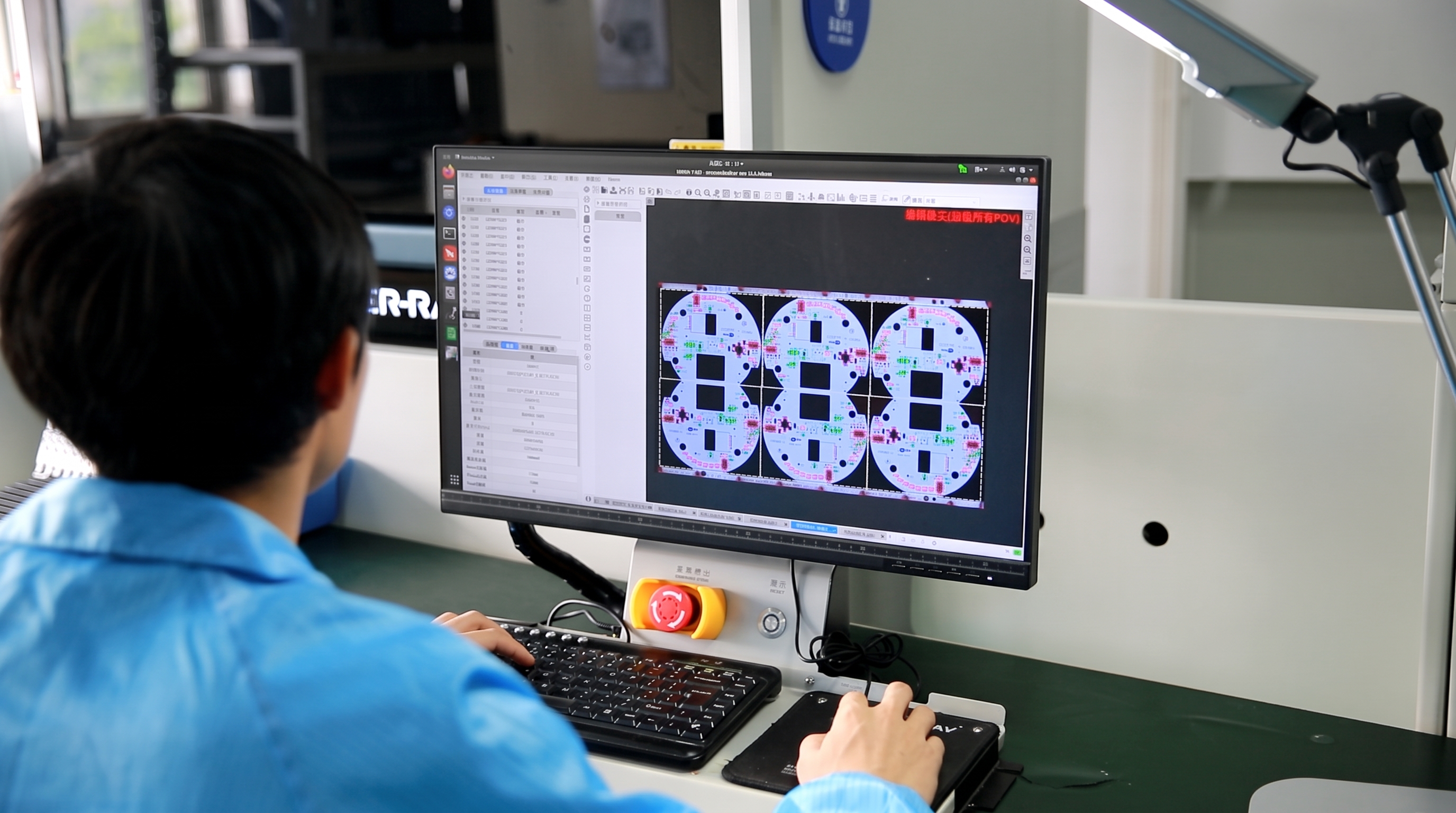
Automated Optical & First-Article Inspection
Automated optical inspection (AOI) and first-article review verify component presence, diode and IC polarity, fine-pitch lead fillets, and visible solder joints before and during the production run.
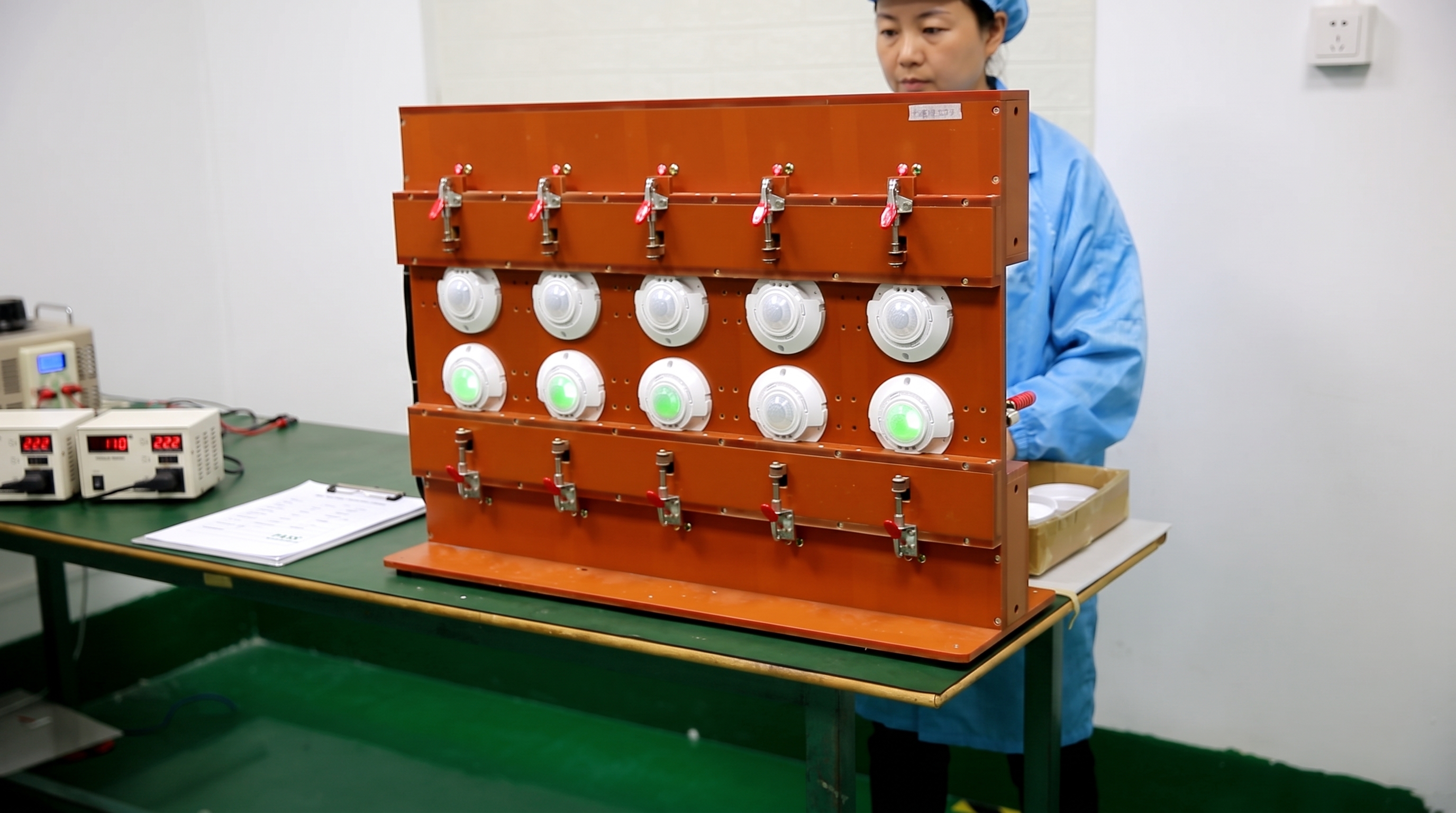
Firmware Flashing & Motion-Trigger Testing
Dedicated test benches execute the electrical and functional checks agreed for your build—including MCU firmware programming, warm-up and motion-trigger verification, ambient-light gating, and relay or output switching.
 ISO 9001:2015 REGISTERED
 IPC-A-610 CLASS 2 & 3
 ANSI/ESD S20.20-2021
 RoHS 2.0 & REACH
 UL 94V-0 DIELECTRICS
 CE CONFORMITY
 FCC PART 15 CLASS B
PIR Module & Sensor Board Formats
PCB Assembly Across PIR Sensor Formats.
Wall-switch occupancy boards, circular ceiling modules, and high-bay industrial detector assemblies configured around your mechanical enclosure and sensing geometry.

Occupancy & Vacancy Wall-Switch Boards
Occupancy & Vacancy Wall-Switch Boards
Compact in-wall control boards engineered for single-live and neutral wall boxes. Mixed SMT and through-hole assembly pairs front-facing PIR detectors, pushbuttons, and status LEDs with AC power relays, triacs, and terminal leads.

360° Office & Classroom Ceiling Modules
360° Office & Classroom Ceiling Modules
Circular and luminaire-integrated sensor boards built for wide-angle overhead coverage. Supports single or multi-sensor PIR placement, daylight harvesting photodiodes, 0-10V/DALI dimming interfaces, and two-board stacked housings.

High-Bay Industrial & Warehouse Sensors
High-Bay Industrial & Warehouse Sensors
Long-range aisle and high-ceiling detector assemblies built for industrial luminaires. Combines accurate detector seating for deep-focal Fresnel lenses with thermal isolation slots, high-inrush relay stages, and twist-lock or Zhaga-style connector integration.
From Sensor Files to Tested Modules
Four clear milestones from Gerber and BOM submission to inspected, trigger-verified PIR motion sensor assemblies. Select any stage to review the process.

Send What You Have.
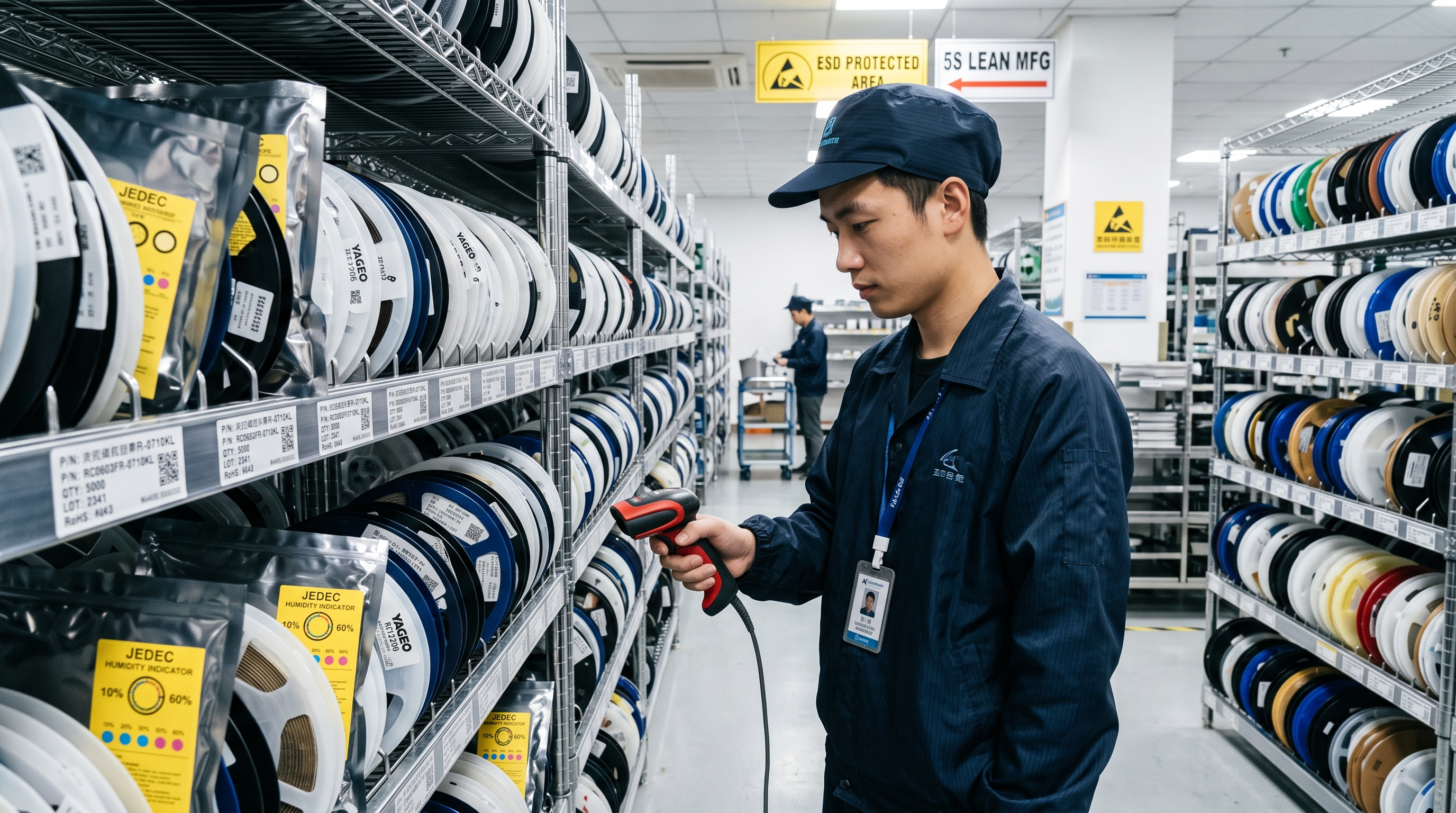
Share your Gerber files, BOM, pick-and-place centroids, and any sensor height or lens alignment notes. Under a mutual NDA, our manufacturing engineers review footprints, panelization, and component availability before production begins.
Clear Commercial & Sourcing Plan.
You receive an itemized quotation separating bare PCB fabrication, component procurement, stencil tooling, and assembly. Choose full turnkey sourcing or consign your proprietary pyroelectric sensors and pre-flashed MCUs.
First-Article Sample Verification.
Before running full volume, we build and inspect initial first-article boards. We check component polarity, solder wetting, PIR window cleanliness, and enclosure/lens fitment so you can sign off with confidence.

Tested, Protected & Ready for Integration.
Completed PIR sensor boards go through AOI and agreed functional trigger testing, then are packed in anti-static ESD shielding trays or bags to protect sensitive pyroelectric elements and optical windows in transit.
Audited Manufacturing Discipline
We bring the same supplier audit discipline and quality controls established with enterprise customers to every PIR motion sensor and control board project.
Enterprise & OEM Supply Experience
Long-term supplier relationships with Fortune Global 500 customers and commercial lighting/control brands have given us practical experience with structured engineering handoffs, BOM control, and recurring production.
Demanding Customer Audits Passed
We have passed demanding supplier audits for enterprise customers. Documented stencil tracking, ESD controls, and revision management are a standard part of our sensor board production workflow.
Sensor Board Quality Controls
Before production, we agree the inspection, programming, and trigger-testing criteria for your PIR module. Quality controls include first-article review, AOI, and functional motion-trigger testing.






Start with what
you have.
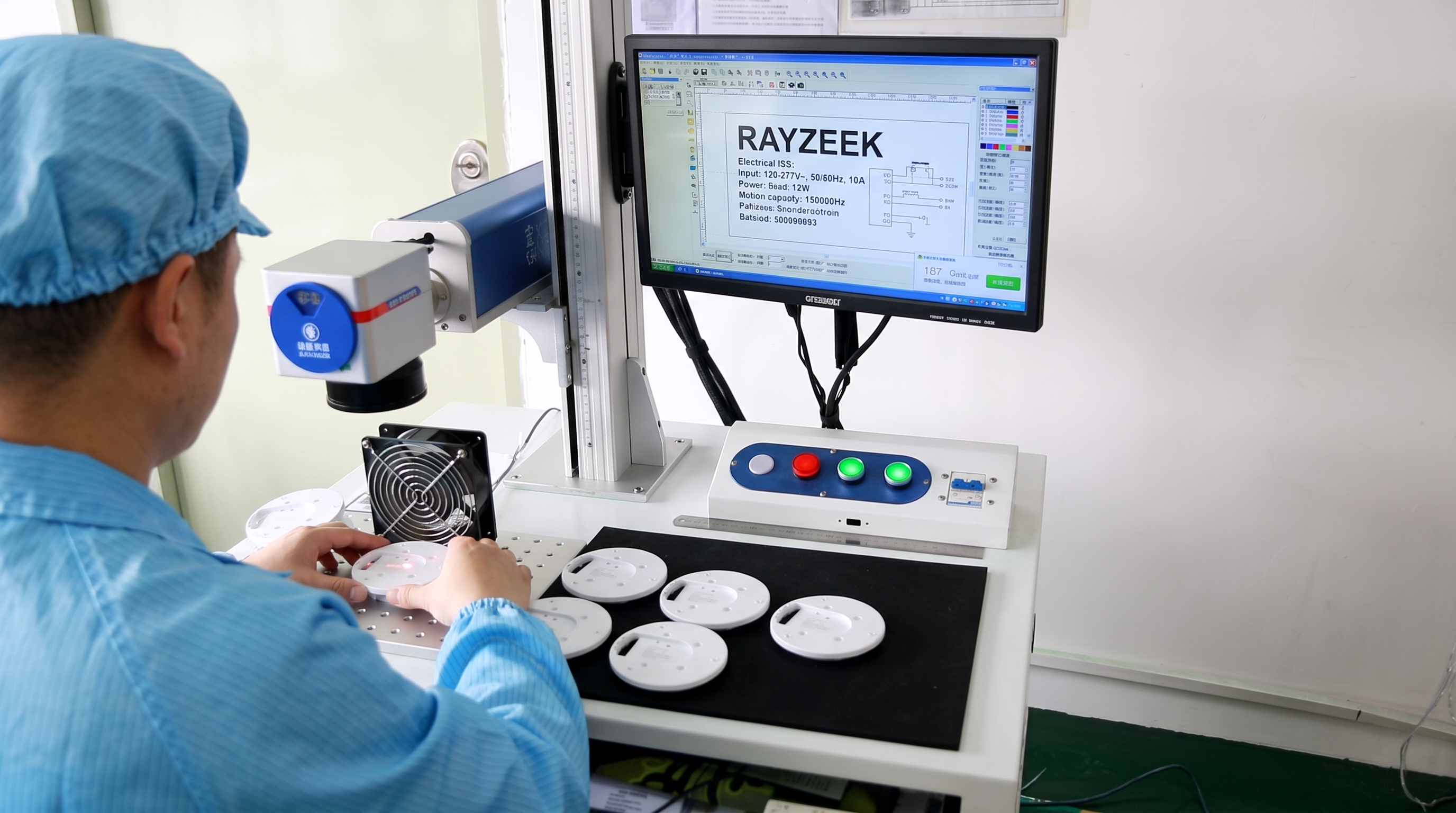
Gerber files, draft BOMs, sensor datasheets, and early prototype questions are welcome. Whether you are building a standalone PIR detector module, a wall-switch occupancy board, or a wireless motion sensor, share what you have and we will review the build with you.
Preliminary files welcome
Start with Gerbers, a BOM, sensor package specs, or your project question.
Direct engineering review
Review sensor height clearances, sourcing, and mixed-assembly details with our team.
Clear next steps
Receive an itemized quote and practical feedback before production begins.