
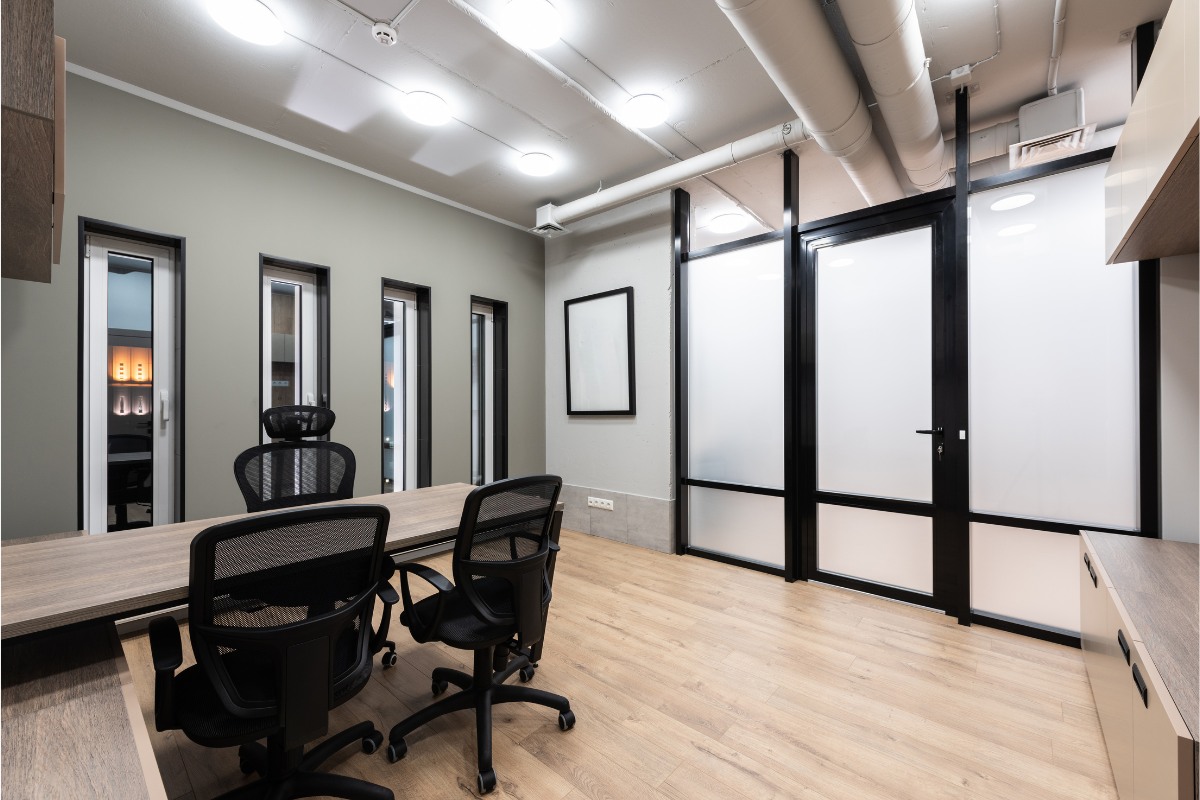
Lighting occupancy sensors are a common lighting solution, frequently employed as an energy-saving and cost-cutting measure in a wide variety of commercial and industrial workspaces. Motion sensors determine when a person has entered the room and instruct the light to turn on. After a set period during which the sensor detects no motion in the room, it commands the light to switch off, assuming the person has left the room.
Lighting occupancy sensors are ideal for work environments because they reduce energy usage and eliminate the need for employees to remember to turn off the lights. If you’re installing a lighting occupancy sensor in a facility, it’s important to remember that there are a number of things you can do to improve its performance and get the most out of this already energy-efficient fixture. Learn more about ensuring the correct operation and maximizing the performance of lighting occupancy sensors in our blog.
Lighting Occupancy Sensor Operation and Performance
- Ensure that the wiring that connects the sensor/power pack to the power/loads is correct. Incorrect wiring can reduce performance and/or present a safety hazard. It is advisable to consult the installation manual closely or seek professional assistance if uncertainties arise during the installation process.
- Ensure that the sensor is placed and oriented as it was in the original drawings. Deviations from the planned layout can significantly impact the sensor’s effectiveness. Additionally, consider environmental factors such as heat sources or air currents that might affect the sensor’s operation.
- Real-world installation may require a series of adjustments in order to fine-tune and calibrate the sensor’s operation. It’s crucial to test the sensor under various conditions to ensure it operates reliably under all expected circumstances. Consider environmental factors such as the placement of furniture or equipment that might obstruct the sensor’s field of view.
Uitschakelvertraging
The time-delay setting allows the operator to adjust how long the lights will stay on after the last instance of motion is detected. The usual recommended minimum delay is 15 minutes. This does several things.
First, it avoids on-off cycles that are too frequent, if occupants enter and leave the room on a regular basis. This prevents the occupants of the room from being distracted, and will also prolong the life of the bulb. It also prevents the lights from going off too soon if an occupant has entered the room but does not move after his or her entrance. Finally, it generates an acceptable compromise between energy savings and performance.
For different environments, adjusting the time-delay to suit the specific usage patterns can optimize energy savings without sacrificing comfort. For instance, in a rarely used storeroom, a shorter delay might be more appropriate, whereas in a busy office, a longer delay ensures that the lights remain on as needed. In environments such as libraries or study areas, where occupants may remain still for longer periods, considering a longer time-delay may be beneficial to avoid disruptions.
Motion Sensitivity
This setting allows for the sensor’s sensitivity to motion to be adjusted. The lower the sensitivity, the more sensitive the sensor will be to motion, meaning even small motions will turn on the lights. Higher sensitivity settings will require more distinct motions to activate the sensor. Following the installation of the sensor, there is usually a trial period during which the operator can work with the room’s occupants to fine-tune this setting to their satisfaction.
Mogelijk bent u ook geïnteresseerd in

- Spanning: 2 AAA-batterijen
- Dag/Nacht-modus
- Uitschakelvertraging: 15min, 30min, 1u (standaard), 2u

- Plafondgemonteerde PIR-aanwezigheidssensor met potentiaalvrije relaisuitgang
- 12/24VDC of 12/24VAC laagspanningsvoeding
- COM-, NO- en NC-geïsoleerde relaiscontacten voor EMS-, HVAC- en gebouwbeheersystemen

- Laagspanning DC inbouw-plafondgemonteerde microgolfbewegingssensorschakelaar
- 12 VDC / 24 VDC-ingang met een bereik van 10-30 VDC
- Max. 10A werkstroom met instelbare uitschakelvertraging, luxdrempelwaarde en gevoeligheid
- Inbouw-plafondgemonteerde microgolfbewegingssensorschakelaar voor hogere belasting
- 100-265 VAC netspanningsingang, 10A-model
- 5,8 GHz microgolfdetectie met instelbare uitschakelvertraging, Lux-drempelwaarde en gevoeligheid
- Plafondinbouw microgolf bewegingssensor-schakelaar
- 100-265 VAC netspanningsingang, 5A-model
- 5,8 GHz microgolfdetectie met instelbare uitschakelvertraging, Lux-drempelwaarde en gevoeligheid
- RZ037 PIR-aanwezigheidssensor-dimmer voor plafondmontage op 220V-voeding
- 3A maximale werkstroom met 660W nominaal vermogen
- LUX-knop regelt lichtsensor AAN/UIT en door de gebruiker ingestelde dimhelderheid
- RZ037 PIR-aanwezigheidssensor-dimmer voor plafondmontage op 110V-voeding
- 3A maximale werkstroom met 330W nominaal vermogen
- LUX-knop regelt lichtsensor AAN/UIT en door de gebruiker ingestelde dimhelderheid

- Laagspanning DC microgolf bewegingssensor-schakelaar voor het plafond
- 12 VDC / 24 VDC-ingang met een bereik van 10-30 VDC
- Max. 10A werkstroom met instelbare uitschakelvertraging, luxdrempelwaarde en gevoeligheid
- Microgolf bewegingssensor-schakelaar voor het plafond met hogere belasting
- 100-265 VAC netspanningsingang, 10A-model
- 5,8 GHz microgolfdetectie met instelbare uitschakelvertraging, Lux-drempelwaarde en gevoeligheid
- Plafondmontage microgolf bewegingssensorschakelaar
- 100-265 VAC netspanningsingang, 5A-model
- 5,8 GHz microgolfdetectie met instelbare uitschakelvertraging, Lux-drempelwaarde en gevoeligheid

- Laagspannings-DC inbouw plafond PIR bewegingssensorschakelaar
- 12 VDC / 24 VDC-ingang met een bereik van 10-30 VDC
- Maximale werkstroom 10A met instelbare uitschakelvertraging, Lux-drempelwaarde en gevoeligheid

- Inbouw plafond PIR bewegingssensorschakelaar voor hogere belastingen
- 100-265 VAC netspanningsingang, 10A-model
- 360-graden detectie met instelbare uitschakelvertraging, Lux-drempelwaarde en gevoeligheid
- Inbouw plafond PIR bewegingssensorschakelaar
- 100-265 VAC netspanningsingang, 5A-model
- 360-graden detectie met instelbare uitschakelvertraging, Lux-drempelwaarde en gevoeligheid

- Draadloze schakelaar- en ontvangerset voor AAN/UIT-lichtregeling binnenshuis
- 100-230VAC, 50/60Hz ontvanger met 5A nominale stroom
- CR2032-gevoede draadloze schakelaar met 2.4GHz-communicatie
- Aanwezigheidsdetectie (Auto-AAN/Auto-UIT)
- 12–24V DC (10–30VDC), tot 10A
- 360° dekking, 8–12 m diameter
- Uitschakelvertraging 15 s–30 min
- Lichtsensor Uit/15/25/35 Lux
- Hoge/Lage gevoeligheid
- Automatisch AAN/Automatisch UIT aanwezigheidsmodus
- 100–265V AC, 10A (nuldraad vereist)
- 360° dekking; 8–12 m detectiediameter
- Uitschakelvertraging 15 s–30 min; Lux UIT/15/25/35; Gevoeligheid Hoog/Laag
- Automatisch AAN/Automatisch UIT aanwezigheidsmodus
- 100–265V AC, 5A (nuldraad vereist)
- 360° dekking; 8–12 m detectiediameter
- Uitschakelvertraging 15 s–30 min; Lux UIT/15/25/35; Gevoeligheid Hoog/Laag
Adjusting the sensitivity is particularly important in areas with varying levels of activity; for example, in conference rooms, a higher sensitivity might be necessary to detect minimal movements during meetings. For areas with high traffic or those prone to small, incidental movements, adjusting the sensitivity to a lower setting can help in reducing false triggers and enhancing energy savings.
Laat u inspireren door Rayzeek bewegingssensor-portfolio's.
Vindt u niet wat u zoekt? Geen zorgen. Er zijn altijd alternatieve manieren om uw problemen op te lossen. Misschien kan een van onze portfolio's u helpen.
Maintenance and Troubleshooting
Regular maintenance is key to ensuring the longevity and effectiveness of occupancy sensors. Periodic checks should be conducted to ensure that sensors are free from dust, debris, and any obstructions that could impair functionality. Common issues such as flickering lights or unresponsive sensors often indicate a need for recalibration or, in some cases, replacement of components. Additionally, it’s beneficial to review sensor settings annually to confirm that they remain aligned with the current usage patterns of the space.
Cost-Benefit Analysis
Implementing lighting occupancy sensors can lead to significant cost savings over traditional lighting systems. By reducing the amount of energy consumed and minimizing the wear and tear on lighting fixtures, these sensors not only lower energy bills but also decrease maintenance costs.
An analysis of energy usage before and after installation often shows a reduction in energy consumption by up to 30-50%, depending on the nature of the workspace and the accuracy of the sensor settings. These savings not only cover the initial investment in the sensors but also contribute to a lower environmental impact over time.
Compatibility with Different Lighting Types
Occupancy sensors are versatile and can be integrated with various types of lighting technologies, including LED, fluorescent, and incandescent lighting. However, it is crucial to ensure compatibility between the sensor and the lighting type to avoid issues such as reduced lifespan of bulbs or improper functioning of the sensor.
Op zoek naar bewegingsgestuurde energiebesparende oplossingen?
Neem contact met ons op voor complete PIR-bewegingssensoren, bewegingsgestuurde energiebesparende producten, bewegingsschakelaars en commerciële oplossingen voor aanwezigheids- en afwezigheidsdetectie.
Also, lighting occupancy sensors can be effectively integrated with other building management systems to create a smart, responsive environment. For example, connecting occupancy sensors with HVAC systems can further enhance energy efficiency by coordinating lighting and temperature based on actual room usage. This integration not only optimizes energy use but also improves the overall comfort and productivity of the occupants.
Regulatory and Compliance Considerations
In many regions, there are specific regulations and standards that govern the installation of electrical devices, including occupancy sensors. Familiarity with these regulations is essential to ensure compliance and avoid legal issues. Additionally, adherence to standards can often enhance the system’s efficiency and safety.
Understanding and addressing these aspects can help facilities maximize the benefits of lighting occupancy sensors, leading to a more energy-efficient and cost-effective operation.







