
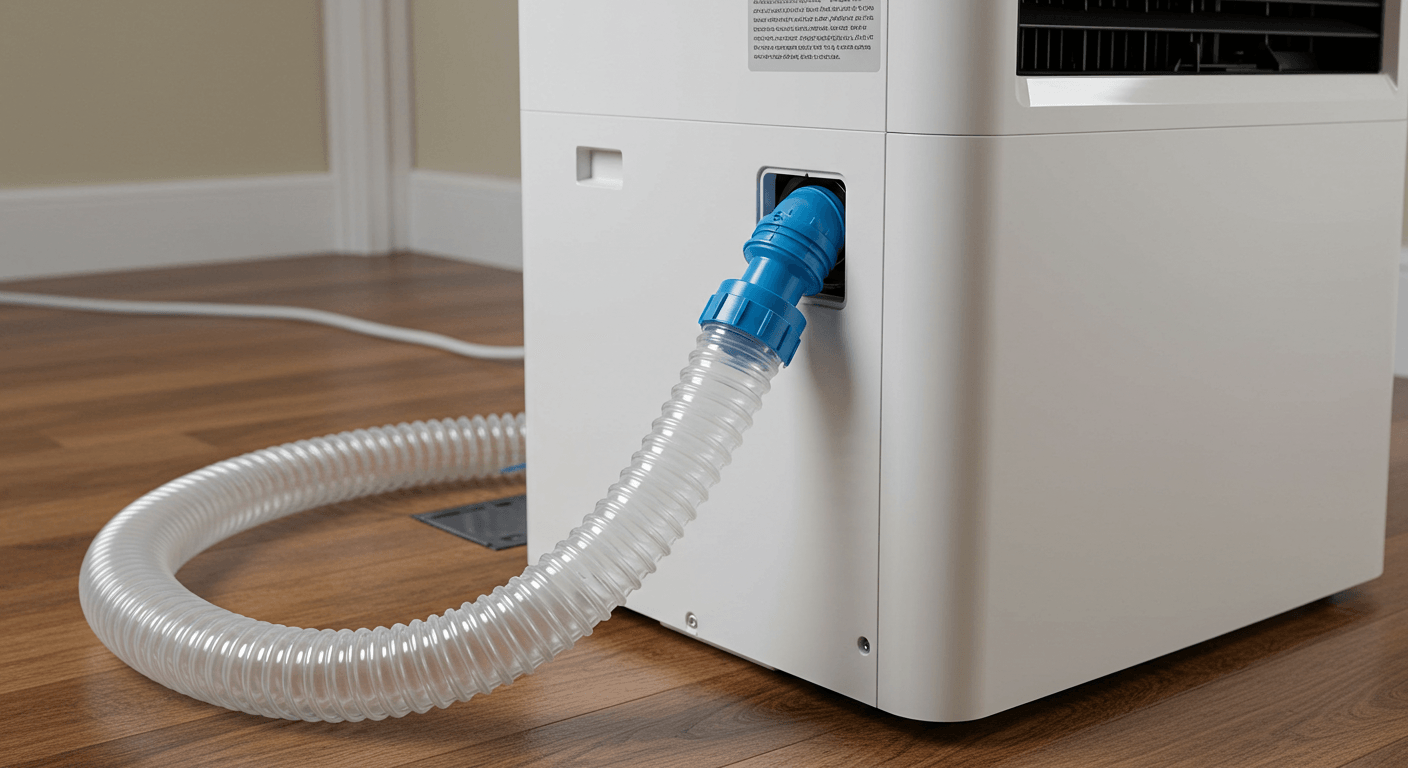
Experiencing water dripping from your portable air conditioner? You’re not alone! It’s a pretty common issue, and it can definitely be a hassle. You might be wondering why your portable AC is doing this. Unlike window units that naturally drain outside, portable ACs, because they’re inside, need specific drainage methods. Let’s talk about how to deal with that.
So, how do you drain a portable air conditioner? This article is all about that! We’ll walk you through the different methods, explaining the science behind why these units produce water and the practical steps for managing the drainage.
We’ll cover gravity drainage (the simplest method!), continuous drainage with a hose, and using a condensate pump (when gravity isn’t your friend). We’ll also touch on self-evaporating technology. By the end, you’ll have a clear understanding of how to keep your portable AC running smoothly and prevent any water-related headaches. Sound good?
Why They Produce Water
Ever wonder why your portable air conditioner produces water? It’s a natural part of the cooling process! Think of it like a cold glass of water on a hot day – it “sweats,” right? That’s condensation. Your AC works similarly. Warm, humid air is drawn into the unit and passed over cold evaporator coils. These coils, which contain refrigerant, are what actually cool the air. The refrigerant absorbs heat, making the coils super cold.
That big temperature difference causes the moisture in the warm air to condense into liquid water on those cold coils, just like we talked about with the glass of water. These water droplets then collect in a pan or reservoir inside your AC unit.
Now, here’s the thing: window air conditioners can drain that water directly outside. But portable units? They’re inside! That’s why we need to figure out how to manage all that collected water.
Thinking about using that water for your plants? While it might seem like a good idea, it’s generally not recommended. The water is essentially distilled, meaning it lacks the minerals your plants need. Plus, it might contain traces of metals from the AC unit itself.
The amount of water your AC produces can vary quite a bit – from several pints to several gallons per day! This depends on a few things: your unit’s BTU rating (that’s British Thermal Unit, a measure of cooling capacity), the humidity level, and the temperature. Some manufacturers even provide charts to help you estimate.
So, what affects how much water your AC produces? Here are a few key factors:
- Higher humidity levels: More humidity means more condensation. Think of a humid summer day versus a dry winter day – you’ll definitely see more water production in humid conditions.
- Clean evaporator coils: Regular cleaning ensures your AC is dehumidifying efficiently. Dust and debris can insulate the coils, making them less effective.
- Coil temperature: If the coil temperature gets too low, ice can form, blocking airflow and reducing cooling (and water production) until it’s defrosted. It’s like what happens in a freezer that needs defrosting.
- Refrigerant type: While different refrigerants exist, they all work on the same principle of heat absorption, so they don’t significantly affect the condensation rate.
How to Drain Your Unit
Okay, so how do you actually drain your unit? While it might seem like a chore, it’s really just about managing the water that’s naturally produced when your AC cools your space. There are three main methods: gravity drainage, continuous drainage with a hose, and using a condensate pump. We’ll explore each of these in detail. The best method for you will depend on your setup, where your drains are located, and what you prefer.
אולי יעניין אותך גם

- חיישן נוכחות PIR להתקנה על התקרה עם יציאת ממסר מגע יבש
- מתח נמוך של 12/24VDC או 12/24VAC
- מגעי ממסר מבודדים מסוג COM, NO ו-NC עבור כניסות בקרת מבנה (EMS), מיזוג אוויר (HVAC) ומערכות ניהול

- מפסק חיישן תנועה מיקרוגל שקוע בתקרה במתח נמוך DC
- כניסת 12 VDC / 24 VDC עם טווח של 10-30 VDC
- זרם עבודה מקסימלי של 10A עם השהיית זמן, סף Lux ורגישות ניתנים לכיוונון
- מפסק חיישן תנועה מיקרוגל שקוע בתקרה לעומס גבוה יותר
- כניסת מתח רשת 100-265 VAC, דגם 10A
- גילוי מיקרוגל בתדר 5.8 GHz עם השהיית זמן, סף Lux ורגישות ניתנים לכיוונון
- מפסק חיישן תנועה מיקרוגל שקוע בתקרה
- כניסת מתח רשת 100-265 VAC, דגם 5A
- גילוי מיקרוגל בתדר 5.8 GHz עם השהיית זמן, סף Lux ורגישות ניתנים לכיוונון
- עמעם חיישן נוכחות RZ037 PIR להתקנה על התקרה עבור מתח של 220V
- זרם עבודה מקסימלי של 3A עם עומס נקוב של 660W
- לחצן LUX שולט בהפעלה/כיבוי של חיישן האור ובבהירות העמעום שנקבעה על ידי המשתמש
- עמעם חיישן נוכחות RZ037 PIR להתקנה על התקרה עבור מתח של 110V
- זרם עבודה מקסימלי של 3A עם עומס נקוב של 330W
- לחצן LUX שולט בהפעלה/כיבוי של חיישן האור ובבהירות העמעום שנקבעה על ידי המשתמש

- מפסק חיישן תנועה מיקרוגל מותקן בתקרה, במתח נמוך DC
- כניסת 12 VDC / 24 VDC עם טווח של 10-30 VDC
- זרם עבודה מקסימלי של 10A עם השהיית זמן, סף Lux ורגישות ניתנים לכיוונון
- מפסק חיישן תנועה מיקרוגל מותקן בתקרה לעומס גבוה יותר
- כניסת מתח רשת 100-265 VAC, דגם 10A
- גילוי מיקרוגל בתדר 5.8 GHz עם השהיית זמן, סף Lux ורגישות ניתנים לכיוונון
- מפסק חיישן תנועה מיקרוגל מותקן בתקרה
- כניסת מתח רשת 100-265 VAC, דגם 5A
- גילוי מיקרוגל בתדר 5.8 GHz עם השהיית זמן, סף Lux ורגישות ניתנים לכיוונון

- מפסק חיישן תנועה PIR שקוע בתקרה, במתח נמוך DC
- כניסת 12 VDC / 24 VDC עם טווח של 10-30 VDC
- זרם עבודה מקסימלי 10A עם השהיית זמן מתכווננת, סף Lux ורגישות

- מפסק חיישן תנועה PIR שקוע בתקרה לעומס גבוה יותר
- כניסת מתח רשת 100-265 VAC, דגם 10A
- זיהוי של 360 מעלות עם השהיית זמן מתכווננת, סף Lux ורגישות
- מפסק חיישן תנועה PIR שקוע בתקרה
- כניסת מתח רשת 100-265 VAC, דגם 5A
- זיהוי של 360 מעלות עם השהיית זמן מתכווננת, סף Lux ורגישות

- ערכת מפסק ומקלט אלחוטי לבקרת תאורת ON/OFF פנימית
- מקלט 100-230VAC, 50/60Hz עם זרם נקוב של 5A
- מפסק אלחוטי מופעל באמצעות CR2032 עם תקשורת 2.4GHz
- נוכחות (הפעלה אוטומטית/כיבוי אוטומטי)
- 12–24V DC (10–30VDC), עד 10A
- כיסוי של 360°, קוטר של 8–12 מ'
- השהיית זמן של 15 שניות–30 דקות
- חיישן אור כבוי/15/25/35 Lux
- רגישות גבוהה/נמוכה
- מצב נוכחות הפעלה אוטומטית/כיבוי אוטומטי
- 100–265V AC, 10A (נדרש ניוטרל)
- כיסוי של 360°; קוטר זיהוי של 8–12 מ'
- השהיית זמן של 15 שניות–30 דקות; Lux כבוי/15/25/35; רגישות גבוהה/נמוכה
- מצב נוכחות הפעלה אוטומטית/כיבוי אוטומטי
- 100–265V AC, 5A (נדרש קו ניוטרל)
- כיסוי של 360°; קוטר זיהוי של 8–12 מ'
- השהיית זמן של 15 שניות–30 דקות; Lux כבוי/15/25/35; רגישות גבוהה/נמוכה
- 100V-230VAC
- טווח שידור: עד 20 מטרים
- חיישן תנועה אלחוטי
- בקרת חיווט קשיח
- מתח: 2 סוללות AAA / 5V DC (Micro USB)
- מצב יום/לילה
- השהיית זמן: 15 דקות, 30 דקות, שעה (ברירת מחדל), שעתיים
- מתאם שקע בתקן אירופי (EU)
- מתאם שקע בתקן בריטי (UK)
First up: gravity drainage! This is the simplest method. Basically, you need to position your AC unit higher than where you want the water to drain. Why? Because water naturally flows downhill!
Next, we have continuous drainage. This involves attaching a hose to a drain port on your AC unit, allowing the water to flow continuously to a drain, like a floor drain or sink. The best part? You don’t have to manually empty a bucket! You can use a standard garden hose or a condensate-specific hose for this.
Finally, there’s the condensate pump. You’ll need this when gravity drainage just isn’t going to work – like when your drain is higher than your AC unit. The pump does the work of pushing the water uphill. If you’re not using continuous drainage, you’ll need to empty the unit regularly. How often? It depends on the humidity and how much you’re using your AC. Check it every few hours at first, and you’ll quickly get a sense of how often it needs to be emptied. Keep in mind that built-in pumps have a limited “head height” (that’s the maximum vertical distance the pump can push water), so check the specifications.
One more thing to keep in mind: some units have multiple drain ports. Usually, the upper port is for continuous drainage, while the lower port is for completely draining the unit (like when you’re storing it). Also, the diameter of the drain port matters – a larger opening allows for faster water flow. Air pressure can sometimes play a role, but it’s usually not a big deal.
מחפשים פתרונות לחיסכון באנרגיה המופעלים על ידי תנועה?
צרו איתנו קשר לקבלת חיישני תנועה PIR מלאים, מוצרים חוסכי אנרגיה המופעלים בתנועה, מתגי חיישני תנועה ופתרונות מסחריים לבקרת נוכחות וחוסר נוכחות (Occupancy/Vacancy).
Using Gravity
Like we said before, gravity drainage is the simplest way to drain your portable AC. It’s all about letting gravity do its thing! To make it work, your AC unit needs to be higher than where you want the water to drain.
You can use a short hose to connect the unit’s drain port to the drain, but you might not even need one! If the drain is right below the unit, the water can flow directly into it. If you do use a hose, make sure it’s not kinked or bent sharply, as that can block the water flow.
Where can you drain the water? Good options include a floor drain, a large bucket, or a sink (if it’s easy to get to and higher than the base of your AC unit).
Even a few inches of elevation can do the trick, but the higher the unit is, the better the drainage will be. If your unit is on the floor, try elevating it on a sturdy, stable platform. Make sure the platform can handle the weight and won’t tip over! If you’re using a hose, make sure it slopes downwards continuously, and avoid any upward sections where water can collect and block the flow. While water temperature does affect the flow rate a little, it’s usually not something you need to worry about. Finally, fill the hose with water before you start to prevent airlocks and ensure a smooth flow.
Continuous Drainage with a Hose
Another option, like we mentioned earlier, is continuous drainage. This is a fantastic choice if you have a drain nearby and want to ditch the bucket-emptying routine! To set it up, attach a hose to the drain port on your AC (usually the upper one, if there are two). Make sure the connection is nice and secure so it doesn’t leak. Hand-tighten it first, and then use pliers for a gentle extra turn – be careful not to overtighten it!
The hose lets the water flow continuously from your AC to a drain. This could be a floor drain, a sink, or even outside, if your local rules allow it and it’s safe for the environment.
To make sure the water drains properly, it’s super important to keep a consistent downward slope. Remember, gravity is still our friend here! Avoid any kinks or upward slopes in the hose, as these can block the water flow. And don’t forget to check the hose regularly for any blockages or kinks.
The typical hose size is 5/8 inch (that’s a standard garden hose), but it’s always a good idea to double-check your unit’s manual to be sure. Make sure the connection is snug, but don’t overtighten it – you could damage the threads on the drain port or the hose connector. For the best resistance to algae and mold, go with a vinyl or other non-porous hose. You can also clean the hose every now and then with a diluted bleach solution to keep it fresh. Different hose materials (like vinyl and rubber) offer different levels of flexibility and durability. While the water pressure is generally low, a durable hose is still a good idea to prevent leaks and ensure it lasts.
Using a Condensate Pump
Okay, let’s talk about condensate pumps. You’ll need one of these when gravity drainage just isn’t an option. This is the solution when your drain is higher than your AC unit. This often happens when there’s no floor drain nearby or when you want to drain the water somewhere higher than the unit. The pump’s job is to lift that water up to the drain.
To install a condensate pump, connect the pump’s inlet hose to your AC’s drain port (usually the lower one, if there are two). The lower port is generally used for complete drainage, which is what you want with a pump. Then, connect the pump’s outlet hose to where you want the water to drain – a sink, laundry tub, or even outside.
Condensate pumps need electricity to run, so make sure you have a standard electrical outlet nearby that’s properly grounded.
Most condensate pumps are designed to turn on automatically when the water level in their internal tank gets to a certain point. This is a nice feature that keeps the pump from running all the time. Many pumps also have a safety feature that shuts off your AC if the pump fails, preventing any water from overflowing and causing damage. That’s definitely something to look for!
Before you buy a pump, be sure to check its specifications for the maximum vertical lift capacity (also known as “head height”). This tells you how high the pump can lift the water. This is super important, because if you exceed that height, the pump won’t work right. Also, keep in mind that noise levels can vary between different pump models, but most are pretty quiet. Some even have designs to reduce noise. The flow rate (usually 1-5 gallons per hour) tells you how quickly the pump can remove the water.
To keep your condensate pump running smoothly and prevent clogs, regular maintenance is key. This usually means cleaning the pump’s reservoir every so often and checking for anything that might be blocking it. Be sure to check your pump’s manual for specific instructions.
קבלו השראה ממגוון חיישני התנועה של Rayzeek.
לא מוצאים את מה שאתם מחפשים? אל דאגה. תמיד יש דרכים חלופיות לפתור את הבעיות שלכם. אולי אחד מתיקי המוצרים שלנו יוכל לעזור.
Troubleshooting Common Drainage Problems
Even though portable air conditioners are generally pretty reliable, you might run into some drainage problems from time to time. But don’t worry, most of these are easy to fix! Here are a few common issues and what you can do about them:
- Kinks, blockages, and elevation: Check for any kinks in the hose, blockages in the drain port or hose, and make sure you have proper elevation for gravity drainage. These are the most common culprits.
- Leaks: Check your hose connections, make sure the drain pan isn’t cracked, and inspect the pump (if you’re using one) for leaks. Leaks can cause water damage, so address them quickly!
- Pump noises: If you’re using a pump, listen for any unusual noises. Grinding, rattling, or unusually loud noises could mean there’s a blockage or the pump is failing.
Self-Evaporating Models and Full Tank Indicator
Now, let’s talk about self-evaporating technology. Some portable air conditioners have this feature, which is designed to re-evaporate some of the collected water back into the air. This means you won’t have to drain the unit as often, but it doesn’t always eliminate the need to drain it completely.
There are two main types of self-evaporating models: fully self-evaporating and partially self-evaporating. Fully self-evaporating units rarely need manual draining, except when it’s super humid. Partially self-evaporating models are more common, and you’ll still need to drain them in moderate to high humidity. Most units also have a full tank indicator (usually a light or an alarm) that lets you know when the water reservoir is full and needs to be emptied. To see if your unit has self-evaporating technology, check the manual or product specifications – it’s usually a big selling point!
If you ignore the full tank indicator, your AC will usually shut down automatically to prevent water from overflowing and causing damage. The evaporation rate can vary quite a bit depending on the design, temperature, and humidity. In very humid conditions, the unit might not be able to evaporate the water as fast as it’s being produced. How well self-evaporation works depends on the unit’s design and the environment around it. Some units even use the collected water to cool the condenser coils, which is a clever way to boost efficiency!







