Alors, pouvez-vous faire fonctionner votre climatiseur de fenêtre 24h/24 et 7j/7 ? Techniquement, oui, la plupart des climatiseurs de fenêtre sont capables de fonctionner 24 heures sur 24. Mais ce n'est pas parce que vous pouvez faire quelque chose que c'est toujours la meilleure idée. Voyez les choses ainsi : vous pourriez conduire votre voiture à sa vitesse maximale pendant des heures, mais vous ne le feriez probablement pas, n'est-ce pas ? Cela consommerait énormément de carburant, userait le moteur et augmenterait le risque de panne. La même logique s'applique à votre climatiseur.
Vous avez peut-être entendu dire qu'il vaut mieux laisser votre climatiseur fonctionner en continu pour éviter les pics d'énergie lors du démarrage. S'il est vrai que le démarrage d'un climatiseur nécessite un peu d'énergie supplémentaire, les appareils modernes sont conçus pour gérer ces surtensions. Dans de nombreux cas, l'énergie consommée et l'usure dues à un fonctionnement continu peuvent en réalité l'emporter sur l'impact de ces pics de démarrage.
Nous examinerons en détail les facteurs qui comptent réellement pour décider s'il faut laisser votre climatiseur de fenêtre fonctionner sans interruption. Nous aborderons la consommation d'énergie, la charge imposée aux composants de l'appareil, l'importance de choisir la bonne capacité de climatisation pour votre pièce, ainsi que l'entretien régulier. Ces informations vous seront utiles, que vous soyez un propriétaire à la recherche de conseils pratiques ou quelqu'un souhaitant comprendre le fonctionnement détaillé des climatiseurs.
Une chose importante : vous devez généralement éviter d'utiliser une rallonge électrique avec votre climatiseur de fenêtre. Ces appareils consomment beaucoup d'énergie, et la plupart des rallonges ne sont simplement pas conçues pour supporter une telle charge en toute sécurité. Un câble sous-dimensionné peut surchauffer et risquer de provoquer un incendie ou d'endommager votre climatiseur. Si vous devez absolument devoir utiliser une rallonge, veillez à ce qu'il s'agisse d'un modèle renforcé spécifiquement conçu pour les gros appareils ménagers, avec un calibre de fil (AWG) de 14 ou moins. Et gardez-la aussi courte que possible ! Cependant, la solution la plus sûre reste toujours de brancher votre climatiseur directement sur une prise murale correctement mise à la terre.
Il est intéressant de noter que, selon l'U.S. Energy Information Administration, un foyer américain moyen fait fonctionner son climatiseur environ 8 heures par jour pendant la saison chaude. Cela montre bien que, bien que faire fonctionner un climatiseur 24h/24 et 7j/7 soit possible, ce n'est certainement pas la norme. Gardez également à l'esprit que même si vous réglez votre climatiseur pour qu'il fonctionne en continu, le thermostat continuera de faire démarrer et s'arrêter le compresseur pour maintenir la température programmée.
Comment fonctionne un climatiseur de fenêtre ?
Vous êtes-vous déjà demandé comment fonctionne réellement un climatiseur de fenêtre ? Tout est question de transfert de chaleur ! Au lieu de créer de l'air froid, un climatiseur de fenêtre extrait la chaleur de l'intérieur de votre logement et la rejette à l'extérieur. Voyez cela comme un aspirateur à chaleur qui extrait la chaleur de votre pièce.
Pour mieux comprendre, imaginez une éponge qui absorbe de l'eau. Dans ce cas, l'éponge est votre climatiseur et l'eau est l'énergie thermique. Le climatiseur absorbe la chaleur de votre pièce puis l“” expulse » par l'arrière, la rejetant à l'extérieur.
L'ensemble de ce processus repose sur une substance appelée fluide frigorigène, contenue dans un système étanche en circuit fermé. Le fluide frigorigène est l'élément clé ici, car il est chargé d'absorber et de libérer la chaleur. Et rassurez-vous, le fluide frigorigène ne s'épuise pas comme le carburant d'une voiture. Il continue simplement de circuler, répétant son action encore et encore.
Les éléments principaux de ce système sont le compresseur, le condenseur, l'évaporateur, le détendeur et le ventilateur. Le compresseur maintient le fluide frigorigène en circulation, le condenseur libère la chaleur à l'extérieur, l'évaporateur absorbe la chaleur à l'intérieur, le détendeur régule le débit du fluide frigorigène et le ventilateur fait circuler l'air pour faciliter le transfert thermique. Nous analyserons plus en détail chacun de ces composants afin de vous permettre de mieux comprendre comment ils fonctionnent ensemble pour vous maintenir au frais.
Rôle du compresseur
Examinons plus en détail le compresseur, que l'on peut considérer comme le cœur de votre système de climatisation. C'est l'élément central chargé de faire circuler le fluide frigorigène, entraînant ainsi l'ensemble du processus de refroidissement.
La fonction principale du compresseur consiste à comprimer le fluide frigorigène à l'état gazeux. La compression d'un gaz augmente simultanément sa pression et sa température. En effet, le rapprochement des molécules de gaz accélère leur mouvement, ce qui accroît leur énergie et donc leur température. Cette pression accrue est essentielle car elle permet au fluide frigorigène d'évacuer plus efficacement la chaleur dans le serpentin du condenseur, situé à l'extérieur de votre fenêtre.
Même si vous réglez votre climatiseur de fenêtre pour un fonctionnement “ continu ”, le compresseur ne fonctionne pas réellement 100% du temps. Le “ cycle de service ” d'un climatiseur correspond au pourcentage de temps pendant lequel le compresseur fonctionne activement. Le thermostat continue de faire alterner la marche et l'arrêt du compresseur afin de maintenir la température sélectionnée, même lorsque l'appareil reste sous tension. Lorsque la pièce atteint la température souhaitée, le compresseur ne s'enclenche plus que de manière intermittente pour la maintenir.
Plusieurs facteurs influencent ce cycle de service : les dimensions de votre pièce, la qualité de son isolation, la température extérieure ainsi que la température intérieure souhaitée.
Les climatiseurs de fenêtre utilisent différents types de compresseurs. Les compresseurs rotatifs sont très répandus en raison de leur taille relativement compacte et de leur efficacité. Ils exploitent un mécanisme rotatif pour comprimer le fluide frigorigène. Les compresseurs à spirale (Scroll) sont réputés pour être encore plus efficaces et plus silencieux que les compresseurs rotatifs, mais leur coût supérieur limite leur présence dans les unités de fenêtre.
Il existe également des compresseurs Inverter, qui reposent sur une technologie plus avancée. Contrairement aux compresseurs traditionnels fonctionnant à vitesse fixe, les compresseurs Inverter ajustent leur vitesse en fonction des besoins de refroidissement. Cela garantit un contrôle de la température plus précis et permet de réaliser d'importantes économies d'énergie, en particulier lors d'une utilisation prolongée du climatiseur.
D'autres types de compresseurs existent, comme les compresseurs à piston. Cependant, cette technologie plus ancienne n'est plus utilisée dans les climatiseurs de fenêtre modernes en raison de son efficacité moindre et de son niveau sonore plus élevé.
Fluide frigorigène et refroidissement
Abordons maintenant le fluide frigorigène. Il s'agit du fluide caloporteur qui circule en permanence à l'intérieur de votre climatiseur et constitue l'élément clé de l'absorption et de la restitution de la chaleur.
La spécificité du fluide frigorigène réside dans sa capacité à changer d'état, c'est-à-dire à passer de l'état liquide à l'état gazeux et inversement. C'est ici qu'interviennent les principes d'évaporation et de condensation. Lorsque le fluide frigorigène s'évapore, il passe de l'état liquide à l'état gazeux en absorbant la chaleur de son environnement. Ce phénomène est comparable à l'évaporation de l'eau sur la peau par forte chaleur, ce qui produit un effet rafraîchissant. À l'inverse, lorsque le fluide frigorigène se condense, il repasse de l'état gazeux à l'état liquide tout en libérant de la chaleur.
Le serpentin de l'évaporateur se situe à l'intérieur de la pièce. C'est à cet endroit que le fluide frigorigène s'évapore, absorbant la chaleur de l'air intérieur et refroidissant l'air redistribué dans la pièce. De son côté, le serpentin du condenseur se trouve à l'extérieur. Le fluide frigorigène s'y condense, restituant à l'air extérieur la chaleur prélevée à l'intérieur.
Le détendeur joue un rôle déterminant en abaissant la pression du fluide frigorigène, ce qui lui permet de s'évaporer à une température plus basse. Alors que le compresseur élève la pression et la température du fluide frigorigène, le détendeur inverse ce processus, préparant ainsi la phase de refroidissement.
Dans un circuit parfaitement étanche, le fluide frigorigène ne nécessite aucun remplacement, sauf en cas de fuite.
Au fil du temps, différents fluides frigorigènes ont été utilisés dans la climatisation. Le R-410A est aujourd'hui couramment employé dans de nombreux climatiseurs de fenêtre. Il est considéré comme plus respectueux de l'environnement que les anciens fluides car il ne détériore pas la couche d'ozone. Le R-32 gagne également en popularité. Il présente des performances environnementales supérieures au R-410A, avec un potentiel de réchauffement global plus faible, tout en améliorant l'efficacité énergétique. Les fluides plus anciens, tels que le R-22 (Fréon), ont été progressivement éliminés en raison de leur impact nocif sur la couche d'ozone.
Régulation par le thermostat
Le thermostat constitue le centre de contrôle de votre système de climatisation. Il régit le fonctionnement de l'appareil afin de maintenir la température souhaitée dans la pièce.
Le thermostat intègre une sonde de température qui mesure en continu la température de l'air ambiant. La “ valeur de consigne ” correspond à la température sélectionnée sur le thermostat, représentant la température intérieure idéale. Le thermostat compare la température de la pièce à cette valeur de consigne, puis active ou désactive le compresseur afin de maintenir ce niveau.
Pour éviter des alternances de marche/arrêt trop fréquentes du compresseur, les thermostats utilisent une zone neutre, appelée également hystérésis. Il s'agit d'une plage de tolérance de température autour de la valeur de consigne (par exemple plus ou moins 1 degré Fahrenheit) au sein de laquelle le thermostat ne réagit pas immédiatement. Cette zone de tolérance évite l'usure prématurée du compresseur en prévenant les cycles courts, qui s'avèrent inefficaces et préjudiciables pour le matériel.
Il convient de noter que votre climatiseur peut être sous tension sans que le compresseur ne refroidisse activement la pièce. Le thermostat ne déclenche le compresseur que lorsque la température ambiante dépasse la valeur de consigne (augmentée de la marge de l'hystérésis).
Un thermostat défaillant peut-il perturber un fonctionnement en continu du climatiseur ? Tout à fait. Un thermostat défectueux peut entraîner un fonctionnement ininterrompu du climatiseur ou l'empêcher totalement de démarrer, ce qui génère une surconsommation d'énergie et peut endommager l'équipement.
Factors Affecting Continuous Operation
Proper Sizing
Proper sizing is absolutely critical for your window AC, especially if you’re thinking about running it continuously. BTU, which stands for British Thermal Unit, is the key measurement here. It tells you how much heat an air conditioner can remove from a room in one hour. So, the higher the BTU rating, the more powerful the AC is.
As a general rule, you’ll need about 20 BTU for every square foot of living space. For example, if you have a 200-square-foot room, you’d probably want an AC with around 4,000 to 5,000 BTUs (200 sq ft * 20 BTU/sq ft = 4,000 BTU). But remember, that’s just a starting point! You also need to consider things like ceiling height, how well your room is insulated, the number and size of windows, and how much direct sunlight the room gets. A room with high ceilings, poor insulation, lots of windows, and direct sunlight will need a higher BTU rating than a small, well-insulated room with little sunlight.
Vous recherchez des solutions d’économie d’énergie activées par le mouvement ?
Contactez-nous pour obtenir une gamme complète de détecteurs de mouvement PIR, de produits d’économie d’énergie activés par le mouvement, d’interrupteurs à détecteur de mouvement et de solutions commerciales de présence/vacance.
What happens if you get an air conditioner that’s too big for the room? An oversized AC will cool the room way too quickly, leading to something called “short cycling” – frequent on/off cycles. This is bad news because it prevents the AC from properly removing moisture from the air, leaving you with a cold but clammy feeling. Plus, short cycling is energy-inefficient because the AC never gets a chance to reach its peak performance.
On the flip side, an undersized air conditioner, with a BTU rating that’s too low for the room, will struggle to cool the space effectively. It might run continuously, especially when it’s hot outside, without ever reaching the temperature you want. This constant running puts extra stress on the components and can cause the unit to break down sooner.
Not sure what the BTU rating of your AC is? You can usually find it on a sticker or label on the unit itself, often on the side or back. It might also be listed in the owner’s manual.
Outside Temperature’s Influence
Did you know that the outside temperature has a big impact on how well your AC works? The efficiency of an air conditioner is directly related to the temperature difference between the inside of your room and the air outside. The bigger that difference, the harder your AC has to work to move heat from the inside to the outside.
During those scorching hot days, when the outside temperature is way higher than the temperature you want inside, your air conditioner might end up running almost non-stop just to keep up. Air conditioners actually become less efficient as the outdoor temperature rises. This is because the refrigerant’s ability to release heat in the condenser coils is reduced when the surrounding air is already super hot. It’s like trying to cool something down by putting it in a warm oven – it’s just not going to work very well!
You might be wondering if there’s a maximum outside temperature at which your AC will just give up. While ACs are designed to handle high temperatures, their cooling capacity does decrease, and they might struggle to maintain your desired temperature when it’s extremely hot outside. Check your owner’s manual – it might specify an operating temperature range.
Keeping the Air Filter Clean
One of the simplest, yet most important, things you can do to keep your window AC running efficiently is to keep that air filter clean! Proper airflow is absolutely essential for your AC to work its best.
A dirty or clogged air filter restricts the flow of air through the unit. Imagine trying to breathe through a thick scarf – it’s going to be tough! This reduced airflow makes it harder for the AC to cool your room effectively. The fan and compressor have to work much harder to move air through a clogged filter, which means they’re using more energy. In severe cases, a severely restricted airflow can even cause the evaporator coils to freeze up or the compressor to overheat.
So, how often should you clean or replace your air filter? It’s generally a good idea to check it at least once a month. Depending on how much you use your AC and the conditions in your environment, you’ll need to clean or replace the filter as needed. If you live in a dusty area or have pets, you’ll probably need to do it more often.
What kind of filter should you use? There are a few different types to choose from. Disposable fiberglass filters are the most common and the cheapest, but they don’t filter the air as well as other options. Washable filters are more environmentally friendly, but you have to remember to clean them regularly. HEPA filters provide the best filtration, but they can also restrict airflow more, so they might not be suitable for all AC units. Check your owner’s manual for recommendations.
Clean Condenser Coils
Don’t forget about those condenser coils! These coils are located on the outside of your window AC unit, and they’re responsible for releasing the heat that was absorbed from inside your room.
Over time, dirt, dust, leaves, and other debris can build up on the condenser coils. This buildup acts like insulation, reducing the coils’ ability to transfer heat to the outside air. Just like a dirty air filter restricts airflow, dirty condenser coils make your AC less efficient.
When the condenser coils are dirty, the compressor has to work harder to pump the refrigerant and keep the cooling cycle going. This increased workload leads to higher energy consumption and can even cause the compressor to overheat.
It’s a good idea to clean the condenser coils at least once a year. If you live in a dusty or polluted area, or if your AC unit is located near trees or shrubs, you might need to clean them more often.
How do you clean the condenser coils? First, and this is super important, disconnect the power to the AC unit! Then, use a vacuum cleaner with a brush attachment to remove any loose debris. You can also use a specialized coil cleaner, which you can find at most hardware stores. Be careful not to bend the delicate fins on the coils. They’re easy to damage!
Speaking of coils, the design of both the condenser and evaporator coils plays a big role in how well your AC can handle continuous operation. Larger coils with more densely packed fins provide a greater surface area for heat transfer. AC units designed for more demanding conditions often have enhanced coil designs, like multiple rows of fins or special coatings to improve heat transfer.
Different AC Types
Did you know that there are different types of window air conditioners? They come with different features and technologies that can affect how well they perform, especially if you’re planning on running them for long stretches.
Traditional window AC units use a single-speed compressor. This means the compressor is either running at full blast or completely off. When it’s on, it’s cooling as hard as it can until the desired temperature is reached, and then it shuts down completely. This on/off cycling can lead to slight temperature swings in the room.
Inverter air conditioners, on the other hand, use a more advanced technology. The key difference is that they have a variable-speed compressor. Instead of just turning on and off, the compressor can adjust its speed depending on how much cooling is needed. Think of it like a car with cruise control – it can adjust the engine to maintain a constant speed, rather than constantly accelerating and braking.
This variable-speed operation gives you more precise temperature control. It can also save you a significant amount of energy, especially if you’re running your AC for long periods, because the compressor doesn’t always have to run at full power. Inverter ACs also have softer starts, which reduces stress on your electrical system and minimizes those initial power surges. Plus, they’re generally quieter than traditional single-speed units.
Now, inverter ACs typically cost more upfront than traditional models. So, is an inverter AC always the better choice? Not necessarily. The benefits are most noticeable when you’re using the AC frequently or continuously.
Laissez-vous inspirer par les portfolios de détecteurs de mouvement Rayzeek.
Vous ne trouvez pas ce que vous cherchez ? Ne vous inquiétez pas. Il existe toujours d'autres solutions à vos besoins. L'un de nos portfolios peut sans doute vous aider.
For continuous operation, inverter ACs have a clear advantage over traditional single-speed units. Because the compressor can adjust its speed, it can maintain a consistent temperature with less energy consumption and less wear and tear. Traditional ACs, constantly cycling on and off at full power, experience more stress during continuous use. This makes inverter technology particularly well-suited for situations where you want or need near-constant cooling.
Potential Downsides of Continuous Use
Energy Costs
Let’s face it: running your air conditioner costs money. There’s a direct link between how long you run your AC and how much energy it sucks up. The longer it runs, the more electricity you use, and the higher your energy bill will be.
Electricity consumption is typically measured in kilowatt-hours, or kWh. One kilowatt-hour represents the amount of energy used by a 1,000-watt appliance running for one hour. Think of it like this: a 100-watt light bulb running for 10 hours uses one kilowatt-hour of energy.
Want to get a rough idea of how much it costs to run your AC? Here’s a simple formula: (Wattage of AC / 1000) * Hours of Use * Cost per kWh = Estimated Cost. For example, if you have a 1000-watt AC running for 24 hours and your electricity costs $0.15 per kWh, you’d be looking at (1000/1000) * 24 * 0.15 = $3.60 worth of electricity.
You might also see terms like Energy Efficiency Ratio (EER) and Seasonal Energy Efficiency Ratio (SEER) when you’re shopping for air conditioners. These are measures of how efficient an AC is. Higher EER and SEER ratings mean better energy efficiency. EER is measured at a specific outdoor temperature (95°F), while SEER is a weighted average across a range of temperatures, representing how the AC performs throughout the cooling season.
Ces produits pourraient vous intéresser

- Tension : 2 piles AAA
- Mode Jour/Nuit
- Temporisation : 15 min, 30 min, 1 h (par défaut), 2 h
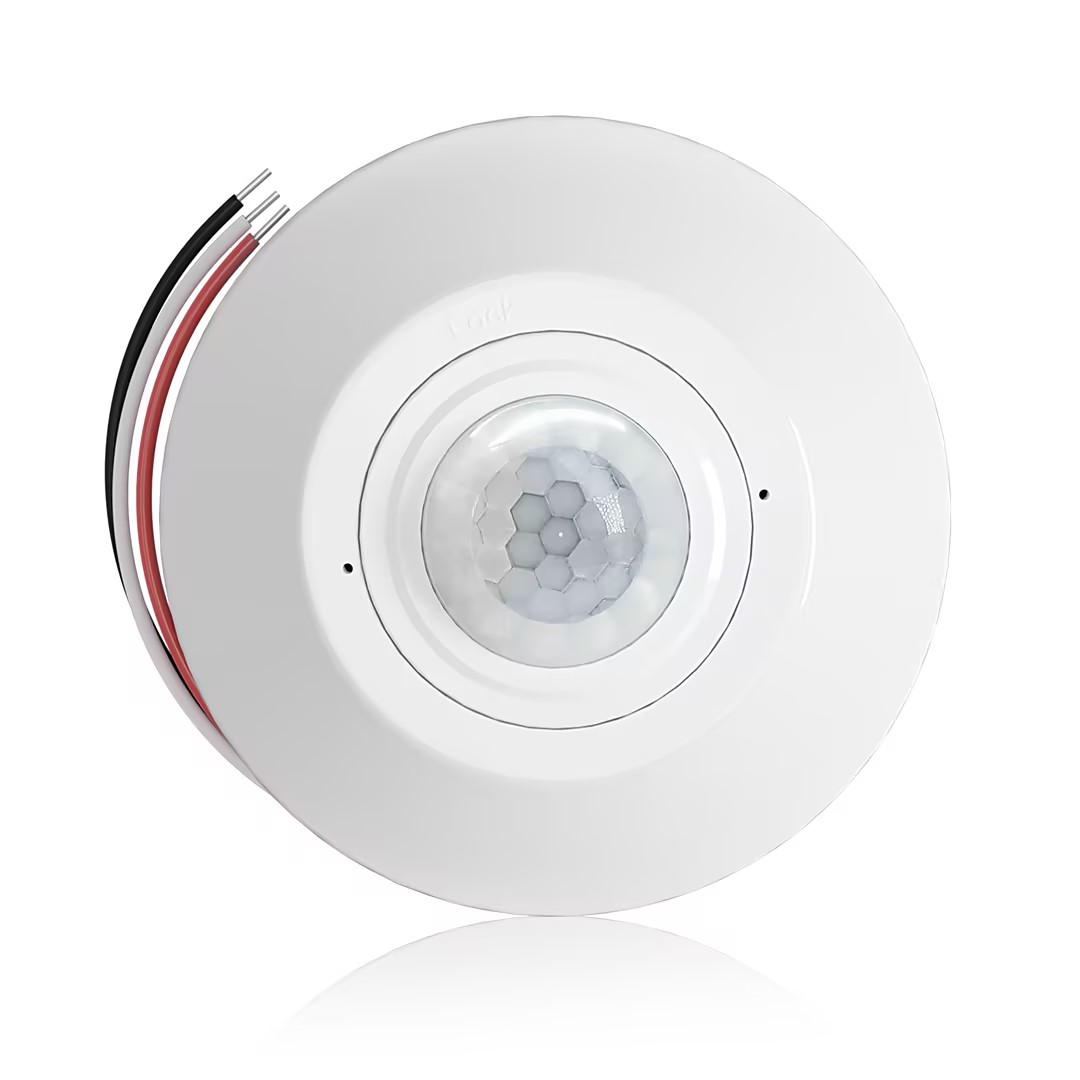
- Détecteur de présence PIR pour montage au plafond avec sortie relais à contact sec
- Alimentation basse tension 12/24VDC ou 12/24VAC
- Contacts relais isolés COM, NO et NC pour les entrées de régulation CVC, GTC et de gestion de l'énergie
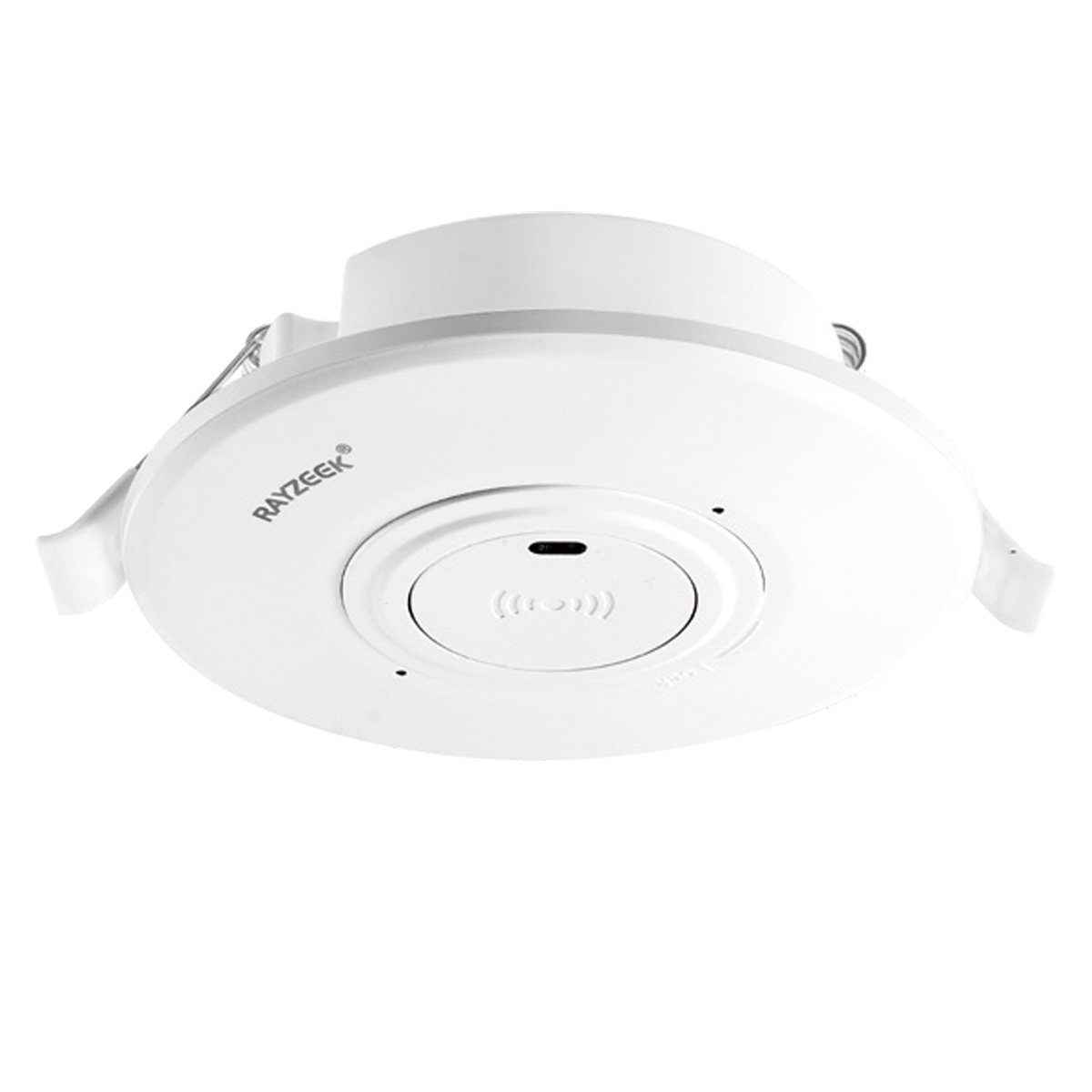
- Interrupteur détecteur de mouvement hyperfréquence encastré pour plafond basse tension continue
- Entrée 12 VDC / 24 VDC avec plage de 10-30 VDC
- Courant de fonctionnement maximal de 10A avec temporisation, seuil Lux et sensibilité réglables
- Interrupteur détecteur de mouvement à micro-ondes encastré au plafond pour charges plus élevées
- Entrée de tension secteur 100-265 VAC, modèle 10A
- Détection hyperfréquence (micro-ondes) 5,8 GHz avec temporisation, seuil Lux et sensibilité réglables
- Interrupteur détecteur de mouvement à micro-ondes encastré au plafond
- Entrée de tension secteur 100-265 VAC, modèle 5A
- Détection hyperfréquence (micro-ondes) 5,8 GHz avec temporisation, seuil Lux et sensibilité réglables
- Variateur détecteur de présence PIR RZ037 pour montage au plafond pour alimentation 220V
- Courant de fonctionnement maximal de 3A avec une charge nominale de 660W
- Le bouton LUX contrôle la marche/arrêt du capteur de lumière et la luminosité de variation réglée par l'utilisateur
- Variateur détecteur de présence PIR RZ037 pour montage au plafond pour alimentation 110V
- Courant de fonctionnement maximal de 3A avec une charge nominale de 330W
- Le bouton LUX contrôle la marche/arrêt du capteur de lumière et la luminosité de variation réglée par l'utilisateur
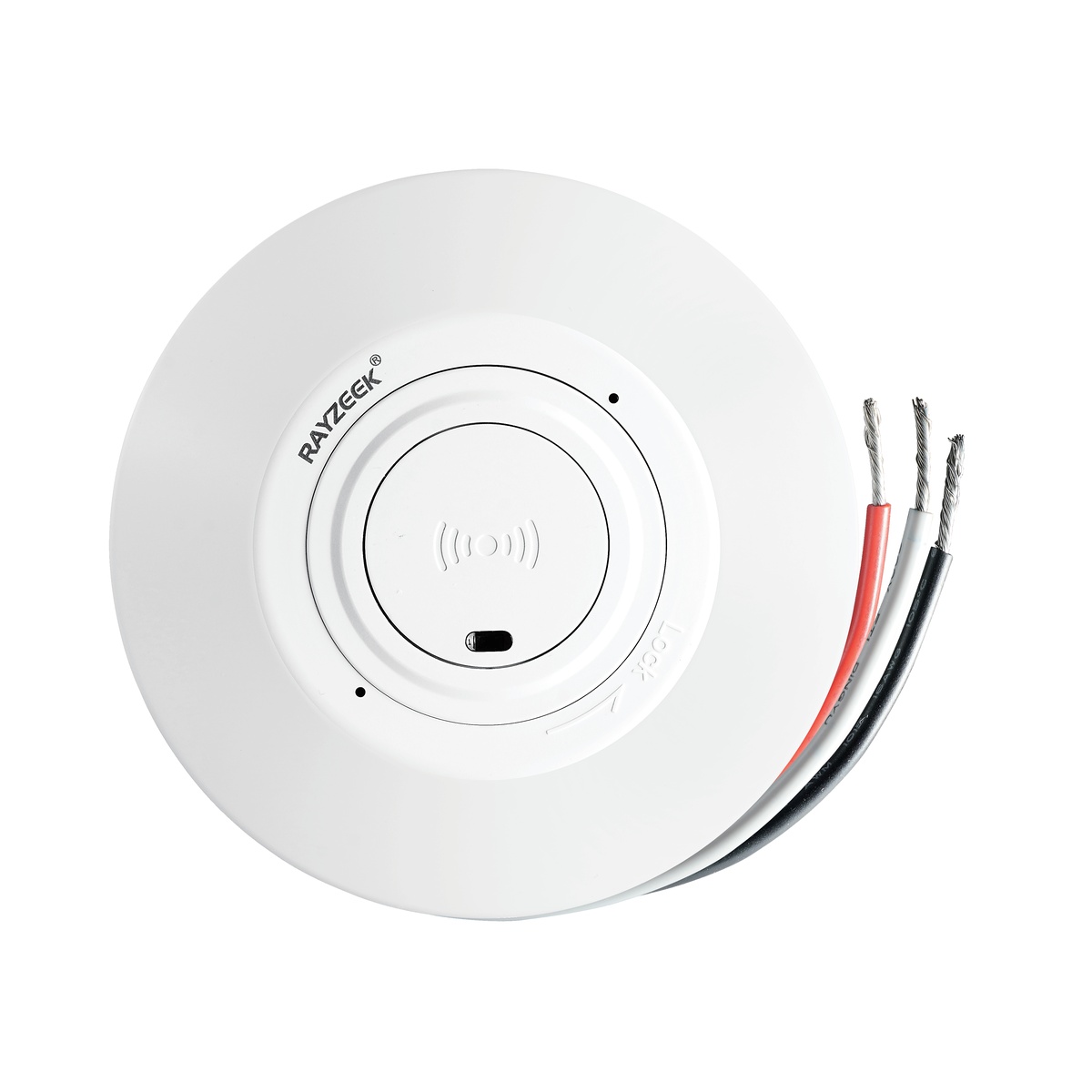
- Interrupteur détecteur de mouvement à micro-ondes basse tension CC pour montage au plafond
- Entrée 12 VDC / 24 VDC avec plage de 10-30 VDC
- Courant de fonctionnement maximal de 10A avec temporisation, seuil Lux et sensibilité réglables
- Interrupteur détecteur de mouvement à micro-ondes pour montage au plafond pour charges plus élevées
- Entrée de tension secteur 100-265 VAC, modèle 10A
- Détection hyperfréquence (micro-ondes) 5,8 GHz avec temporisation, seuil Lux et sensibilité réglables
- Interrupteur à détecteur de mouvement hyperfréquence pour montage au plafond
- Entrée de tension secteur 100-265 VAC, modèle 5A
- Détection hyperfréquence (micro-ondes) 5,8 GHz avec temporisation, seuil Lux et sensibilité réglables
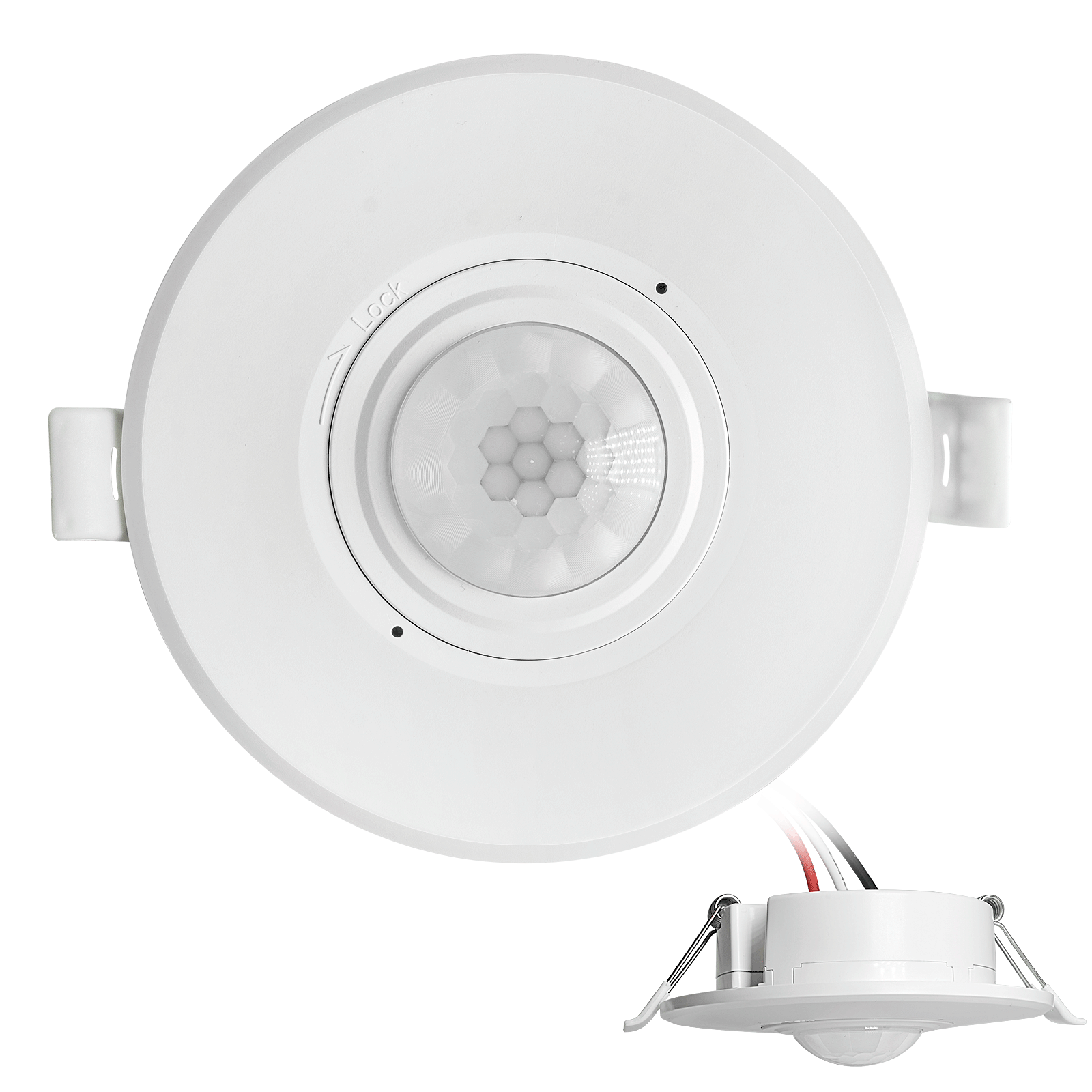
- Interrupteur à détecteur de mouvement PIR encastré pour plafond à basse tension CC
- Entrée 12 VDC / 24 VDC avec plage de 10-30 VDC
- Courant de fonctionnement maximal de 10A avec temporisation, seuil Lux et sensibilité réglables
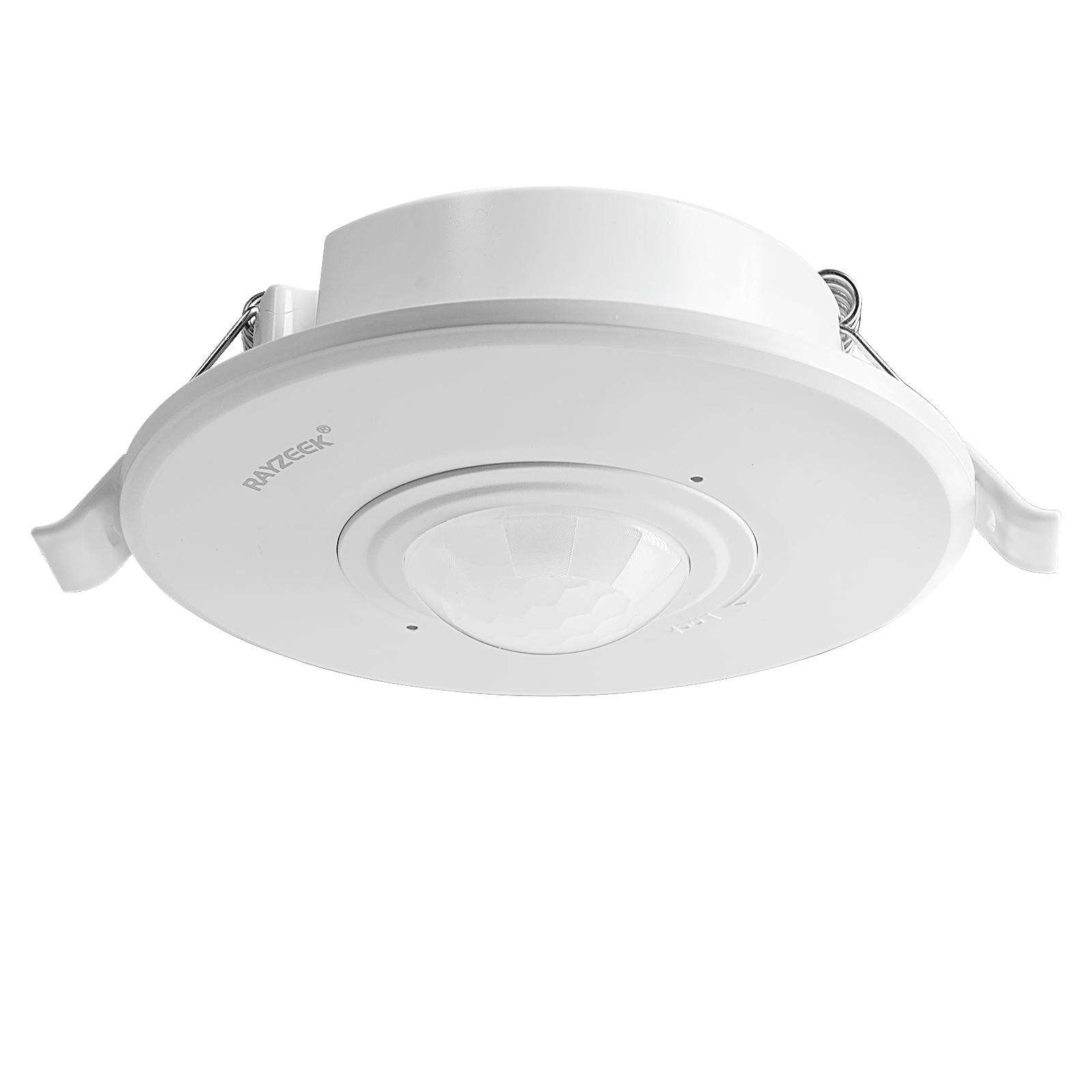
- Interrupteur à détecteur de mouvement PIR encastré pour plafond pour charges plus élevées
- Entrée de tension secteur 100-265 VAC, modèle 10A
- Détection à 360 degrés avec temporisation, seuil Lux et sensibilité réglables
- Interrupteur à détecteur de mouvement PIR encastré pour plafond
- Entrée de tension secteur 100-265 VAC, modèle 5A
- Détection à 360 degrés avec temporisation, seuil Lux et sensibilité réglables
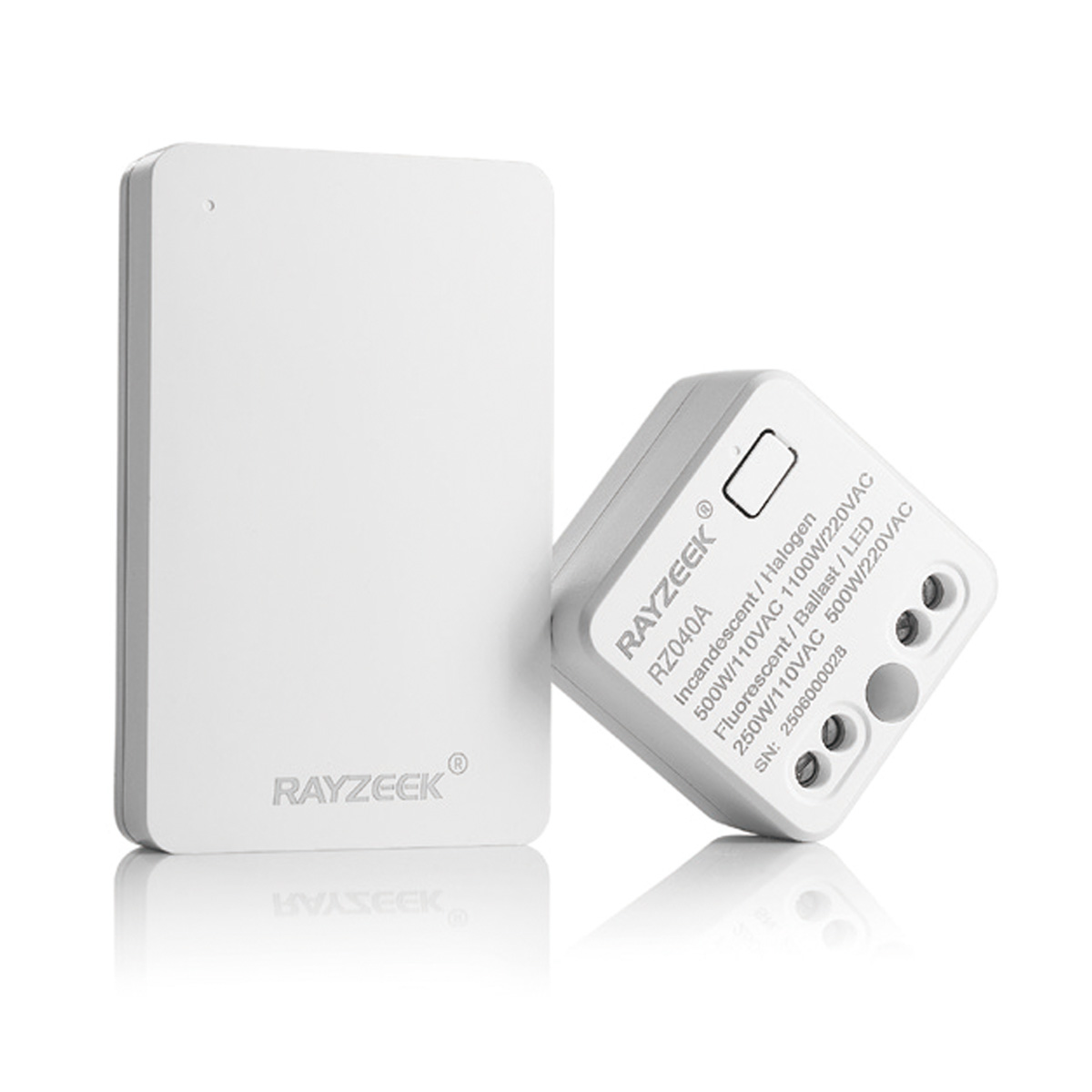
- Kit d’interrupteur sans fil et récepteur pour le contrôle de l’éclairage intérieur MARCHE/ARRÊT
- Récepteur 100-230VAC, 50/60Hz avec courant nominal de 5A
- Interrupteur sans fil alimenté par pile CR2032 avec communication 2.4GHz
- Détection d'occupation (Auto-ON/Auto-OFF)
- 12–24V DC (10–30VDC), jusqu'à 10A
- Couverture 360°, diamètre de 8–12 m
- Temporisation 15 s–30 min
- Capteur de luminosité Désactivé/15/25/35 Lux
- Sensibilité Haute/Basse
- Mode d'occupation Auto-ON/Auto-OFF
- 100–265V AC, 10A (neutre requis)
- Couverture 360° ; diamètre de détection 8–12 m
- Temporisation 15 s–30 min ; Lux Désactivé/15/25/35 ; Sensibilité Haute/Basse
- Mode d'occupation Auto-ON/Auto-OFF
- 100–265V AC, 5A (neutre requis)
- Couverture 360° ; diamètre de détection 8–12 m
- Temporisation 15 s–30 min ; Lux Désactivé/15/25/35 ; Sensibilité Haute/Basse
Even if you decide to run your AC for extended periods, there are things you can do to keep those energy costs down:
- Use a programmable thermostat: This lets you automatically adjust the temperature settings. You can set a higher temperature for when you’re away from home or asleep, saving energy without sacrificing comfort.
- Improve your home’s insulation: Good insulation helps to reduce heat gain, which means your AC won’t have to work as hard. Seal any air leaks around windows and doors, and consider adding insulation to your attic and walls.
- Use fans to circulate the air: Fans can make a room feel cooler, allowing you to set the thermostat a few degrees higher.
- Shade windows from direct sunlight: Use curtains, blinds, or awnings to block direct sunlight, which can significantly heat up a room.
How much more will it cost to run your AC 24/7? It really depends on the wattage of your AC, your electricity rate, and the factors we’ve talked about. It could increase your energy bill by a significant amount. It’s best to do the calculation I showed you earlier to get a better estimate.
Component Wear
It’s important to consider the impact of continuous operation on the lifespan of your AC unit. Running an air conditioner non-stop puts more stress on all its components compared to using it now and then. Think of it like running a marathon versus going for a leisurely jog – the marathon is going to take a much bigger toll on your body. This increased stress can lead to faster wear and tear, potentially shortening the lifespan of your AC.
The compressor, being the most complex and expensive part of the AC, is especially vulnerable to wear and tear from continuous operation. If the compressor fails, you’ll often have to replace the entire unit. The fan motor, which circulates air, also experiences increased wear and tear from constant use.
While continuous operation doesn’t directly cause refrigerant leaks, it can worsen existing small leaks in the refrigerant lines due to the increased stress on the system.
Regular maintenance is key to minimizing wear and tear, especially if you’re running your AC continuously. Cleaning the air filter and condenser coils is crucial. With proper maintenance and moderate use, a window air conditioner can typically last for 8-10 years. However, continuous operation, especially in demanding conditions, can shorten that lifespan. Other factors, like dust accumulation, extreme temperatures, and the overall quality of the unit, also play a role.
Will running your AC 24/7 void the warranty? It’s worth checking the fine print. Some manufacturers might have clauses about excessive use, but it’s unlikely to be explicitly prohibited.
Over the long term, continuous operation, especially when it’s really hot outside, can lead to slightly higher refrigerant pressures inside the system. While the system is designed to handle these fluctuations, prolonged high pressure can increase the risk of leaks over time.
Furthermore, running your AC near its maximum capacity for extended periods can gradually decrease its overall efficiency, even if you’re diligent about maintenance. This is due to things like increased wear on the compressor and a potential slight degradation of the refrigerant’s properties after many years of intense use.
While running an AC can help filter out some airborne allergens, keeping it on 24/7 doesn’t necessarily improve your air quality. A clean air filter is still the most important thing for maintaining good indoor air quality. In fact, continuous operation without proper humidity control can sometimes worsen indoor air quality by creating conditions that promote mold and mildew growth. It’s best to focus on changing the filter regularly and making sure you have adequate ventilation.
What is Short Cycling?
Have you ever heard of “short cycling?” It’s a term used to describe when your air conditioner turns on and off way too frequently, usually every few minutes. This is different from the normal on/off cycling that happens as the thermostat regulates the temperature.
So, what causes short cycling? Several things can be to blame:
- An oversized AC: This is a common culprit. If your AC is too big for the room, it will cool the space too quickly, reaching the set point before it has a chance to properly dehumidify the air. Then it shuts off, only to turn back on again shortly after.
- Thermostat problems: A faulty thermostat or one that’s placed in the wrong spot (like in direct sunlight or near a heat source) can also cause short cycling.
- Restricted airflow: If the airflow is blocked, often because of a clogged air filter or blocked vents, it can lead to short cycling.
- Refrigerant issues: A low refrigerant charge can also cause your AC to short cycle.
Short cycling is bad news for a few reasons:
- Reduced efficiency: The AC doesn’t reach its peak operating efficiency during those short cycles, which means you’re using more energy.
- Increased wear and tear: All those frequent starts and stops put extra stress on the compressor and other components, leading to increased wear and tear.
- Poor dehumidification: The AC doesn’t run long enough to remove moisture from the air effectively, leaving you with a humid and uncomfortable environment.
How can you tell if your AC is short cycling? Listen for those frequent on/off cycles and pay attention to whether the cooling feels inconsistent. If the AC is turning on and off every few minutes, it’s likely short cycling.
Overload Protection
Air conditioners have built-in safety mechanisms to prevent damage from overheating. This is called overload protection.
A crucial part of this safety system is the compressor overload protector. It’s basically a thermal switch that automatically shuts down the compressor if it gets too hot. Think of it like a circuit breaker in your house – it trips when there’s too much electricity flowing through the circuit, preventing a fire.
What can cause the compressor to overheat and trigger the overload protector?
- High outdoor temperatures increase the workload on the compressor.
- Dirty condenser coils restrict heat dissipation.
- Restricted airflow, often due to a dirty air filter, prevents proper cooling.
- A low refrigerant charge can cause the compressor to overheat.
- Continuous operation in extremely hot and humid conditions can push the compressor to its limits.
Some AC units have a manual reset button for the overload protector, usually located near the compressor. Other units reset automatically after the compressor cools down. If the overload protector trips, it’s important to let the unit cool down for a while before you try to reset it.
If the overload protector trips, does that mean your AC is broken? Not necessarily. It’s a sign that the AC is under stress and is protecting itself from damage. However, frequent tripping indicates an underlying problem that needs to be addressed, like one of the causes I mentioned earlier.
Can you bypass the overload protector? Absolutely not! Bypassing the overload protector is extremely dangerous and can lead to a fire or permanent damage to your AC unit. It’s a critical safety feature designed to prevent catastrophic failure.
Conclusion
So, can you run your window air conditioner 24/7? As we’ve discussed, it’s technically possible, but it’s a decision that requires careful thought. While modern AC units are built to handle extended use, running them continuously affects energy consumption, puts stress on the components, and can impact overall efficiency. Making the right choice depends on proper sizing, regular maintenance (especially keeping that air filter and those condenser coils clean), and understanding how your AC actually works. Ultimately, it’s about finding the sweet spot between staying comfortable, keeping costs down, and extending the life of your appliance.
Looking ahead, smart thermostats offer another way to optimize how you use your AC. These clever devices learn your preferences and automatically adjust settings based on whether you’re home, the weather outside, and other factors. This can help you balance comfort, energy efficiency, and the lifespan of your AC, potentially reducing the need to run it non-stop. And who knows what future advancements in AC technology will bring? Perhaps even more efficient units that minimize the downsides of extended use.