
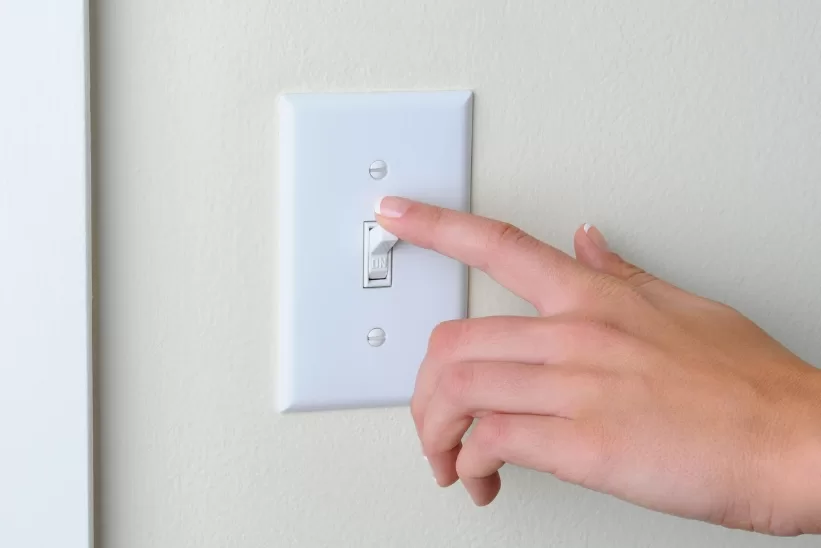
Light switches are vital electrical components that control light fixtures, appliances, and other items. There are many types of switches, such as toggle, rocker, slide, or pushbutton switches. Style does not usually influence the operation of the switch or the electrical wiring, although it can make the selection process difficult. However, narrowing down the choices to the most common switch types simplifies choosing the right one for your needs.
Here are the common types of light switches.
Contenido
- Single-Pole Switch
- Double-Pole Switch
- Three-Way Switch
- Four-Way Switch
- Dimmer Switch
- Motion Sensor Switch(Occupancy Switch)
- Smart Switch
- How to Choose a Light Switch
Single-Pole Switch
Singple-pole switches can be used in a wide variety of applications. You can tell if your light switch is single-pole as it will usually have ON/OFF symbols on the face of the switch. If it is a toggle or rocker type switch, the ON/OFF symbol might be hidden.
If you look closely, you will see that a new single pole switch has two brass-colored screw terminals attached to the switch body, as well as a green screw attached to the metal strap. This switch is used in normal operation to regulate the flow of current through the hot wires of the circuit.
In single-pole switches, each of the brass-colored screw terminals is connected to a hot wire, and there is normally no neutral wire connection. The circuit ground wire (usually a bare copper wire) is connected to the green ground screw of the switch. Single-pole switches are the universal type of light switch used in households.
Double-Pole Switch
Double-pole switches are often used in industrial applications. However, it can also be found in a number of home wiring systems, where it is often used to control 240-volt appliances, such as an electric furnace or air conditioner, electric water heater or whirlpool tub heater. Double-pole switches are much less common in the home than single-pole switches: if you don’t have appliances that require a double-pole switch, you may not have one at all.
Since 240-volt circuits use two separate “hot” wires, these switches have four brass-colored screw terminals to allow control of both hot wires in the circuit: incoming wires connect to one set of screws and outgoing wires connect to the other set of screws. These switches are typically rated at 30 to 40 amps, rather than the 15 to 20 amps of traditional single-pole wall switches. A green grounding screw is also included in the circuit grounding wire so a double-pole switch has overall 5 terminals.
Three-Way Switch
Three-way switches are used in stairwells, garages or basements with two entrances, in hallways, and in other situations where two independent wall switches control a single light fixture or appliance. Three-way switches must be used in pairs so that you can control the light at either end of the entrance.
A 3-way switch includes three terminal screws. The switch can be connected to either the power supply or the luminaire/fixture, depending on where it is located in the circuit configuration. The two three-way switches are connected by wires tied to “traveler” wires. A three-way switch also has a green grounding screw, to which the circuit’s bare copper grounding wire is connected.
The term ‘3-way’ is usually used in the US, whereas the same type of switch might be called a “2-way” switch in EU regions like the UK.
¿Busca soluciones de ahorro de energía activadas por movimiento?
Póngase en contacto con nosotros para obtener sensores de movimiento PIR completos, productos de ahorro de energía activados por movimiento, interruptores con sensor de movimiento y soluciones comerciales de presencia/vacancia.
Four-Way Switch
Although not commonly used, four-way switches are often found in long hallways and in large rooms with more than two entrances. Two three-way switches are used to control an outlet or light fixture from multiple locations. Now you can have control from more than three locations, for example, five locations and three four-way switches between the two three locations.
The four-way switch has four terminals and a ground terminal. Two of the four terminals are usually brass colored, while the other two are not. In a three-way switch, there is no “COM” or “common” terminal. The four-way switch becomes a switching unit for the traveling wires between the three-way switches.
Similarly, the term ‘4-way’ is usually used in the US, whereas the same type of switch might be called a “3-way” switch in EU regions like the UK.
Dimmer Switch
A dimmer switch gives you more freedom with your lighting by allowing you to adjust the brightness level of the bulbs. Dimmers are divided into several subcategories: dimmer switches and inline dimmers.
A dimmer switch is like a switch with an extra dimmer control and it also has various control styles. For example, a rotary dimmer uses a knob that can be turned to increase or decrease the brightness. To turn the light completely off or on, users need to press the knob. A slide dimmer usually has a rocker switch that turns the light on and off, as well as a slider that adjusts or dims the brightness. Some dimmers have very subtle sliders that virtually blend in with the rest of the switch.
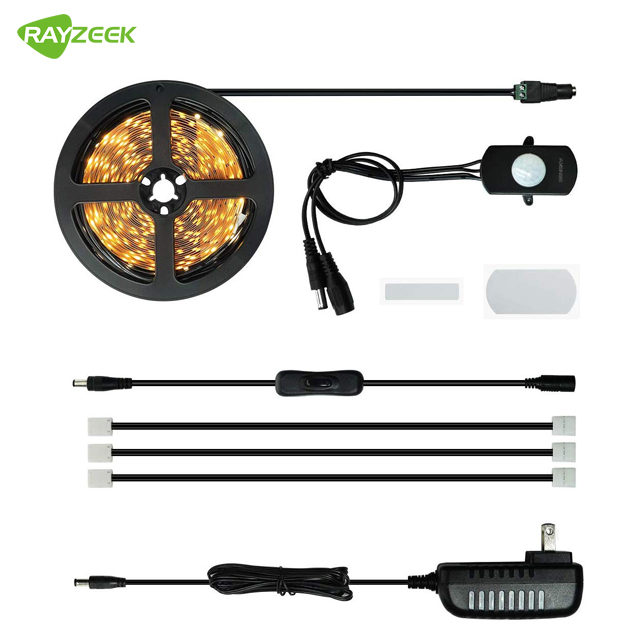
Inline dimmers are also called plug-in dimmers that can be connected inline with your low voltage DC lighting, such as light strips or cabient night lights.
Motion Sensor Switch(Occupancy Switch)
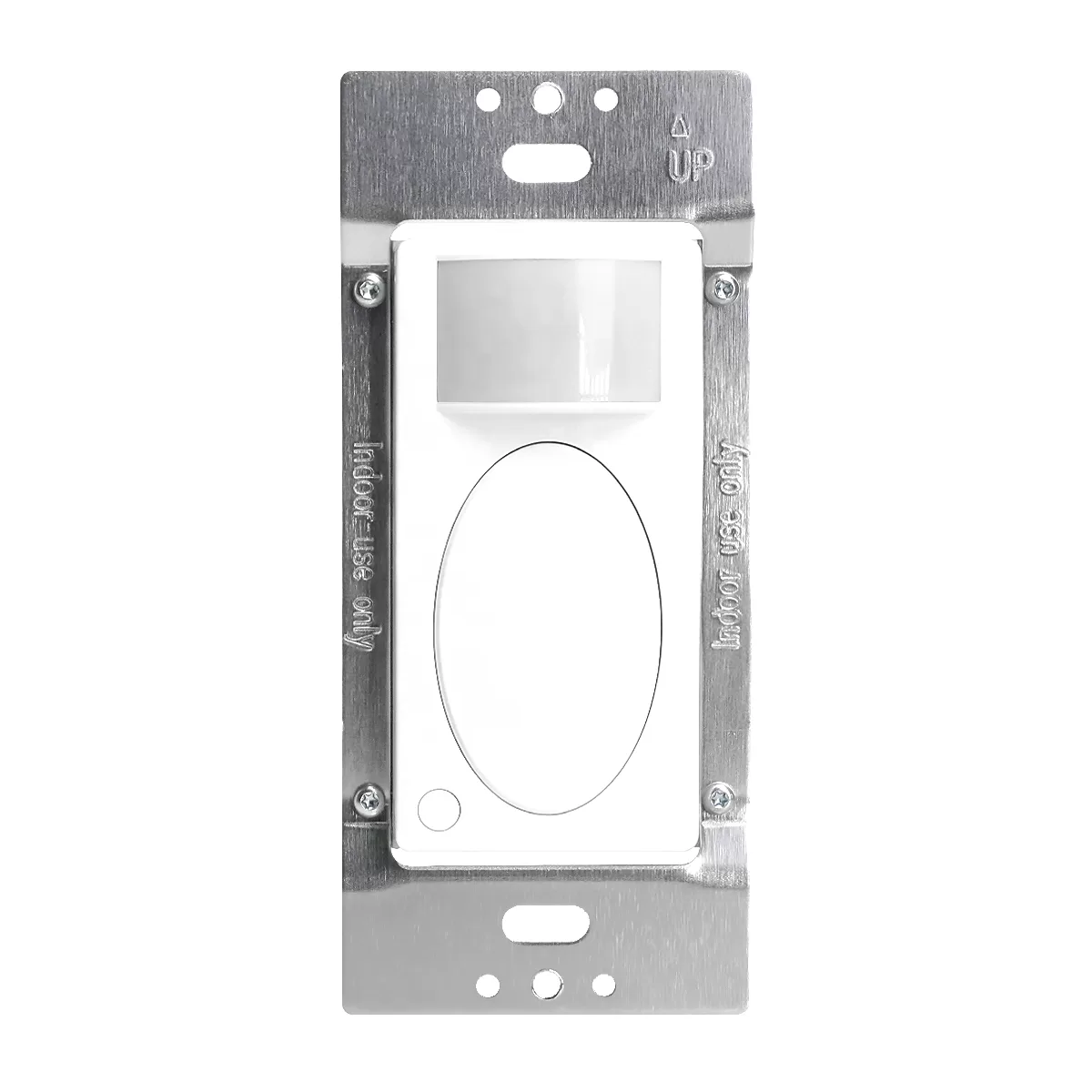
An occupancy switch, or interruptor de luz con sensor de movimiento, uses a motion sensor that detects when someone enters a room and turns on the light. The light will remain on for a set amount of time. As long as the sensor detects no further movement, it will turn the light off to save electricity.
Quizás le interese

- Tensión: 2 pilas AAA
- Modo Día/Noche
- Temporización: 15 min, 30 min, 1 h (por defecto), 2 h

- Sensor de presencia PIR para montaje en techo con salida de relé de contacto seco
- Alimentación de baja tensión de 12/24VDC o 12/24VAC
- Contactos de relé aislados COM, NO y NC para entradas de EMS, HVAC y control de edificios

- Interruptor con sensor de movimiento por microondas empotrable en techo de baja tensión DC
- Entrada de 12 VDC / 24 VDC con rango de 10-30 VDC
- Corriente de funcionamiento máxima de 10A con retardo de tiempo, umbral de Lux y sensibilidad ajustables
- Interruptor con sensor de movimiento por microondas empotrable en techo para cargas más elevadas
- Entrada de tensión de red de 100-265 VAC, modelo de 10A
- Detección por microondas de 5,8 GHz con temporizador, umbral Lux y sensibilidad ajustables
- Interruptor con sensor de movimiento por microondas empotrable para techo
- Entrada de tensión de red de 100-265 VAC, modelo de 5A
- Detección por microondas de 5,8 GHz con temporizador, umbral Lux y sensibilidad ajustables
- Regulador con sensor de presencia PIR RZ037 de techo para alimentación de 220V
- Corriente de funcionamiento máxima de 3A con carga nominal de 660W
- El botón LUX controla el encendido/apagado del sensor de luz y la regulación de brillo ajustada por el usuario
- Regulador con sensor de presencia PIR RZ037 de techo para alimentación de 110V
- Corriente de funcionamiento máxima de 3A con carga nominal de 330W
- El botón LUX controla el encendido/apagado del sensor de luz y la regulación de brillo ajustada por el usuario

- Interruptor con sensor de movimiento por microondas de techo para CC de bajo voltaje
- Entrada de 12 VDC / 24 VDC con rango de 10-30 VDC
- Corriente de funcionamiento máxima de 10A con retardo de tiempo, umbral de Lux y sensibilidad ajustables
- Interruptor con sensor de movimiento por microondas de techo para mayor carga
- Entrada de tensión de red de 100-265 VAC, modelo de 10A
- Detección por microondas de 5,8 GHz con temporizador, umbral Lux y sensibilidad ajustables
- Interruptor con sensor de movimiento por microondas de techo
- Entrada de tensión de red de 100-265 VAC, modelo de 5A
- Detección por microondas de 5,8 GHz con temporizador, umbral Lux y sensibilidad ajustables

- Interruptor con sensor de movimiento PIR para montaje empotrable en techo de CC de bajo voltaje
- Entrada de 12 VDC / 24 VDC con rango de 10-30 VDC
- Corriente máxima de trabajo de 10 A con tiempo de retardo, umbral de luxes y sensibilidad ajustables

- Interruptor con sensor de movimiento PIR empotrable en techo para mayor carga
- Entrada de tensión de red de 100-265 VAC, modelo de 10A
- Detección de 360 grados con tiempo de retardo, umbral de luxes y sensibilidad ajustables
- Interruptor con sensor de movimiento PIR empotrable en techo
- Entrada de tensión de red de 100-265 VAC, modelo de 5A
- Detección de 360 grados con tiempo de retardo, umbral de luxes y sensibilidad ajustables

- Kit de emisor inalámbrico y receptor para el control de iluminación de encendido/apagado en interiores
- Receptor de 100-230 V CA, 50/60 Hz con corriente nominal de 5 A
- Interruptor inalámbrico alimentado por CR2032 con comunicación de 2,4 GHz
- Presencia (encendido automático/apagado automático)
- 12–24 V CC (10–30 V CC), hasta 10 A
- Cobertura de 360°, 8–12 m de diámetro
- Tiempo de retardo de 15 s a 30 min
- Sensor de luz Desactivado/15/25/35 Lux
- Sensibilidad alta/baja
- Modo de presencia con encendido/apagado automático
- 100–265V CA, 10A (requiere neutro)
- Cobertura de 360°; diámetro de detección de 8–12 m
- Temporización: 15 s–30 min; Lux OFF/15/25/35; Sensibilidad Alta/Baja
- Modo de presencia con encendido/apagado automático
- 100–265V CA, 5A (requiere neutro)
- Cobertura de 360°; diámetro de detección de 8–12 m
- Temporización: 15 s–30 min; Lux OFF/15/25/35; Sensibilidad Alta/Baja
The motion sensor switches usually have two working modes: occupancy mode and vacancy mode. As occupancy mode is the most commonly used mode that automatically controls the lights ON and OFF for users, thus motion sensor switch is referred to as an occupancy switch as well. Vacancy mode requires users to manually turn on the light by pressing the switch. It’s not as convenient as hands-free occupancy mode and is less commonly used in households.
Additionally, most motion sensor switches also have a light sensor for daylight detection, so they won’t turn on based on motion during the day when you don’t need additional lighting. In addition, they can be used in a bathroom to control both light and fans, so you don’t have to worry about remembering to turn the fan on and off.
Inspírese con los portafolios de sensores de movimiento Rayzeek.
¿No encuentra lo que busca? No se preocupe. Siempre existen formas alternativas de resolver sus problemas. Quizá alguno de nuestros portafolios pueda ayudarle.
Smart Switch
Smart switch refers to a new style of wall switch with internal circuitry that allows lamps or appliances to be controlled by one of many non-traditional methods, such as a voice assistant (like Alexa) or an Internet or smartphone app. For example, many modern smart switches allow you to control lights and turn them on or off with a smartphone app that can be downloaded from anywhere with an Internet connection. They can also be programmed to automatically turn lights or appliances of your choice on or off.
Although smart switches are typically installed in the same location as a standard wall switch, most require a neutral wire connection to draw a small amount of current flow required for operation. Therefore, you will likely need a circuit upgrade to use these switches. There are a collection of smart switches that use ground wire instead of neutral wire for electricity. If you are incapable of upgrading the circuit, choose the ground wire required switch instead.
Other smart switches do not require a neutral network and connect to the Internet wirelessly through a hub. Be sure to purchase a smart switch that is compatible with your hub or voice automation system, as well as the lights you need to control.
How to Choose a Light Switch
The choice of the appropriate wall light switch depends on whether the luminaire or fixture is controlled within the electrical circuit, the type of circuit being controlled, and the degree of automation or remote operation required.
All standard 120-volt household circuits are compatible with single-pole switches, three-way switches, and four-way switches. And it all depends on whether you want to control a fixture from one, two, three, or more locations on the wall.
Double-pole switches are special devices that are only used when it is necessary to control 240-volt circuits that supply electricity to large appliances. When you need the convenience of automating the operation of the switch or appliance or controlling it remotely via the Internet, a smart switch can be used.







