What is ELV Dimming
ELV Dimming (Electronic Low Voltage Dimming) is a dimming technology utilized in the lighting industry for light fixtures that employ electronic transformers. Unlike traditional or multi-location dimmers that adjust voltage levels using rheostats, ELV dimmers employ pulse-width modulation (PWM) to precisely control the power delivered to the light fixture, resulting in a smoother and more accurate dimming experience.
ELV dimming operates by turning off the electrical load at the trailing edge or end of the AC waveform. Also known as electronic or trailing edge dimmers, these dimmers control the power to the load by manipulating the ratio of on/off time, known as the “duty cycle,” in conjunction with the voltage related to the load. This level of control allows for precise adjustment of the luminosity of LED lights.
Lassen Sie sich von den Rayzeek Bewegungssensor-Portfolios inspirieren.
Nicht das Richtige gefunden? Keine Sorge. Es gibt immer alternative Wege, Ihre Anforderungen zu erfüllen. Vielleicht kann eines unserer Portfolios helfen.
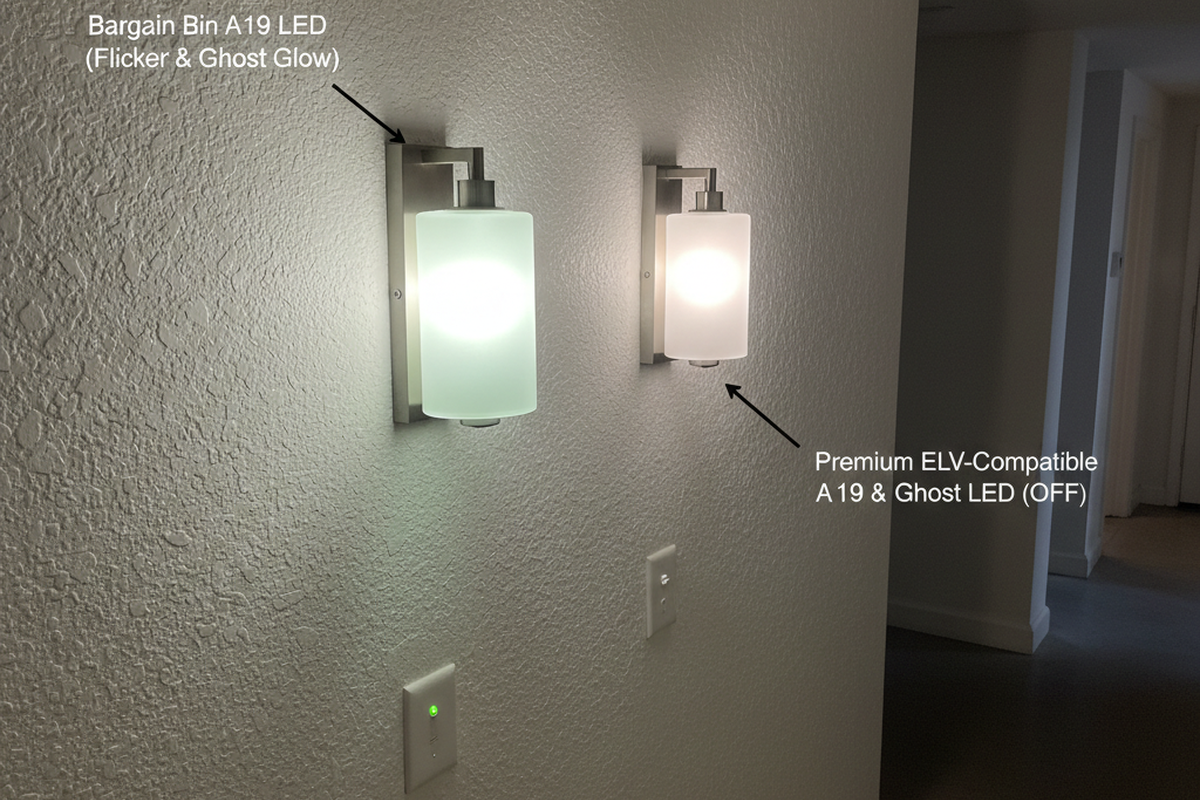
ELV dimming offers several advantages, including compatibility with both resistive and capacitive loads, making it suitable for LED technology. LED drivers often require dimmers capable of effectively regulating the power supplied to the LEDs, and ELV dimmers have a proven track record of enhancing energy conservation while delivering functional and sustainable lighting. Furthermore, ELV dimming prevents excessive voltage influx, mitigating the risk of sudden current surges. Additionally, these dimmers eliminate the buzzing sound commonly associated with dimming, making them aesthetically preferable.
Suchen Sie nach bewegungsgesteuerten Energiesparlösungen?
Kontaktieren Sie uns für komplette PIR-Bewegungssensoren, bewegungsgesteuerte Energiesparprodukte, Bewegungsmelderschalter sowie gewerbliche Präsenz-/Präsenzabwesenheitslösungen.
When selecting an LED lighting system, it is crucial to consider the required dimming technology. ELV dimming ensures optimal energy efficiency and prevents unnecessary expenditure. While not all LED applications necessitate dimming, the ability to adjust light output proves advantageous in many scenarios. To ensure quality and compatibility, it is advisable to procure LEDs and associated electrical accessories from reputable suppliers with expertise in electricity. Investing in the appropriate dimming technology can significantly enhance the performance and lifespan of LED lighting systems.
Häufig gestellte Fragen
Do I Need a Low Voltage Dimmer
If you have low voltage lights that run on a reduced supply of either 12V or 24V, you will require a dimmer that is compatible with the same voltage. However, for line voltage systems that run on the standard voltage supply of 120V, a basic dimmer can be used.
What Is the Difference Between a Dimmer and a ELV Dimmer
An ELV dimmer is specifically designed to dim the electronic power supply of a low voltage halogen light. Unlike a regular dimmer, an ELV dimmer cuts the trailing edge of the power wave in order to reduce hum. Therefore, ELV, Trailing Edge, and Reverse Phase all refer to the same functionality.
Benötigen LED-Lampen einen ELV-Dimmer
Während die Mehrheit der integrierten LEDs die Verwendung eines ELV-Dimmers erfordert, gibt es bestimmte europäische Marken, die das 0-10-Volt-System nutzen.
Wie viele LED-Leuchten können an einen Dimmerschalter angeschlossen werden?
Varilight empfiehlt, maximal 10 LED-Lampen an ein Dimmermodul anzuschließen. Wenn Sie jedoch eine 3-fach-Dimmerplatte verwenden, können Sie insgesamt dreißig LED-Lampen an der Platte betreiben, wobei jeweils zehn Lampen mit einem Modul verbunden sind.
Was passiert, wenn Sie einen Dimmerschalter für LED-Leuchten verwenden?
Sobald Sie einen speziell für LED-Leuchten entwickelten Dimmerschalter installieren, verbessern Sie Ihr Beleuchtungserlebnis. Dieser moderne Dimmerschalter ist darauf ausgelegt, den Stromfluss zu den LED-Leuchtmitteln effizient zu steuern, sodass Sie die Helligkeitsstufen mühelos anpassen und die gewünschte Atmosphäre in Ihrem Raum schaffen können.
What Happens if You Put a Regular Bulb in a Dimmer Switch
Yes, it is important to note that using regular light bulbs with dimmer switches is not recommended. If you do so, the performance of the light will be affected. Initially, it may seem fine, but over time, you will begin to notice a difference in the light intensity.
Why Do LED Bulbs Require a Special Dimmer Switch
Because LED bulbs have a lower wattage compared to incandescent bulbs, they may not work properly with older dimmer switches that are designed for higher wattage bulbs.
Welcher Dimmertyp benötigt ein dimmbares Vorschaltgerät
Für Leuchtstofflampen ist ein dimmbares Vorschaltgerät erforderlich. Lutron, ein Unternehmen, das vor drei Jahrzehnten das erste elektronische dimmbare Vorschaltgerät einführte, bietet heute eine breite Palette an Vorschaltgeräten und Steuerungen für die Leuchtstoffdimmung an, um ihre umfassenden Dimm-Systeme für Leuchtstoffröhren zu unterstützen.
What Is the Best Method of Dimming LED Lights
Phase-cut dimming, also referred to as triac dimming, is widely considered the most effective technique for dimming LED lights. By selectively removing a portion of the AC waveform, the power delivered to the LED is reduced, resulting in the desired dimming effect. Originally designed for incandescent bulbs, this method has been modified and successfully applied to LED lights.
Was ist die Hauptursache für Probleme beim Dimmen von LED-Lampen
Probleme beim Dimmen von LED-Lampen treten in der Regel aufgrund mangelnder Synchronisation zwischen den LED-Lampen und den Steuerungen oder Dimmerschaltern auf. Um LED-Lampen erfolgreich zu dimmen, ist es entscheidend, eine geeignete Abstimmung zwischen Lampe und Steuerung sicherzustellen.