
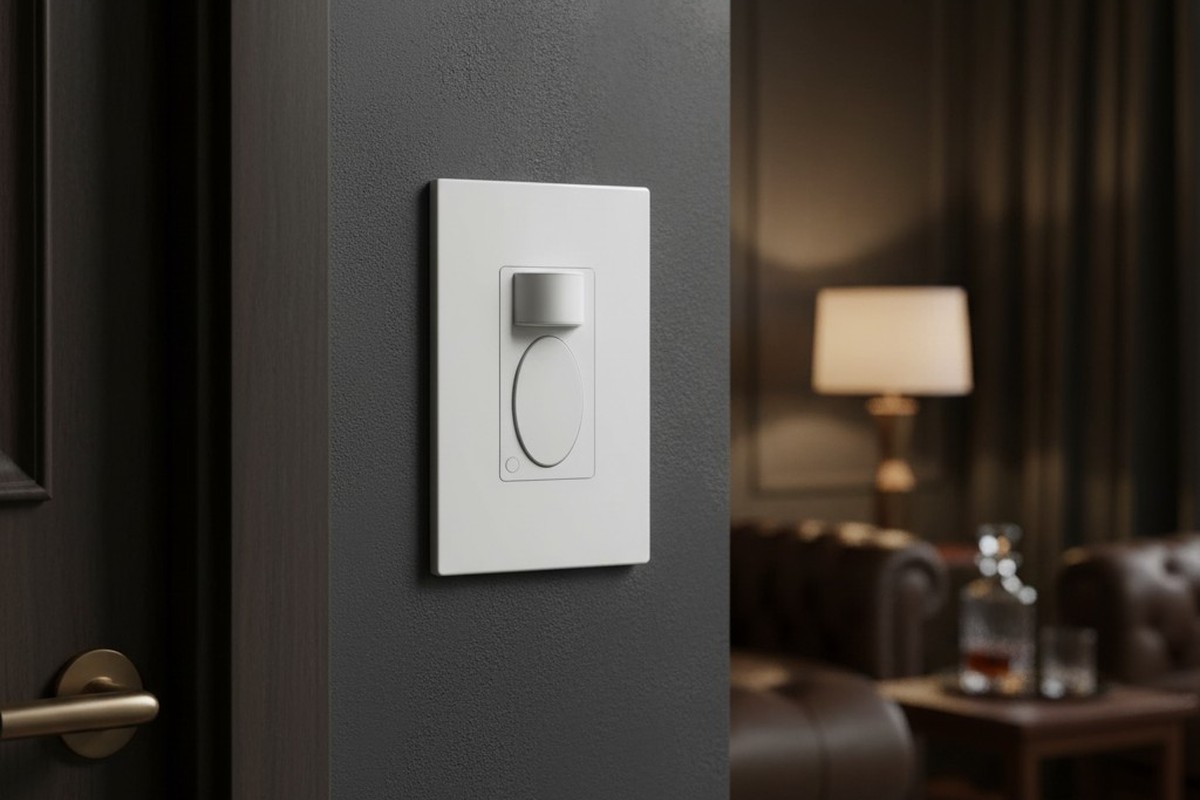
The failure of most smoking lounges—from high-stakes casino rooms to converted suburban basements—is rarely detected while the cigar is lit. It hits you the next morning. You walk in at 9:00 AM, twelve hours after the last occupant left, and catch the heavy, stale scent of cold tobacco settled into the upholstery. You look up at the ceiling and see a premium exhaust fan, perhaps a commercial-grade Panasonic or Fantech unit moving 400 cubic feet of air per minute. The ductwork is clear. The filter is clean. The equipment is expensive and code-compliant, yet the room smells like a wet ashtray.

The problem is almost never the fan. It’s the clock. In nearly every case where a smoking room fails the “morning after” test, the ventilation system was turned off too early. The occupant left, flipped the switch (or the motion sensor timed out), and the fan spun down five minutes later. This is a fundamental misunderstanding of fluid dynamics. Smoke isn’t a gas that vanishes the moment the source is extinguished. It is a suspension of heavy particulates. If you cut the airflow while those particulates are still suspended, gravity takes over. The cloud stops moving toward the exhaust vent and settles onto the felt tables, the drapes, and the carpet. Once it lands, no amount of ventilation will lift it back up. It’s too late.
The Physics of Dead Air
Standard bathroom logic fails in a smoking room because of how particulate matter (PM2.5 and larger) behaves. When a cigar is active, the cherry’s heat drives the smoke upward. The exhaust fan creates negative pressure, pulling that thermal plume out of the room. This works efficiently while the smoker is present. But the moment the smoker extinguishes the cigar and leaves, that thermal drive dies. The remaining smoke begins to cool. As it cools, it becomes heavier and “stickier.”
관심 있는 다른 제품

- 전압: AAA 배터리 2개
- 주간/야간 모드
- 시간 지연: 15분, 30분, 1시간(기본값), 2시간

- 무전압 접점 리레이 출력을 갖춘 천장 설치형 PIR 재실 감지 센서
- 12/24VDC 또는 12/24VAC 저전압 전원 공급
- EMS, HVAC 및 빌딩 제어 입력을 위한 COM, NO 및 NC 절연 리레이 접점

- 저전압 DC 매립형 천장 설치형 마이크로웨이브 모션 센서 스위치
- 10-30 VDC 범위를 지원하는 12 VDC / 24 VDC 입력
- 조절 가능한 지연 시간, Lux 임계값 및 감도 기능을 갖춘 최대 10A 동작 전류
- 고부하용 매립형 천장 설치형 마이크로웨이브 모션 센서 스위치
- 100-265 VAC 라인 전압 입력, 10A 모델
- 조절 가능한 지연 시간, Lux 임계값 및 감도를 갖춘 5.8 GHz 마이크로웨이브 감지
- 천장 매립형 마이크로웨이브 동작 감지 센서 스위치
- 100-265 VAC 라인 전압 입력, 5A 모델
- 조절 가능한 지연 시간, Lux 임계값 및 감도를 갖춘 5.8 GHz 마이크로웨이브 감지
- 220V 전원용 천장 부착형 RZ037 PIR 재실 감지 센서 디머
- 660W 정격 부하 및 최대 동작 전류 3A
- LUX 버튼으로 조도 센서 ON/OFF 및 사용자 설정 디밍 밝기 제어
- 110V 전원용 천장 부착형 RZ037 PIR 재실 감지 디머 스위치
- 330W 정격 부하 및 최대 동작 전류 3A
- LUX 버튼으로 조도 센서 ON/OFF 및 사용자 설정 디밍 밝기 제어

- 저전압 DC 천장 부착형 마이크로웨이브 동작 감지 센서 스위치
- 10-30 VDC 범위를 지원하는 12 VDC / 24 VDC 입력
- 조절 가능한 지연 시간, Lux 임계값 및 감도 기능을 갖춘 최대 10A 동작 전류
- 고부하용 천장 부착형 마이크로웨이브 동작 감지 센서 스위치
- 100-265 VAC 라인 전압 입력, 10A 모델
- 조절 가능한 지연 시간, Lux 임계값 및 감도를 갖춘 5.8 GHz 마이크로웨이브 감지
- 천장 부착형 마이크로웨이브 동작 감지 센서 스위치
- 100-265 VAC 라인 전압 입력, 5A 모델
- 조절 가능한 지연 시간, Lux 임계값 및 감도를 갖춘 5.8 GHz 마이크로웨이브 감지

- 저전압 DC 매립형 천장 PIR 동작 감지 센서 스위치
- 10-30 VDC 범위를 지원하는 12 VDC / 24 VDC 입력
- 시간 지연, 조도 임계값, 감도 조절이 가능한 최대 동작 전류 10A 제품

- 고부하용 매립형 천장 PIR 동작 감지 센서 스위치
- 100-265 VAC 라인 전압 입력, 10A 모델
- 시간 지연, 조도 임계값, 감도 조절이 가능한 360도 감지
- 매립형 천장 PIR 동작 감지 센서 스위치
- 100-265 VAC 라인 전압 입력, 5A 모델
- 시간 지연, 조도 임계값, 감도 조절이 가능한 360도 감지

- 실내 ON/OFF 조명 제어용 무선 스위치 및 수신기 키트
- 정격 전류 5A의 100-230VAC, 50/60Hz 수신기
- 2.4GHz 통신 방식의 CR2032 배터리 구동 무선 스위치
- 재실 모드(자동 ON/자동 OFF)
- 12–24V DC (10–30VDC), 최대 10A
- 360° 감지 범주, 직경 8–12m
- 시간 지연 15초–30분
- 조도 센서 Off/15/25/35 Lux
- 높음/낮음 감도
- 자동 ON/자동 OFF 재실 모드
- 100–265V AC, 10A (중성선 필요)
- 360° 감지 범위; 감지 직경 8–12m
- 시간 지연 15초–30분; 조도 OFF/15/25/35; 감도 높음/낮음
- 자동 ON/자동 OFF 재실 모드
- 100–265V AC, 5A (중성선 필요)
- 360° 감지 범위; 감지 직경 8–12m
- 시간 지연 15초–30분; 조도 OFF/15/25/35; 감도 높음/낮음
ASHRAE standards and common ventilation practices focus on air changes per hour (ACH), but for smoke, the critical metric is the “Purge Cycle.” This is how long the fan must run after the source is removed to fully scrub the room volume. In a standard 12×12 room with 9-foot ceilings, swapping the air completely takes time. If you turn the fan off five minutes after the door closes, you’ve likely left 20-30% of the smoke volume behind. That remaining smoke settles within twenty minutes. To prevent this, the fan must run for a minimum of 15 minutes for light vaping and up to 30 minutes for heavy cigar smoke. The air must keep moving until the room is scrubbed clean. If the air stops, the cleaning stops, and the staining begins.
Why Standard Sensors Are Useless for Smoke
The market is flooded with “smart” switches designed for energy efficiency, and almost all of them are actively hostile to a smoking room. The most common culprit is the standard Passive Infrared (PIR) occupancy sensor—the kind found in office breakrooms or residential bathrooms like the Lutron Maestro series. These sensors detect major motion: walking, waving arms, entering a room. They are terrible at detecting a person sitting in a leather chair holding a cigar.
Smokers and vapers are sedentary. They sit still. A standard occupancy sensor will often decide the room is empty because the occupant hasn’t waved their arms in ten minutes. The lights go out, the fan cuts off, and the room sits full of smoke. You can wave your arms to turn it back on, but the user experience is already broken. Even worse are “Vacancy” modes that require a manual turn-on but auto-off after a short delay. If that delay is capped at 5 or 10 minutes—standard for bathroom codes—it is useless for a purge cycle.
For the vape crowd, there is a persistent myth that a humidity sensor is the solution. The logic seems sound: vape clouds look like steam, and humidity sensors (like the Leviton IPHS5) catch steam. This is a mistake. Vape aerosol is composed of vegetable glycerin (VG) and propylene glycol (PG), not water vapor. A humidity sensor measures water content. It will often stare right at a thick cloud of strawberry-scented vape and read “0% change in humidity,” failing to trigger the fan at all. Alternatively, it might trigger erratically based on ambient weather. Relying on moisture detection for particulate exhaust is a category error that leads to sticky walls and lingering sweetness.
The Hardware Solution: Manual-ON, Auto-OFF
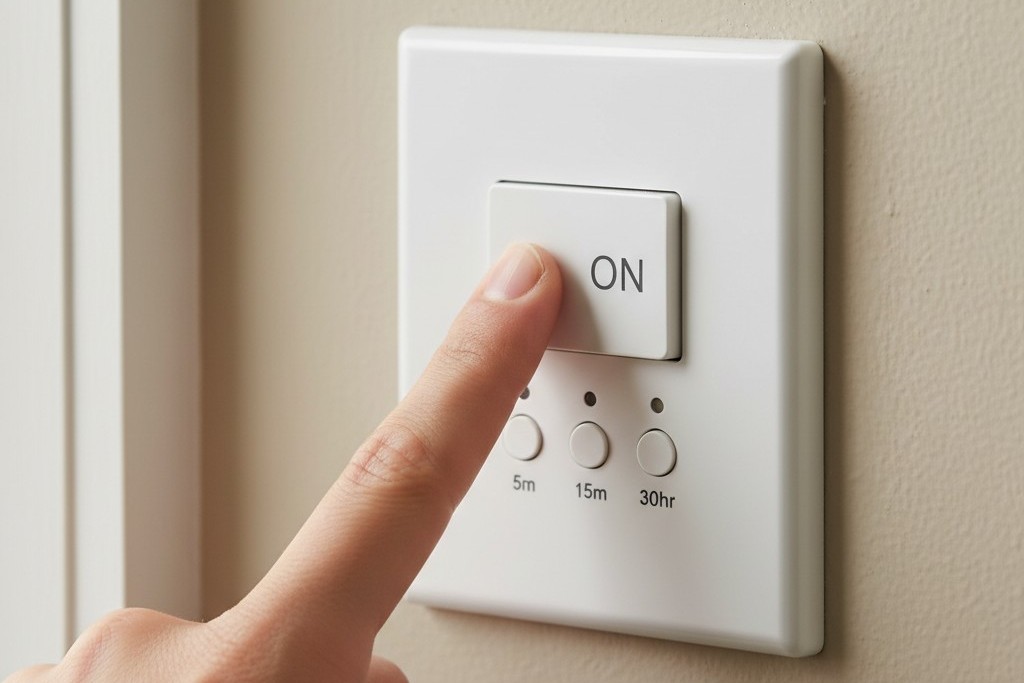
The only control logic that reliably clears a smoking room removes human error and sensor blindness from the equation. The system must be Manual-ON, Auto-OFF, with a hard-coded delay exceeding 20 minutes. You want the user to hit the button when they enter (or tie it to the light switch), but you do not want the user—or a motion sensor—deciding when it turns off. The shut-off must be governed by a timer that assumes the air is dirty for a full half-hour after the room is vacated.
The specific tool for this job is often a countdown timer with programmable dip switches, such as the Rayzeek RZ021 or similar dedicated countdown units. Unlike digital “10-20-30-60” minute buttons, which look cheap and can be set incorrectly by the user, these units hide the logic behind the faceplate. You pop the cover, set the dip switches to a fixed 30-minute delay, and close it up. When the user hits the switch, the fan runs. When they leave and hit the switch again (or if they forget), the fan enters its countdown cycle. It doesn’t stop immediately. It runs for the full 30 minutes, scrubbing the air long after the door is locked.
Tech-savvy users might be tempted to over-complicate this with smart home routines. You might think, “I’ll just set a routine in Home Assistant or Alexa to run the fan for 30 minutes after the lights go off.” While possible, this introduces fragility. Wi-Fi drops. Hubs update and reboot. Latency happens. In a smoking lounge, if the internet goes down, your upholstery gets ruined. A hardwired switch like the Rayzeek has no firmware to update and no connection to lose. It costs twenty-five dollars and works every single time. Peace of mind comes from the hardware, not the cloud.
동작 감지 기반의 에너지 절감 솔루션을 찾고 계십니까?
PIR 동작 감지 센서, 동작 감지 에너지 절감 제품, 동작 감지 센서 스위치, 상업용 점유/부재(Occupancy/Vacancy) 감지 솔루션에 대해 문의해 주시기 바랍니다.
Installation Realities
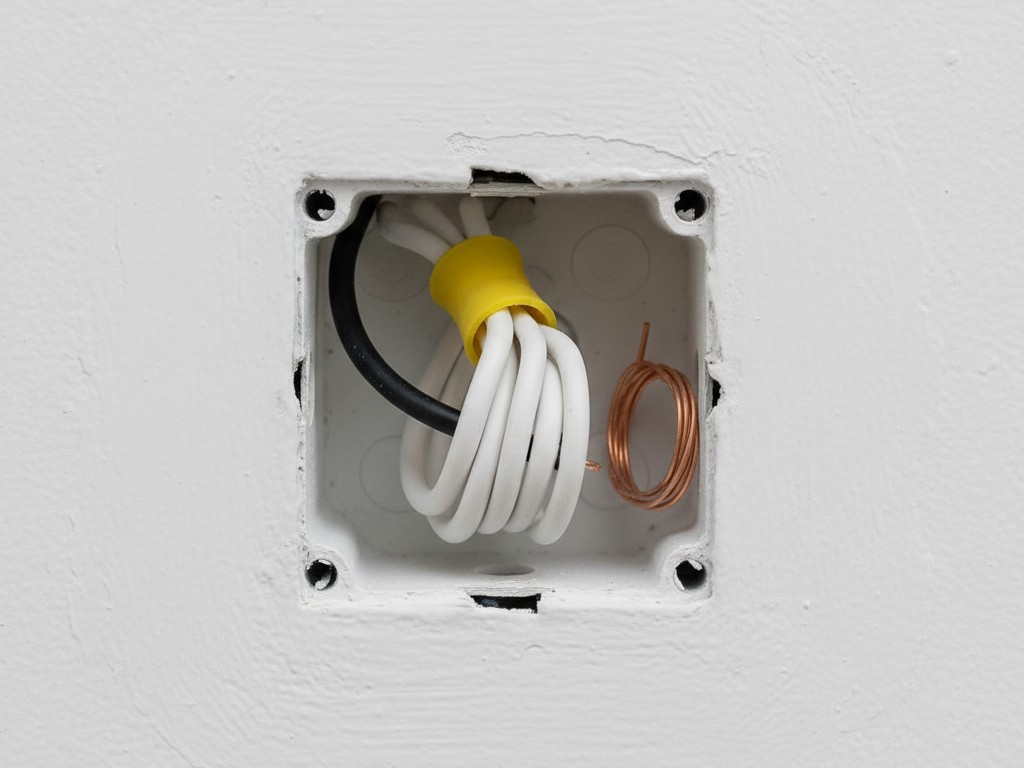
Before ordering a timer switch, verify the wiring in the wall box. This is the most common stumbling block for retrofits. Most advanced timer switches, including those capable of a 30-minute hold, require a Neutral Wire (usually a bundle of white wires capped off in the back of the box). Standard mechanical toggle switches don’t use a neutral. If you open a switch box in a house built before the mid-80s, or even some newer commercial builds with efficient conduits, you might only find a Line and a Load. Without a neutral wire to power the timer’s internal clock, these switches won’t function. You cannot “cheat” the ground wire. If the neutral isn’t there, you’re looking at pulling new wire or hiring a sparky.
Finally, you will hear arguments about energy loss. A facility manager or a frugal homeowner might argue that running a 400 CFM fan for 30 minutes after the room is empty wastes conditioned air. They worry about sucking heat out of the house in winter or AC in summer. This is a valid calculation for a bathroom, but it’s the wrong math for a smoking room. The cost of reheating the air displaced by a 30-minute purge cycle is measured in pennies. The cost of professionally steam-cleaning nicotine and smoke residue out of carpets, drapes, and furniture is measured in thousands of dollars. You aren’t wasting energy. You’re paying a small premium to protect the asset.







