
The standard approach to residential lighting is fundamentally broken, and nowhere is this more apparent than at 3:00 AM. When a homeowner enters a kitchen for a glass of water and flips the wall switch, they are blasting their retinas with 3,000 lumens of overhead glare. This isn’t just uncomfortable; it is a biological error.
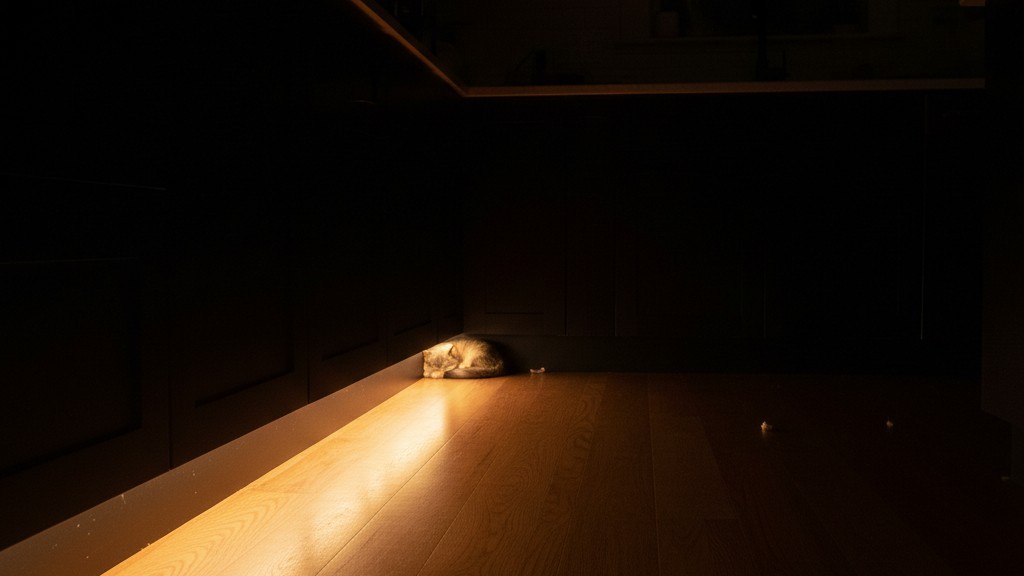
The sudden spike in brightness suppresses melatonin and triggers a cortisol response, effectively telling the body it is noon. The heart rate elevates. The sleep cycle fractures. The problem isn’t that the room is dark. The problem is that “Big Light”—that grid of six-inch wafer cans in the ceiling—is a blunt instrument used for a delicate task.
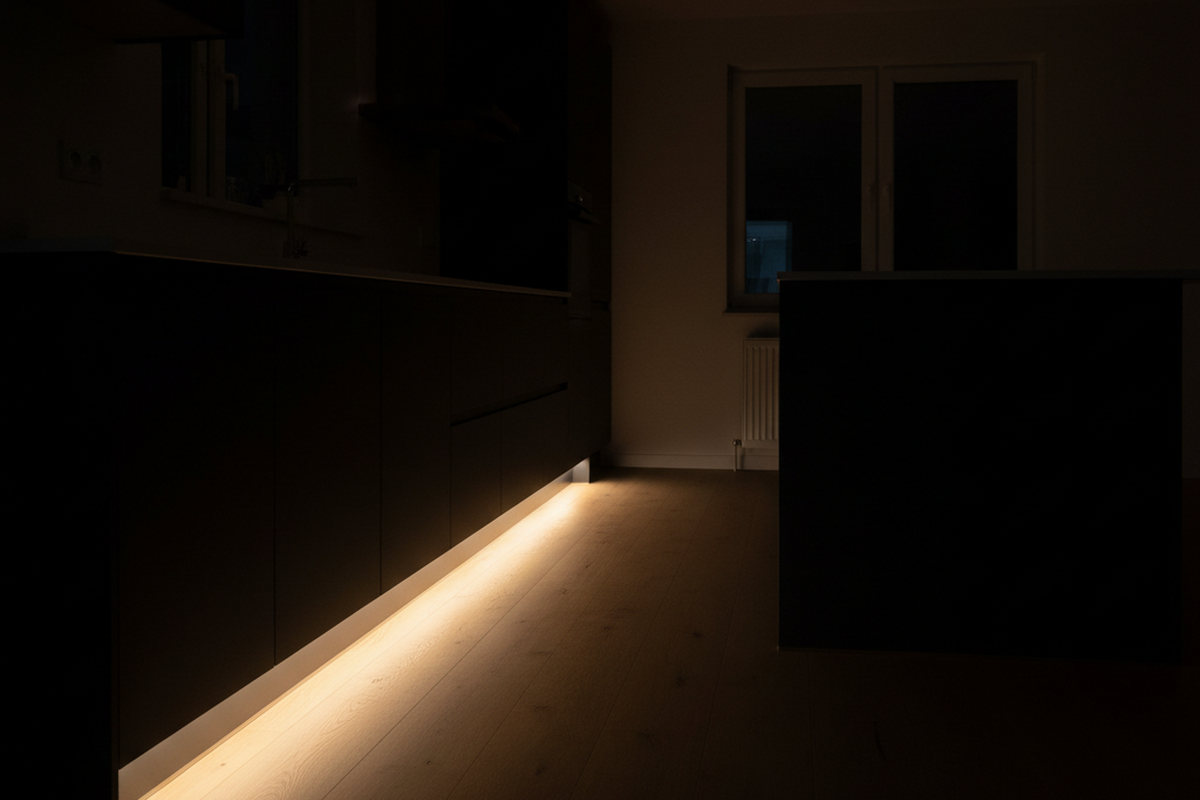
You don’t need full illumination here. You need navigation. The goal is to define the boundaries of the room and the path of travel without engaging the brain’s alertness systems. You do this by dropping the light source below the waist. Toe-kick lighting—LED strips mounted in the recess under base cabinets—creates a soft wash across the floor. It highlights obstacles (the island, the dog bowl, the stray Lego) while leaving the upper volume of the room in shadow.
But the light itself is only half the system. The control mechanism is where most installations fail. If you have to fumble for a switch in the dark, the design has already lost. The system must be autonomous.
The Hardwired Imperative
There is a temptation in the current market to solve this problem with toys. A quick search yields endless results for battery-powered, stick-on motion strips. These devices are landfill in waiting. The adhesive fails after six months of humidity changes, leaving the strip dangling like a dead snake. More critically, they rely on batteries that require a “recharging chore.” Human nature dictates that if a stair light needs to be plugged into a USB charger every three weeks, eventually it will just stay dead. A safety feature that requires maintenance is not a safety feature.
Reliability in electrical infrastructure comes from copper, not lithium-ion. The standard for permanent night-path lighting is a hardwired motion sensor switch, such as the Rayzeek RZ series, controlling a low-voltage driver hidden in the cabinetry or basement. This is “set and forget” architecture. The switch replaces a standard single-pole wall switch, stealing power from the line voltage to run its internal sensor and the LED load. It does not need a firmware update. It does not disconnect when the router reboots. It simply closes the circuit when a thermal signature moves across its field of view.
동작 감지 기반의 에너지 절감 솔루션을 찾고 계십니까?
PIR 동작 감지 센서, 동작 감지 에너지 절감 제품, 동작 감지 센서 스위치, 상업용 점유/부재(Occupancy/Vacancy) 감지 솔루션에 대해 문의해 주시기 바랍니다.
Tuning the Sensor: The Difference Between Magic and a Nuisance
The heart of the system is the Passive Infrared (PIR) sensor. This component does not “see” in the photographic sense; it detects the differential in heat energy between a human body and the background ambient temperature. When that heat signature crosses the Fresnel lens segments on the switch face, the circuit triggers. However, an untuned sensor is a pest. It triggers when you walk past the hallway door but have no intention of entering the kitchen. It triggers for the cat. It triggers for the HVAC vent blowing warm air.
Professional installation requires a physical intervention on the sensor lens itself. The Rayzeek RZ-021, for instance, has a 180-degree field of view. In a narrow galley kitchen, this is fine. In an open-concept floor plan, it is too aggressive. Forget the app settings. You solve this with a fifty-cent roll of white electrical tape. By masking the lateral edges of the lens, you narrow the detection zone to a specific “tripwire” at the cabinet edge.
For homeowners with pets, the “false positive” is the primary anxiety—nobody wants the kitchen glowing all night because a Golden Retriever is pacing. The fix is vertical masking. Applying a strip of tape over the bottom third of the sensor lens blinds it to movement below waist height. The sensor will ignore the dog but catch the human torso. This is the difference between a “smart home” device that annoys you and a piece of infrastructure that serves you.
Finally, you need to dial in the timeout. These switches offer Occupancy Mode (Auto-ON / Auto-OFF) and Vacancy Mode (Manual-ON / Auto-OFF). For a bedroom, Vacancy is superior—you don’t want lights blazing just because you rolled over in bed. But for a kitchen or hallway path, Occupancy with a short timeout—1 to 5 minutes—is the correct setting. The light should exist only as long as the human is present, and then vanish.
The Wiring Reality Check
Before purchasing any hardware, you must audit the existing electrical box. This is where DIY enthusiasm often hits the wall of National Electrical Code (NEC) reality. Most modern motion sensor switches, including the Rayzeek models, require a Neutral wire (usually a bundle of white wires tucked in the back of the box) to function. The sensor needs a tiny trickle of current to stay “awake” even when the lights are off. In homes built prior to the mid-80s, switch loops often lack this neutral conductor.
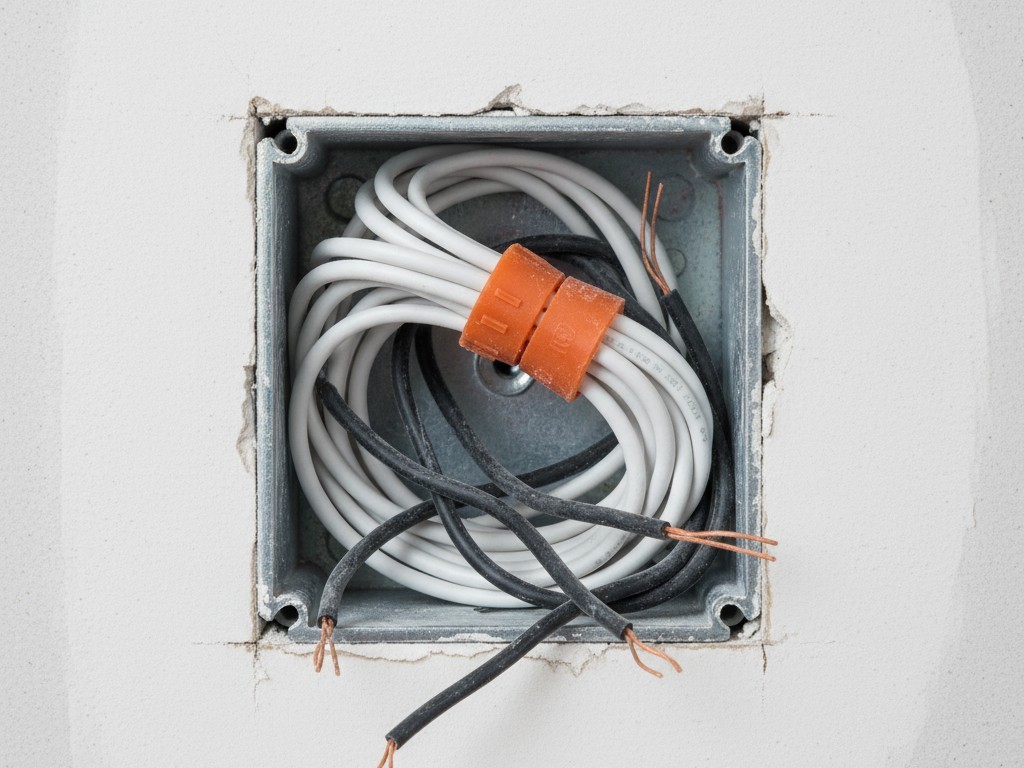
If the box contains only a black (hot) and a white (switch leg) wire, a standard neutral-required sensor will not work. There are workarounds—some specific models allow for a “ground wire” connection to trickle that current, provided the local Authority Having Jurisdiction (AHJ) allows it, as current on the ground wire is generally a code violation. If no neutral exists and the ground trick is prohibited, the only reliable path is a rewire or a specialized battery-assist switch, though the latter introduces the maintenance cycle we are trying to avoid.
관심 있는 다른 제품

- 전압: AAA 배터리 2개
- 주간/야간 모드
- 시간 지연: 15분, 30분, 1시간(기본값), 2시간

- 무전압 접점 리레이 출력을 갖춘 천장 설치형 PIR 재실 감지 센서
- 12/24VDC 또는 12/24VAC 저전압 전원 공급
- EMS, HVAC 및 빌딩 제어 입력을 위한 COM, NO 및 NC 절연 리레이 접점

- 저전압 DC 매립형 천장 설치형 마이크로웨이브 모션 센서 스위치
- 10-30 VDC 범위를 지원하는 12 VDC / 24 VDC 입력
- 조절 가능한 지연 시간, Lux 임계값 및 감도 기능을 갖춘 최대 10A 동작 전류
- 고부하용 매립형 천장 설치형 마이크로웨이브 모션 센서 스위치
- 100-265 VAC 라인 전압 입력, 10A 모델
- 조절 가능한 지연 시간, Lux 임계값 및 감도를 갖춘 5.8 GHz 마이크로웨이브 감지
- 천장 매립형 마이크로웨이브 동작 감지 센서 스위치
- 100-265 VAC 라인 전압 입력, 5A 모델
- 조절 가능한 지연 시간, Lux 임계값 및 감도를 갖춘 5.8 GHz 마이크로웨이브 감지
- 220V 전원용 천장 부착형 RZ037 PIR 재실 감지 센서 디머
- 660W 정격 부하 및 최대 동작 전류 3A
- LUX 버튼으로 조도 센서 ON/OFF 및 사용자 설정 디밍 밝기 제어
- 110V 전원용 천장 부착형 RZ037 PIR 재실 감지 디머 스위치
- 330W 정격 부하 및 최대 동작 전류 3A
- LUX 버튼으로 조도 센서 ON/OFF 및 사용자 설정 디밍 밝기 제어

- 저전압 DC 천장 부착형 마이크로웨이브 동작 감지 센서 스위치
- 10-30 VDC 범위를 지원하는 12 VDC / 24 VDC 입력
- 조절 가능한 지연 시간, Lux 임계값 및 감도 기능을 갖춘 최대 10A 동작 전류
- 고부하용 천장 부착형 마이크로웨이브 동작 감지 센서 스위치
- 100-265 VAC 라인 전압 입력, 10A 모델
- 조절 가능한 지연 시간, Lux 임계값 및 감도를 갖춘 5.8 GHz 마이크로웨이브 감지
- 천장 부착형 마이크로웨이브 동작 감지 센서 스위치
- 100-265 VAC 라인 전압 입력, 5A 모델
- 조절 가능한 지연 시간, Lux 임계값 및 감도를 갖춘 5.8 GHz 마이크로웨이브 감지

- 저전압 DC 매립형 천장 PIR 동작 감지 센서 스위치
- 10-30 VDC 범위를 지원하는 12 VDC / 24 VDC 입력
- 시간 지연, 조도 임계값, 감도 조절이 가능한 최대 동작 전류 10A 제품

- 고부하용 매립형 천장 PIR 동작 감지 센서 스위치
- 100-265 VAC 라인 전압 입력, 10A 모델
- 시간 지연, 조도 임계값, 감도 조절이 가능한 360도 감지
- 매립형 천장 PIR 동작 감지 센서 스위치
- 100-265 VAC 라인 전압 입력, 5A 모델
- 시간 지연, 조도 임계값, 감도 조절이 가능한 360도 감지

- 실내 ON/OFF 조명 제어용 무선 스위치 및 수신기 키트
- 정격 전류 5A의 100-230VAC, 50/60Hz 수신기
- 2.4GHz 통신 방식의 CR2032 배터리 구동 무선 스위치
- 재실 모드(자동 ON/자동 OFF)
- 12–24V DC (10–30VDC), 최대 10A
- 360° 감지 범주, 직경 8–12m
- 시간 지연 15초–30분
- 조도 센서 Off/15/25/35 Lux
- 높음/낮음 감도
- 자동 ON/자동 OFF 재실 모드
- 100–265V AC, 10A (중성선 필요)
- 360° 감지 범위; 감지 직경 8–12m
- 시간 지연 15초–30분; 조도 OFF/15/25/35; 감도 높음/낮음
- 자동 ON/자동 OFF 재실 모드
- 100–265V AC, 5A (중성선 필요)
- 360° 감지 범위; 감지 직경 8–12m
- 시간 지연 15초–30분; 조도 OFF/15/25/35; 감도 높음/낮음
Furthermore, compatibility between the switch and the LED driver is non-negotiable. If the toe-kick LEDs are powered by a Magnetic Low Voltage (MLV) transformer, the Rayzeek switch must be rated for MLV loads. Using an Electronic Low Voltage (ELV) switch on a magnetic transformer will result in a buzzing driver, flickering lights, and eventual failure of the dimmer triac.
The Quality of Light
The light source itself—the LED strip hidden under the cabinet overhang—must be selected with physics in mind. The metric that matters here is Kelvin temperature. A “Daylight” 5000K strip in a toe-kick is an abomination; it looks like a hospital spill. The strip should be 2700K or warmer. This mimics the spectrum of incandescent filaments or firelight, which the human eye finds restful at night.
Using a high-density strip (more chips per foot) is preferable to avoid the “dotted line” reflection on polished floors. If the floor is highly reflective tile or stone, the strip must be mounted inside an aluminum channel with a milky diffuser lens. On matte hardwoods or slate, the bare strip adhered to the back of the cabinet face frame is usually sufficient, provided the angle of view is blocked.
Rayzeek 모션 센서 포트폴리오에서 영감을 얻어보세요.
원하시는 제품을 찾지 못하셨나요? 걱정하지 마세요. 문제를 해결할 수 있는 대체 방법은 언제나 존재합니다. 당사의 포트폴리오 중 하나가 도움이 될 수 있습니다.
The Invisible Result
When the system is installed correctly—hardwired, masked, warm, and diffused—it disappears. There is no app to open. There is no switch to touch. You simply walk into the room, and the floor glows just enough to find the water glass. You leave, and the room returns to darkness. It isn’t “smart” like a voice assistant harvesting data. It is smart like plumbing. It works because gravity and physics dictate it must. That is the only standard worth installing.







