
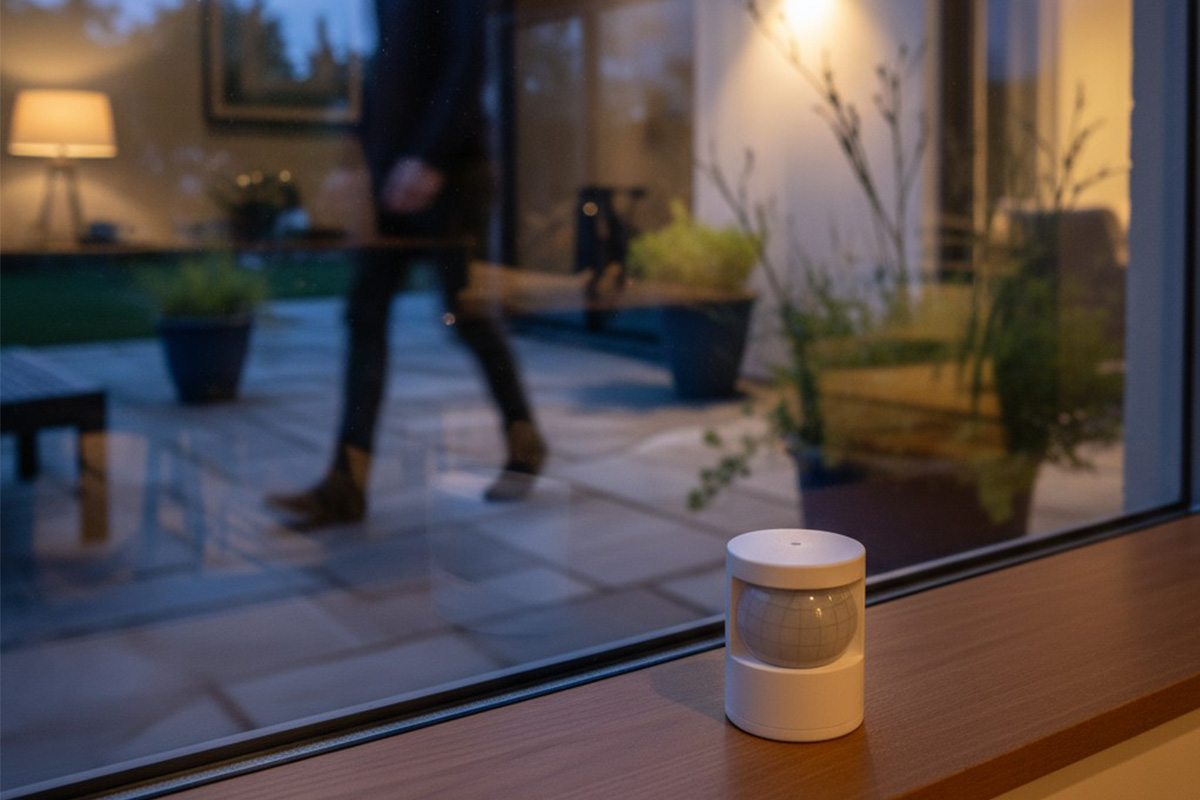
A tenant installs a motion sensor on an interior windowsill, aiming it at the patio to control the outdoor lights. It’s a perfect setup, yet nothing happens. Frustration mounts. The device gets labeled as defective and returned, only to be replaced by another model that fails in precisely the same way. The cycle repeats because the sensor isn’t the problem. The problem is the glass.
Most motion sensors detect people by reading their heat signatures, energy that radiates in the mid-infrared spectrum. While standard glass is transparent to the light we see, it’s almost completely opaque to the infrared wavelengths these sensors rely on. A sensor placed behind a window is effectively blind. It cannot see the heat through the barrier, no matter how sensitive it is or how perfectly it’s aimed. The logical assumption—if light gets through, heat should too—is fundamentally wrong.
This guide breaks down the physics behind the glass barrier, explores what happens when you try it anyway, and provides real solutions. We’ll cover proper exterior placement, alternative triggers for tricky situations, and why gimmick workarounds are a dead end.
The Physics: An Opaque Wall of Glass
Why can’t a motion sensor see through glass? The answer starts with what it’s actually looking for: heat. The term “motion sensor” is a bit of a misnomer for most residential devices. They don’t track movement like a camera; they detect sudden changes in infrared radiation.
How Sensors Read Heat
Every object warmer than absolute zero radiates energy. Human skin, at roughly 32° to 34°C, emits this energy in the mid-infrared range (8 to 14 micrometers). A passive infrared (PIR) sensor contains a pyroelectric element tuned specifically to this range. When you walk into the sensor’s field of view, your body creates a rapid change in the infrared energy pattern hitting that element. The sensor interprets this spike as motion and triggers the lights.
Crucially, the sensor is entirely dependent on receiving those infrared photons. If they don’t reach the element, it has nothing to process. It doesn’t guess or extrapolate. It simply waits.
Why Glass Blocks Infrared
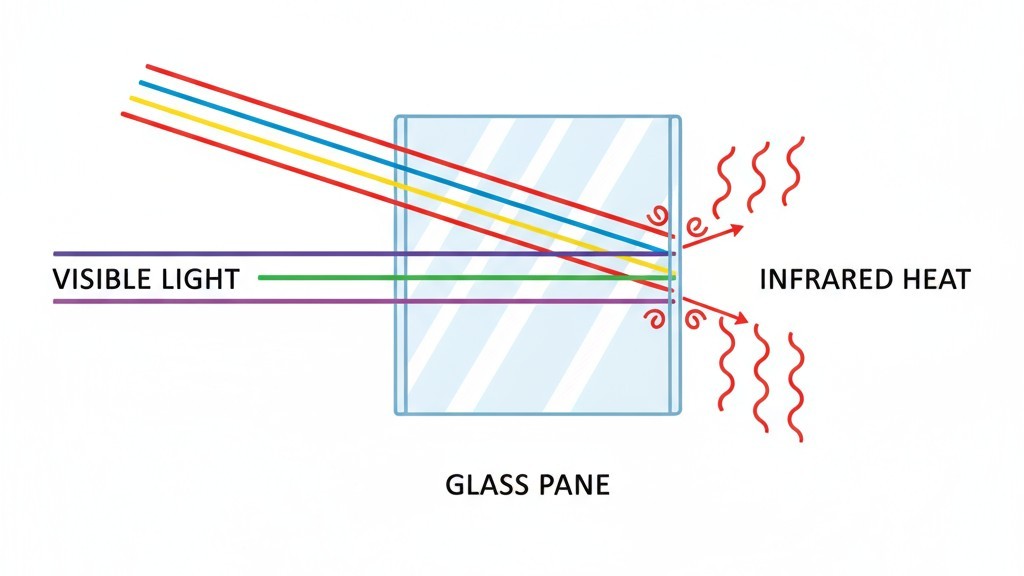
Glass is not uniformly transparent. Its properties change dramatically depending on the wavelength of energy trying to pass through it. Visible light, with its short wavelengths, passes through easily. Mid-infrared wavelengths, however, are much longer.
When these longer infrared photons strike a glass pane, their energy is absorbed or reflected by the molecular structure of the glass itself. The wavelength is so close to the natural vibrational frequencies of the silicon-oxygen bonds in glass that the energy gets converted into heat within the pane instead of passing through. A motion sensor on the inside of a window receives almost no infrared signal from a person standing outside. The glass has blocked it completely.
This is the visible light trap. We see clearly through a window and assume all signals must pass through just as easily. But what appears as a clear window to your eyes is an opaque wall to the sensor.
The Inevitable Failure of Window Placement
With the physics established, the practical outcome is predictable. Placing a motion sensor behind a window results in one of two failures: it either doesn’t work at all, or it works so erratically it can’t be trusted.
Rayzeek 모션 센서 포트폴리오에서 영감을 얻어보세요.
원하시는 제품을 찾지 못하셨나요? 걱정하지 마세요. 문제를 해결할 수 있는 대체 방법은 언제나 존재합니다. 당사의 포트폴리오 중 하나가 도움이 될 수 있습니다.
Most often, nothing happens. A person can walk directly in front of the window, well within the sensor’s specified range, and the lights will not turn on. The glass absorbs their infrared signature before it ever reaches the sensor. From the sensor’s perspective, the world outside is static. Turning up the sensitivity won’t help; you can’t amplify a signal that never arrives.
Occasionally, the sensor might trigger sporadically. This isn’t because it’s detecting motion outside, but because it’s reacting to secondary heat sources. Direct sunlight warming the glass can create thermal patterns the sensor misinterprets as movement. Someone pressing their hand against the window might conduct enough heat through the thin pane to trigger a response. These are not reliable detection events; they are artifacts. A system built on such inconsistent behavior is doomed to frustrate.
The size of the glass doesn’t change the outcome. A large sliding glass door exposed to the sun is more likely to generate false positives from uneven heating, while a small, shaded window is less likely to produce these artifacts. In both cases, the system fails to perform its core function. The sensor isn’t broken; it’s just reporting on the only signals it can receive. The error is in the placement.
관심 있는 다른 제품

- 전압: AAA 배터리 2개
- 주간/야간 모드
- 시간 지연: 15분, 30분, 1시간(기본값), 2시간

- 무전압 접점 리레이 출력을 갖춘 천장 설치형 PIR 재실 감지 센서
- 12/24VDC 또는 12/24VAC 저전압 전원 공급
- EMS, HVAC 및 빌딩 제어 입력을 위한 COM, NO 및 NC 절연 리레이 접점

- 저전압 DC 매립형 천장 설치형 마이크로웨이브 모션 센서 스위치
- 10-30 VDC 범위를 지원하는 12 VDC / 24 VDC 입력
- 조절 가능한 지연 시간, Lux 임계값 및 감도 기능을 갖춘 최대 10A 동작 전류
- 고부하용 매립형 천장 설치형 마이크로웨이브 모션 센서 스위치
- 100-265 VAC 라인 전압 입력, 10A 모델
- 조절 가능한 지연 시간, Lux 임계값 및 감도를 갖춘 5.8 GHz 마이크로웨이브 감지
- 천장 매립형 마이크로웨이브 동작 감지 센서 스위치
- 100-265 VAC 라인 전압 입력, 5A 모델
- 조절 가능한 지연 시간, Lux 임계값 및 감도를 갖춘 5.8 GHz 마이크로웨이브 감지
- 220V 전원용 천장 부착형 RZ037 PIR 재실 감지 센서 디머
- 660W 정격 부하 및 최대 동작 전류 3A
- LUX 버튼으로 조도 센서 ON/OFF 및 사용자 설정 디밍 밝기 제어
- 110V 전원용 천장 부착형 RZ037 PIR 재실 감지 디머 스위치
- 330W 정격 부하 및 최대 동작 전류 3A
- LUX 버튼으로 조도 센서 ON/OFF 및 사용자 설정 디밍 밝기 제어

- 저전압 DC 천장 부착형 마이크로웨이브 동작 감지 센서 스위치
- 10-30 VDC 범위를 지원하는 12 VDC / 24 VDC 입력
- 조절 가능한 지연 시간, Lux 임계값 및 감도 기능을 갖춘 최대 10A 동작 전류
- 고부하용 천장 부착형 마이크로웨이브 동작 감지 센서 스위치
- 100-265 VAC 라인 전압 입력, 10A 모델
- 조절 가능한 지연 시간, Lux 임계값 및 감도를 갖춘 5.8 GHz 마이크로웨이브 감지
- 천장 부착형 마이크로웨이브 동작 감지 센서 스위치
- 100-265 VAC 라인 전압 입력, 5A 모델
- 조절 가능한 지연 시간, Lux 임계값 및 감도를 갖춘 5.8 GHz 마이크로웨이브 감지

- 저전압 DC 매립형 천장 PIR 동작 감지 센서 스위치
- 10-30 VDC 범위를 지원하는 12 VDC / 24 VDC 입력
- 시간 지연, 조도 임계값, 감도 조절이 가능한 최대 동작 전류 10A 제품

- 고부하용 매립형 천장 PIR 동작 감지 센서 스위치
- 100-265 VAC 라인 전압 입력, 10A 모델
- 시간 지연, 조도 임계값, 감도 조절이 가능한 360도 감지
- 매립형 천장 PIR 동작 감지 센서 스위치
- 100-265 VAC 라인 전압 입력, 5A 모델
- 시간 지연, 조도 임계값, 감도 조절이 가능한 360도 감지

- 실내 ON/OFF 조명 제어용 무선 스위치 및 수신기 키트
- 정격 전류 5A의 100-230VAC, 50/60Hz 수신기
- 2.4GHz 통신 방식의 CR2032 배터리 구동 무선 스위치
- 재실 모드(자동 ON/자동 OFF)
- 12–24V DC (10–30VDC), 최대 10A
- 360° 감지 범주, 직경 8–12m
- 시간 지연 15초–30분
- 조도 센서 Off/15/25/35 Lux
- 높음/낮음 감도
- 자동 ON/자동 OFF 재실 모드
- 100–265V AC, 10A (중성선 필요)
- 360° 감지 범위; 감지 직경 8–12m
- 시간 지연 15초–30분; 조도 OFF/15/25/35; 감도 높음/낮음
- 자동 ON/자동 OFF 재실 모드
- 100–265V AC, 5A (중성선 필요)
- 360° 감지 범위; 감지 직경 8–12m
- 시간 지연 15초–30분; 조도 OFF/15/25/35; 감도 높음/낮음
The Real Solution: Exterior-Rated Placement
The only direct and reliable solution is to eliminate the barrier. A motion sensor must have an unobstructed infrared line of sight to the area it monitors. For outdoor lighting, this means mounting the sensor on the exterior of the building.
This isn’t a workaround; it’s the correct installation method. An exterior-mounted sensor receives infrared radiation directly from people moving in its path. Detection becomes immediate, reliable, and consistent, because the physical requirements of the technology are finally met.
Choosing a Weatherproof Sensor
Of course, placing a sensor outside exposes it to rain, heat, cold, and sun. A standard indoor sensor won’t last long. An outdoor installation demands a sensor specifically built to withstand the elements.
Look for an Ingress Protection (IP) rating, which describes resistance to dust and water. For most outdoor applications, a minimum of IP65 is recommended. The ‘6’ indicates total protection from dust, and the ‘5’ means it can withstand water jets from any direction, making it safe from rain. Harsher climates might call for a higher rating like IP66.
Temperature tolerance is also critical. Ensure the sensor is rated for the full range of temperatures in your region. Most quality outdoor sensors operate from -20°C to 50°C (-4°F to 122°F). Finally, look for UV-resistant housing. Plastics that aren’t UV-stabilized will become brittle and crack under sun exposure, destroying the weatherproof seal.
Optimal Mounting for Maximum Coverage
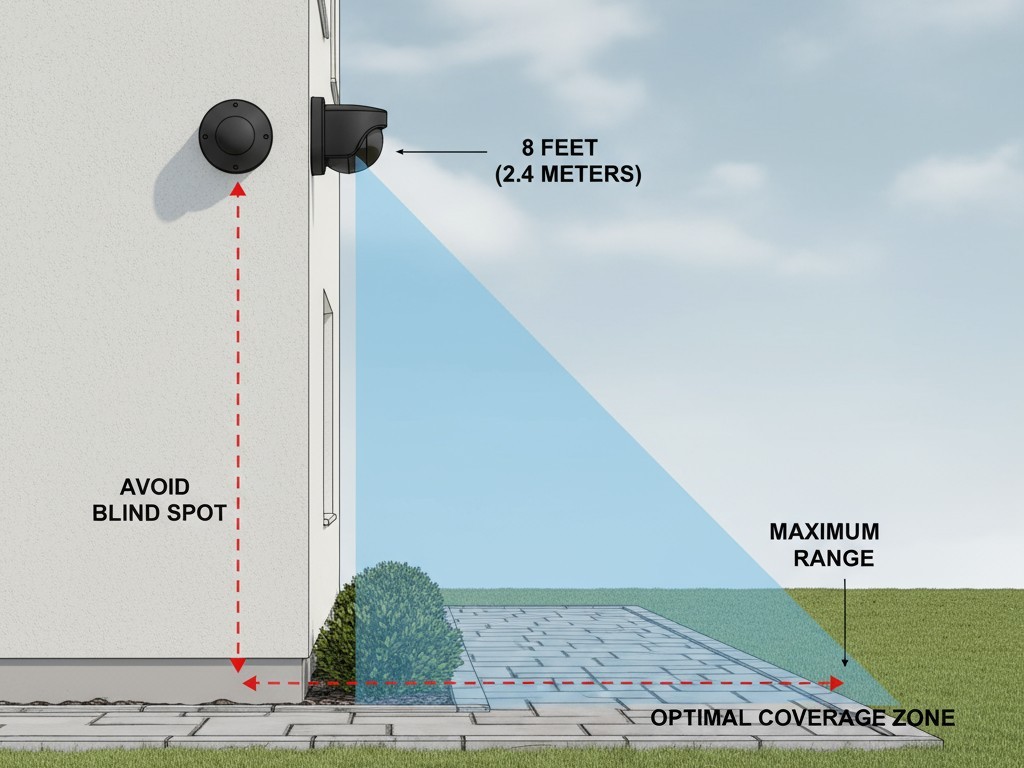
Proper placement is everything. The goal is to cover the target area—a walkway, patio, or driveway—while minimizing false triggers from moving trees, passing cars, or pets.
Height and angle are your primary tools. Most sensors are designed for mounting 2 to 3 meters (6 to 10 feet) high, angled slightly down. This position provides broad coverage at ground level. Mounting too low reduces range, while mounting too high can create a blind spot directly beneath the sensor.
Pay attention to the sensor’s field of view, typically specified in degrees. A 180-degree sensor is great for wide areas like a driveway, while a narrower 90-degree sensor is better for covering a specific path or doorway. Many outdoor sensors also include adjustable sensitivity and physical masks, allowing you to fine-tune the detection zone and block out areas like a neighbor’s yard or a busy sidewalk.
Alternatives When Exterior Mounting Isn’t an Option
Sometimes, exterior mounting is prohibited by rental agreements or HOA rules. In these cases, a standard motion sensor is off the table, but you still have options. These alternatives are compromises that work through different mechanisms.
Door and Window Contact Sensors
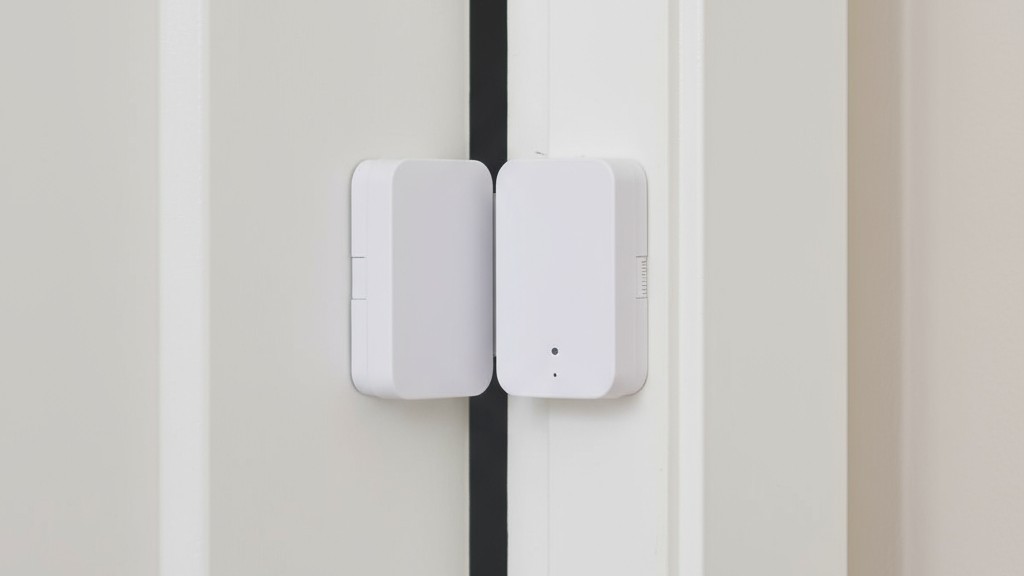
A simple contact sensor triggers an action when a door or window is opened. It consists of a magnet on the door and a switch on the frame. When the door opens, the two parts separate, sending a signal. For outdoor lighting, a contact sensor on the patio door can serve as a proxy trigger. The light turns on when the door opens, assuming someone is heading outside. This works well if that door is the primary point of entry, but it can’t detect motion from someone already in the yard.
Smart Scheduling and Interior Triggers
Another approach pairs an interior motion sensor with smart scheduling. A sensor in a hallway leading to the back door can detect someone moving toward the exit. If this happens during evening hours (when lighting is needed), it can trigger the outdoor lights. This method relies on predictable patterns and inferred intent, so it’s less reliable than direct detection. It may turn lights on when no one goes out or miss someone who uses a different route.
These workarounds are fine for low-stakes convenience but are not suitable for security applications where reliable detection is a must.
동작 감지 기반의 에너지 절감 솔루션을 찾고 계십니까?
PIR 동작 감지 센서, 동작 감지 에너지 절감 제품, 동작 감지 센서 스위치, 상업용 점유/부재(Occupancy/Vacancy) 감지 솔루션에 대해 문의해 주시기 바랍니다.
Debunking the Gimmicks
The physics are clear, yet myths about “tricking” a sensor to see through glass persist in online forums. These gimmicks are a waste of time and money because they ignore the fundamental barrier.
One common myth suggests that angling the sensor or changing its distance from the glass will help. This is false. The glass absorbs mid-infrared energy; the angle of approach doesn’t change the material’s properties. Another myth claims that cranking the sensitivity to maximum will compensate for the weak signal. This only makes the sensor more susceptible to false triggers from electronic noise or minor temperature changes on the glass surface. It cannot amplify a signal that isn’t there.
Finally, some believe that thinner materials like acrylic will work. While plastics are slightly more transparent to infrared than glass, the improvement is negligible for motion detection. The sensor will still fail to perform reliably.
There are no shortcuts. A motion sensor needs a clear line of sight to its target. For outdoor detection, that means mounting it outside. If you can’t, use an alternative trigger that doesn’t rely on infrared detection through a barrier. The sensor is a reliable tool when used within its physical constraints. The failure isn’t in the device, but in expecting it to defy the laws of physics.







