
The marketing promise on the box is seductive. “No Neutral Required,” it says, suggesting a five-minute swap where you trade an old toggle switch for a modern motion sensor. You turn off the breaker, cap the wires, screw it in, and restore power. Then the trouble starts.
In the best-case scenario, the lights turn on but refuse to turn off completely, leaving a ghostly, dim glow in the fixture at 2 AM. In the worst case—often called the “Hallway Disco”—the sensor clicks frantically, strobing the lights like a rave until you kill the breaker. This isn’t a defective unit, nor is it a poltergeist in the wiring. It’s a fundamental conflict between 1970s wiring logic and the physics of modern LED drivers. The switch is starving for power, and it’s trying to eat through your light bulbs to survive.
The Leakage Current Reality
To understand why a Rayzeek RZ021 or similar sensor fails in an older home, you have to stop viewing the switch as a mechanical gate. Think of it as a computer. A standard toggle switch physically breaks the circuit; when it’s off, the wire is dead. A motion sensor, however, has a brain—an infrared detector and a logic chip—that needs to stay awake 24/7 to watch for movement.
In a modern home (largely post-2011 NEC code), the box contains a white neutral wire. This provides a clean return path for the sensor’s operating current to cycle back to the panel without touching the lights. But in older switch loops, that white wire is missing or used as a traveler. The sensor still needs to complete its circuit to breathe, so it has only one option: send its operating current—the “leakage current”—out through the load wire, through the bulb’s filament, and back to the panel.
This worked beautifully in the era of incandescent bulbs. A 60-watt tungsten filament is a sturdy, dumb resistor. It lets that tiny trickle of current pass through without heating up enough to glow. The sensor gets its power, the bulb stays dark, and everyone is happy.
The problem arises when you replace that sturdy filament with a sensitive LED driver. LED bulbs aren’t simple resistors; they are complex electronic devices with capacitors that store energy. When the motion sensor sends its “leakage” current down the line, the LED’s capacitor catches it. It charges up, slowly and silently, until it hits its activation threshold. Pop—the light flashes on for a split second, dumping the energy. The capacitor drains, the light dies, and the cycle begins again. This is the heartbeat of the strobe effect. If you hear a buzzing sound coming from the fixture itself, that’s the audible frequency of the driver fighting this current—a clear signal that the components are mismatched.
The Minimum Load Math
You won’t find the solution in the switch settings. It’s a math problem. Every no-neutral sensor has a “Minimum Load Requirement,” often buried deep in the PDF datasheet. For many Rayzeek models, this floor is around 15 watts.
Quizás le interese

- Tensión: 2 pilas AAA
- Modo Día/Noche
- Temporización: 15 min, 30 min, 1 h (por defecto), 2 h

- Sensor de presencia PIR para montaje en techo con salida de relé de contacto seco
- Alimentación de baja tensión de 12/24VDC o 12/24VAC
- Contactos de relé aislados COM, NO y NC para entradas de EMS, HVAC y control de edificios

- Interruptor con sensor de movimiento por microondas empotrable en techo de baja tensión DC
- Entrada de 12 VDC / 24 VDC con rango de 10-30 VDC
- Corriente de funcionamiento máxima de 10A con retardo de tiempo, umbral de Lux y sensibilidad ajustables
- Interruptor con sensor de movimiento por microondas empotrable en techo para cargas más elevadas
- Entrada de tensión de red de 100-265 VAC, modelo de 10A
- Detección por microondas de 5,8 GHz con temporizador, umbral Lux y sensibilidad ajustables
- Interruptor con sensor de movimiento por microondas empotrable para techo
- Entrada de tensión de red de 100-265 VAC, modelo de 5A
- Detección por microondas de 5,8 GHz con temporizador, umbral Lux y sensibilidad ajustables
- Regulador con sensor de presencia PIR RZ037 de techo para alimentación de 220V
- Corriente de funcionamiento máxima de 3A con carga nominal de 660W
- El botón LUX controla el encendido/apagado del sensor de luz y la regulación de brillo ajustada por el usuario
- Regulador con sensor de presencia PIR RZ037 de techo para alimentación de 110V
- Corriente de funcionamiento máxima de 3A con carga nominal de 330W
- El botón LUX controla el encendido/apagado del sensor de luz y la regulación de brillo ajustada por el usuario

- Interruptor con sensor de movimiento por microondas de techo para CC de bajo voltaje
- Entrada de 12 VDC / 24 VDC con rango de 10-30 VDC
- Corriente de funcionamiento máxima de 10A con retardo de tiempo, umbral de Lux y sensibilidad ajustables
- Interruptor con sensor de movimiento por microondas de techo para mayor carga
- Entrada de tensión de red de 100-265 VAC, modelo de 10A
- Detección por microondas de 5,8 GHz con temporizador, umbral Lux y sensibilidad ajustables
- Interruptor con sensor de movimiento por microondas de techo
- Entrada de tensión de red de 100-265 VAC, modelo de 5A
- Detección por microondas de 5,8 GHz con temporizador, umbral Lux y sensibilidad ajustables

- Interruptor con sensor de movimiento PIR para montaje empotrable en techo de CC de bajo voltaje
- Entrada de 12 VDC / 24 VDC con rango de 10-30 VDC
- Corriente máxima de trabajo de 10 A con tiempo de retardo, umbral de luxes y sensibilidad ajustables

- Interruptor con sensor de movimiento PIR empotrable en techo para mayor carga
- Entrada de tensión de red de 100-265 VAC, modelo de 10A
- Detección de 360 grados con tiempo de retardo, umbral de luxes y sensibilidad ajustables
- Interruptor con sensor de movimiento PIR empotrable en techo
- Entrada de tensión de red de 100-265 VAC, modelo de 5A
- Detección de 360 grados con tiempo de retardo, umbral de luxes y sensibilidad ajustables

- Kit de emisor inalámbrico y receptor para el control de iluminación de encendido/apagado en interiores
- Receptor de 100-230 V CA, 50/60 Hz con corriente nominal de 5 A
- Interruptor inalámbrico alimentado por CR2032 con comunicación de 2,4 GHz
- Presencia (encendido automático/apagado automático)
- 12–24 V CC (10–30 V CC), hasta 10 A
- Cobertura de 360°, 8–12 m de diámetro
- Tiempo de retardo de 15 s a 30 min
- Sensor de luz Desactivado/15/25/35 Lux
- Sensibilidad alta/baja
- Modo de presencia con encendido/apagado automático
- 100–265V CA, 10A (requiere neutro)
- Cobertura de 360°; diámetro de detección de 8–12 m
- Temporización: 15 s–30 min; Lux OFF/15/25/35; Sensibilidad Alta/Baja
- Modo de presencia con encendido/apagado automático
- 100–265V CA, 5A (requiere neutro)
- Cobertura de 360°; diámetro de detección de 8–12 m
- Temporización: 15 s–30 min; Lux OFF/15/25/35; Sensibilidad Alta/Baja
In the age of efficiency, hitting 15 watts is harder than it sounds. A single generic LED bulb might draw 4 watts. A fancy vintage-style Edison LED might draw only 2.5. If a hallway fixture has two of these bulbs, the total load is 5 to 8 watts—well below the threshold required to stabilize the current. The sensor tries to pull power, the load is too light to anchor it, and the internal relay starts clicking. It sounds like a turn signal in a car that won’t start.
This is where the “Bulb Lottery” comes into play. Not all LEDs are created equal. Brands like Philips and Cree often build better damping into their dimmable drivers, allowing them to tolerate the leakage current without ghosting. Conversely, budget brands found in the checkout aisle of a hardware store—Feit Electric or the unbranded bulk packs—often lack this regulation. They are efficient, but fragile. A sensor that works perfectly with a 10-watt Cree bulb might strobe uncontrollably with a 10-watt generic bulb simply because the driver architecture is different. And since manufacturers change internal components without changing the model number, a bulb that worked last year might not work this year.
¿Busca soluciones de ahorro de energía activadas por movimiento?
Póngase en contacto con nosotros para obtener sensores de movimiento PIR completos, productos de ahorro de energía activados por movimiento, interruptores con sensor de movimiento y soluciones comerciales de presencia/vacancia.
The Bypass Fix
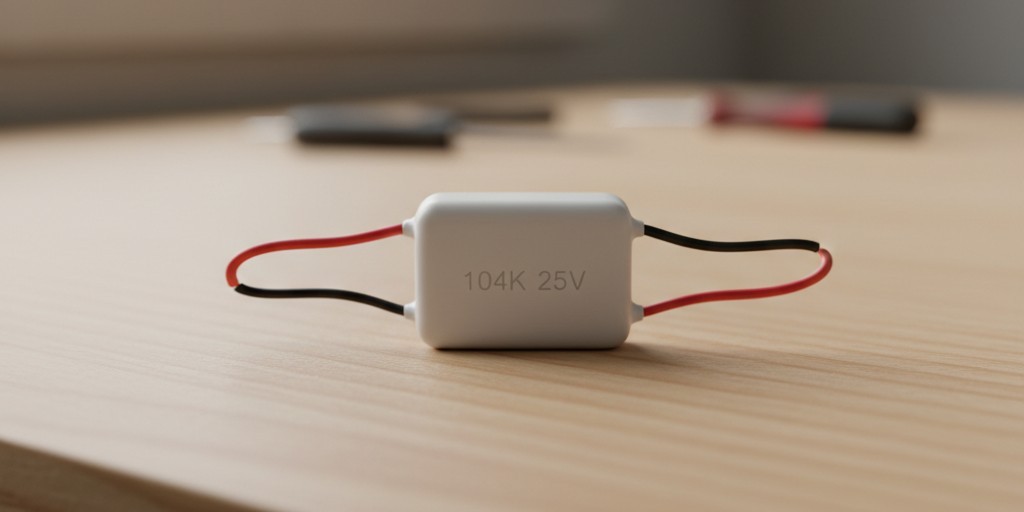
When the math doesn’t work and the bulbs are flickering, there is a brute-force solution that preserves the sensor without rewiring the house: the bypass capacitor.
Often sold as a “dynamic load adapter” or under part numbers like the Lutron LUT-MLC, this small component is the secret weapon for no-neutral installs. It’s not a battery; it’s a dummy load. You install it not at the switch, but up at the light fixture itself, wiring it in parallel between the hot and neutral wires inside the canopy.
The bypass acts as a pressure valve. It provides a dedicated path for that leakage current to go around the sensitive LED bulbs. The sensor gets its power through the capacitor, the LEDs stay dark until actually turned on, and the flickering stops. It feels like a hack—adding a “useless” part to a circuit—but in a no-neutral environment, it is often the difference between a working smart home and a fire hazard.
Wiring the Ground
There is a final, uncomfortable reality regarding the Rayzeek RZ021 and similar units: the role of the green wire. In a strictly code-compliant world, current should never flow on the grounding conductor. The ground is for safety, not for returning power to the panel.
Inspírese con los portafolios de sensores de movimiento Rayzeek.
¿No encuentra lo que busca? No se preocupe. Siempre existen formas alternativas de resolver sus problemas. Quizá alguno de nuestros portafolios pueda ayudarle.
However, many no-neutral sensors are engineered to cheat this rule slightly. They use the ground wire as a reference point to stabilize their internal electronics. If you open a 1950s metal switch box and see only two black wires and the bare metal of the box, you might be tempted to leave the green wire on the sensor disconnected. Don’t do it. Without that ground reference, the sensor’s brain often floats electrically, leading to erratic detection or a failure to energize.
If your home uses armored cable (BX) or metal conduit, the box itself is the ground. You must bond the sensor’s green wire to the box. If you have older Romex with a bare copper wire, that must be connected. It is a compromise—using the safety drain for a tiny amount of operational stability—but it is how these specific units are designed to function. If you are uncomfortable with current on the ground, the only code-perfect solution is to pull a new neutral wire, a job that involves tearing open drywall and spending thousands.
Knowing When to Fold
Sometimes, the physics wins. If you are trying to control a single 3-watt LED tape light in a pantry, or a specialized low-voltage fixture, no amount of bypass capacitors or expensive bulbs will stabilize a high-voltage no-neutral sensor. The load is simply too small.
In these cases, the correct move is to stop fighting the wiring. Cap the wires, put a standard toggle switch back in (or wire it always-on), and buy a battery-powered motion sensor like a Philips Hue or a generic Zigbee device paired with a smart bulb. It lacks the permanence of a hardwired switch, and you will have to change batteries every two years, but it separates the control logic from the power delivery. In a house fighting against 50-year-old wiring constraints, that separation is sometimes the only way to keep the lights off at 3 AM.







