
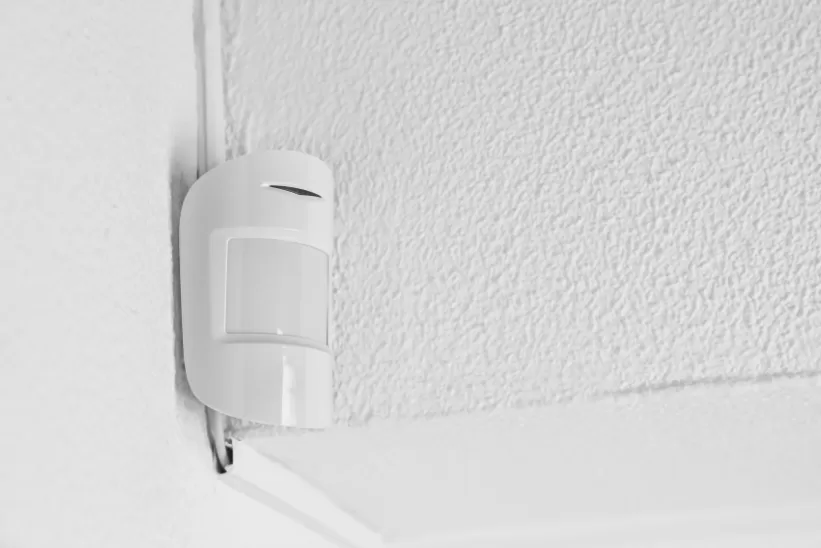
Motion sensors are becoming increasingly popular in areas of home security, energy savings and automation fields. They can be used for burglar alarms or security cameras and programmed to operate when they detect motion in the area. They can also turn off the lights in your home or a commercial building when the sensor no longer detects motion in an enclosed space, which is widely used in offices, kitchens, and bathrooms for energy-saving and lighting automation.
Contenido
Motion sensors are available in a large variety of forms. They can be a standalone united to be mounted on the wall and connected to your lighting, or they can be so small that has already been integrated into your security camera, which can’t be easily noticed. So what exactly is a motion sensor?
¿Qué es un sensor de movimiento?
A motion sensor is an electronic device that basically utilizes a sensor to detect nearby, moving objects, primarily people. Thus the name motion sensor. The motion sensor itself is typically a small device that is usually embedded into other devices as a component to provide motion detection functions.
For example, when integrated into a security camera, it empowers a security camera to alert users when it sees a suspicious person entering a restricted area. Or it can automatically control a light to turn on and off as a motion-activated light when embedded into a regular light fixture. All these products have a motion sensor built-in to provide an end-to-end motion detection feature.
Motion sensors can also be made as standalone devices. You can connect this motion sensor unit to another device that has not been equipped with a built-in motion sensor. In this case, you can easily turn your regular electronic device into a motion-activated one.
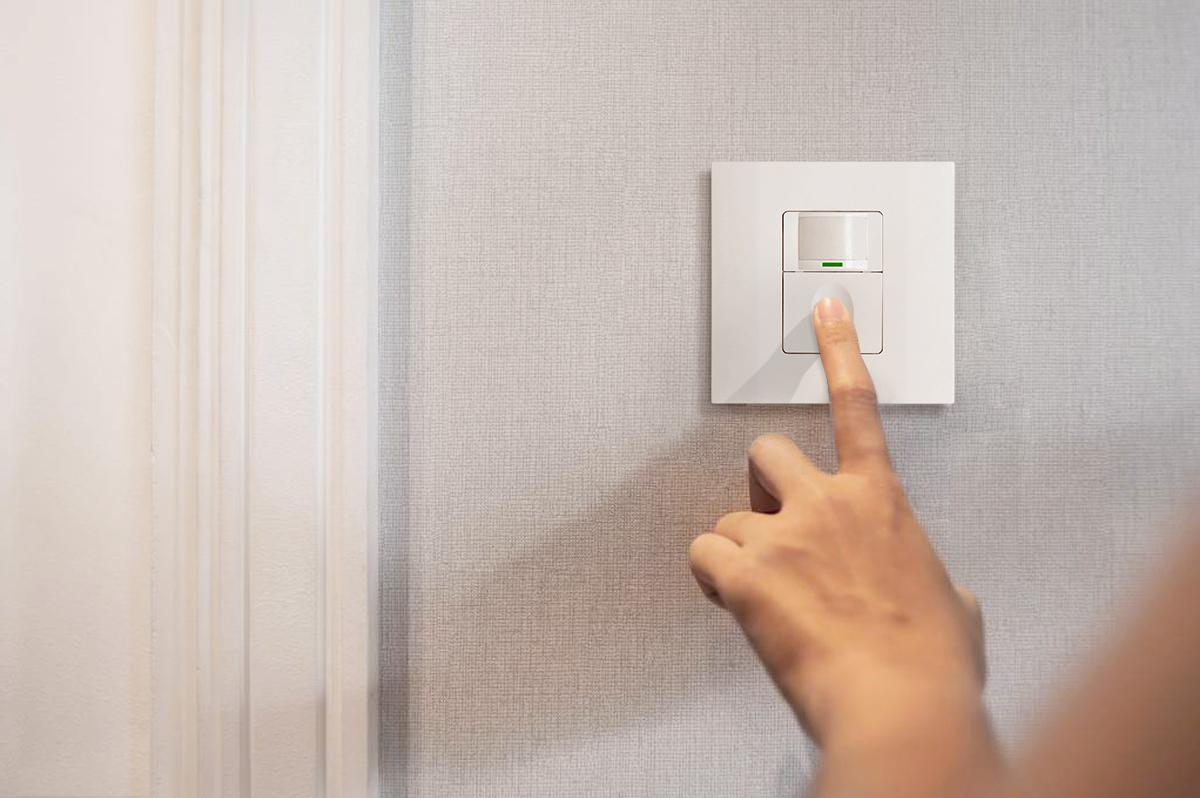
Some of the common examples are motion detectors and motion sensor switches. For instance, you can turn your existing light into a motion sensor light by simply replacing the light switch with a motion sensor switch without further modifying the light. Or mount a motion detector on the wall and connect to your light by wire or wireless, so as soon as the standalone detector ‘sees’ you, it will trigger the light.
Quizás le interese

- Tensión: 2 pilas AAA
- Modo Día/Noche
- Temporización: 15 min, 30 min, 1 h (por defecto), 2 h

- Sensor de presencia PIR para montaje en techo con salida de relé de contacto seco
- Alimentación de baja tensión de 12/24VDC o 12/24VAC
- Contactos de relé aislados COM, NO y NC para entradas de EMS, HVAC y control de edificios

- Interruptor con sensor de movimiento por microondas empotrable en techo de baja tensión DC
- Entrada de 12 VDC / 24 VDC con rango de 10-30 VDC
- Corriente de funcionamiento máxima de 10A con retardo de tiempo, umbral de Lux y sensibilidad ajustables
- Interruptor con sensor de movimiento por microondas empotrable en techo para cargas más elevadas
- Entrada de tensión de red de 100-265 VAC, modelo de 10A
- Detección por microondas de 5,8 GHz con temporizador, umbral Lux y sensibilidad ajustables
- Interruptor con sensor de movimiento por microondas empotrable para techo
- Entrada de tensión de red de 100-265 VAC, modelo de 5A
- Detección por microondas de 5,8 GHz con temporizador, umbral Lux y sensibilidad ajustables
- Regulador con sensor de presencia PIR RZ037 de techo para alimentación de 220V
- Corriente de funcionamiento máxima de 3A con carga nominal de 660W
- El botón LUX controla el encendido/apagado del sensor de luz y la regulación de brillo ajustada por el usuario
- Regulador con sensor de presencia PIR RZ037 de techo para alimentación de 110V
- Corriente de funcionamiento máxima de 3A con carga nominal de 330W
- El botón LUX controla el encendido/apagado del sensor de luz y la regulación de brillo ajustada por el usuario

- Interruptor con sensor de movimiento por microondas de techo para CC de bajo voltaje
- Entrada de 12 VDC / 24 VDC con rango de 10-30 VDC
- Corriente de funcionamiento máxima de 10A con retardo de tiempo, umbral de Lux y sensibilidad ajustables
- Interruptor con sensor de movimiento por microondas de techo para mayor carga
- Entrada de tensión de red de 100-265 VAC, modelo de 10A
- Detección por microondas de 5,8 GHz con temporizador, umbral Lux y sensibilidad ajustables
- Interruptor con sensor de movimiento por microondas de techo
- Entrada de tensión de red de 100-265 VAC, modelo de 5A
- Detección por microondas de 5,8 GHz con temporizador, umbral Lux y sensibilidad ajustables

- Interruptor con sensor de movimiento PIR para montaje empotrable en techo de CC de bajo voltaje
- Entrada de 12 VDC / 24 VDC con rango de 10-30 VDC
- Corriente máxima de trabajo de 10 A con tiempo de retardo, umbral de luxes y sensibilidad ajustables

- Interruptor con sensor de movimiento PIR empotrable en techo para mayor carga
- Entrada de tensión de red de 100-265 VAC, modelo de 10A
- Detección de 360 grados con tiempo de retardo, umbral de luxes y sensibilidad ajustables
- Interruptor con sensor de movimiento PIR empotrable en techo
- Entrada de tensión de red de 100-265 VAC, modelo de 5A
- Detección de 360 grados con tiempo de retardo, umbral de luxes y sensibilidad ajustables

- Kit de emisor inalámbrico y receptor para el control de iluminación de encendido/apagado en interiores
- Receptor de 100-230 V CA, 50/60 Hz con corriente nominal de 5 A
- Interruptor inalámbrico alimentado por CR2032 con comunicación de 2,4 GHz
- Presencia (encendido automático/apagado automático)
- 12–24 V CC (10–30 V CC), hasta 10 A
- Cobertura de 360°, 8–12 m de diámetro
- Tiempo de retardo de 15 s a 30 min
- Sensor de luz Desactivado/15/25/35 Lux
- Sensibilidad alta/baja
- Modo de presencia con encendido/apagado automático
- 100–265V CA, 10A (requiere neutro)
- Cobertura de 360°; diámetro de detección de 8–12 m
- Temporización: 15 s–30 min; Lux OFF/15/25/35; Sensibilidad Alta/Baja
- Modo de presencia con encendido/apagado automático
- 100–265V CA, 5A (requiere neutro)
- Cobertura de 360°; diámetro de detección de 8–12 m
- Temporización: 15 s–30 min; Lux OFF/15/25/35; Sensibilidad Alta/Baja
Given its application and forms, a standalone motion sensor is also called a motion detector. In contrast, a built-in motion sensor that acts as a vital component for providing motion sensing and control function is called directly a motion sensor. All in all, they refer to the same concept or product most of the time.
Motion Sensor vs. Occupancy Sensor
A common misunderstanding concept is the relationship and usage between a motion sensor and an occupancy sensor, as they are very similar and constantly misused. Motion sensors and occupancy sensors can be quite different in some cases. However, they are also vastly overlapped and share similar technology and application in other cases.
- A sensor de movimiento, as described earlier, is a sensor that detects motion signals. The object or people has to be constantly moving to get detected by a motion sensor.
- Una sensor de presencia is a device that detects the existence of a person. As its name suggests, it detects whether the space is occupied by people or not.
Well, from the definitions of a motion sensor and an occupancy sensor, we can tell they are pretty similar, and they do perform similar tasks. And in reality, it’s also true that they mostly share the same technology for detection, such as PIR, microwave or ultrasonic sensor technology. But they do have a few main differences.
A motion sensor is only capable of detecting a moving object/person. For example, let’s say we have a motion sensor light installed and the sensor monitors the room. When we enter the room, it will detect a motion signal(we walk into the room) with ease and turn on the light for us. If we keep moving in the room, for instance, having a meeting in the room, the motion sensor light is still able to detect us now and then, keeping the light on. But if we stay still in the room with no motion, say we just sit in a chair and do nothing. Even if we are still in the room, the motion sensor is not able to detect us because it cannot find any motion signals. Hence it will turn the light off. Until we need to get up and leave the room or simply wave our hands to the sensor, it is now able to detect us in motion and turn on the light again.

In comparison to a motion sensor, an occupancy sensor detects whether the space is occupied by people. The people do not have to be in motion to get detected. A vivid example is the occupancy sensor widely used in hospitals which detects whether the patient is in bed or not. It’s simply a pressure pad above the bed which detects the weight load on the bed. If the patient leaves the bed, the occupancy sensor knows the bed is not occupied, which will alert and notify the nurses. As long as the patient is in bed, the occupancy sensor can detect his presence by weight. The patient does not have to be moving to get detected, such as when he is sleeping.
Inspírese con los portafolios de sensores de movimiento Rayzeek.
¿No encuentra lo que busca? No se preocupe. Siempre existen formas alternativas de resolver sus problemas. Quizá alguno de nuestros portafolios pueda ayudarle.
Difference & Similarity
The two examples above clearly show that a motion sensor and an occupancy sensor share two different concepts and are two completely different products. But in most industries, they semantically refer to the same things and are often used interchangeably.
¿Busca soluciones de ahorro de energía activadas por movimiento?
Póngase en contacto con nosotros para obtener sensores de movimiento PIR completos, productos de ahorro de energía activados por movimiento, interruptores con sensor de movimiento y soluciones comerciales de presencia/vacancia.
In most real-life applications, such as in home automation and lighting control areas, motion sensor and occupancy sensor are often used interchangeably and refer to the same thing because the objects to be detected are both moving and occupying the space simultaneously. And they use the same motion detection technologies; mostly, they use a PIR sensor to detect motion or the presence of people. Additionally, the term occupancy also refers to the working mode of lights.

Whereas in security industries, such as in security camera monitoring and security alarm applications, we only use a motion sensor to detect a suspicious burglar as soon as he appears. Occupancy sensors are not used here because it makes less sense, and we care about the motion signal more than the presence of inturders. So as long as something unusual happens, we will get notified by the security system.
In IoT systems and other general scenarios, both motion sensors and occupancy sensors can be used accordingly for specific detection at the same time. In a smart building, we use motion sensors are used to detect people entering and exiting the building and desk occupancy sensors to detect desk usage and make efficient desk booking management. In modern hospitals, we need both motion and occupancy sensors properly placed nearly everywhere to prevent potential accidents or injuries from ever happening.








אני מעוניין בכיבוי והדלקה תאורה במבנה עם מספר גני ילדים , האם דרוש חיישני תנועה או תפוסה ? האם שילוב ? האם אפשר להגדיר שכל זמן שיש תנועה או תפוסה באזור מסוים האור ישאר דלוק