
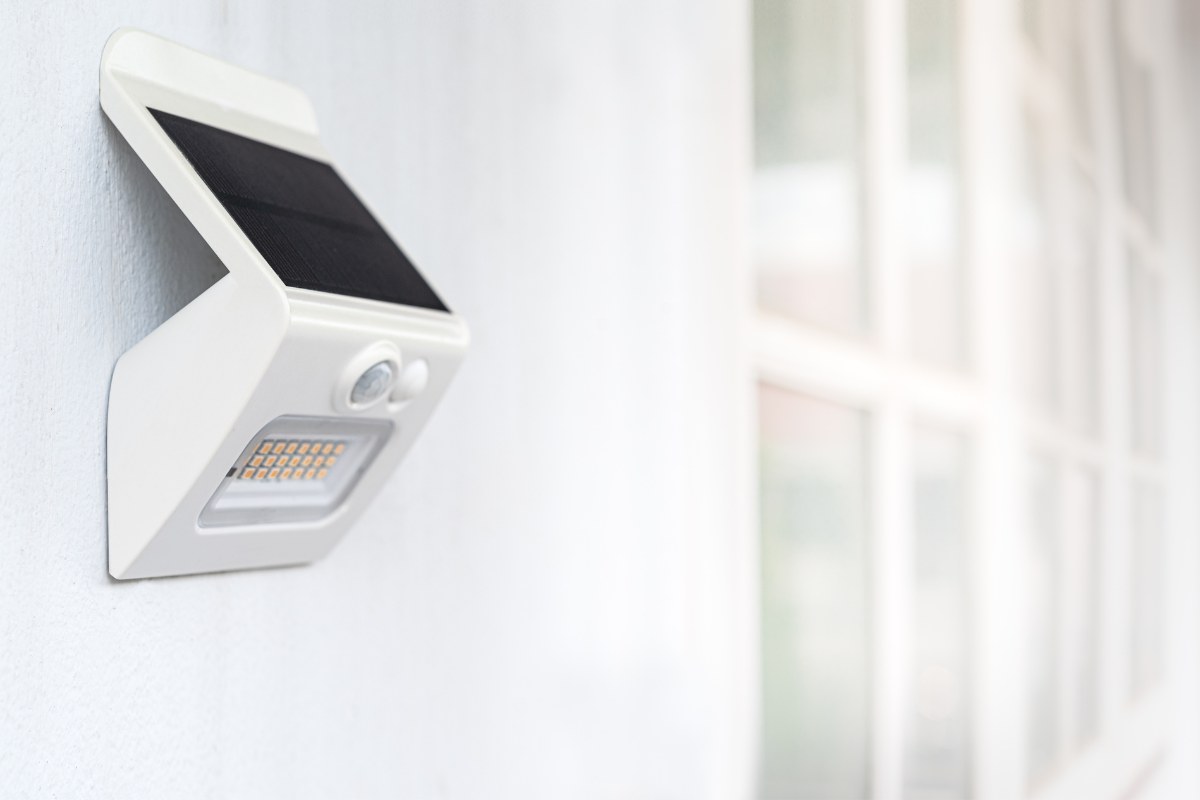
Save money on outdoor security lighting while at the same time, protecting your property (and your own personal safety) with floodlights that are activated when motion is detected by a sensor. Floodlights that are illuminated from dusk to dawn are high-energy consumers and can easily be replaced by automating the activating process.
Motion-activated outdoor lighting has a shock value to would-be intruders. Suspecting that your home is shrouded in darkness making it an easy target for burglary, would-be intruders are shocked when they are suddenly flooded with light. It’s just common sense to expect them to move on to a less protected target.
Enhancing Safety and Security
In addition to protecting your property from criminals, motion-activated lighting can provide an element of safety for you when you are returning home after dark or if you venture outside to investigate a strange noise. Strategically placed, motion-activated floodlights can illuminate the driveway, entryways, and other walkways around your home. Some insurance companies will even offer premium incentives for homeowners with this type of security lighting.
Understanding Motion Sensors
Basic Mechanics of Motion Detection
The basic mechanics of the motion detection sensor are fairly simple. The active sensor works by pulsing a stream of energy such as microwaves or sound that is sensitive to changes in the environment. Most lighting systems are of the passive variety designed to detect infrared energy. These passive systems, known as passive infrared detectors, can be calibrated to detect a person by picking up on the infrared energy they emit.
The motion sensor is sensitive to both motion and the amount of infrared energy that it is sensing. The electronics are designed to find a relatively rapid change in the amount of infrared energy it is sensing. This is why these sensing devices are triggered by a person or animal moving and not the slow gradual change that occurs in the nighttime environment.
Types of Motion Sensors
Indoor Use: Occupant Sensors
Motion sensors are also used indoors and are generally called occupant sensors. A special feature of many occupant sensors is that they detect not only the presence of a person in a particular area but also detect the absence of a person as well. The way they work is fairly simple and straightforward. The motion detector itself is designed to sense both the presence and the absence of a person, send the appropriate message or signal to what is called the control unit which then processes the information and sends a signal to a controllable switch which then either opens or closes a relay which either turns lights on or turns them off.
Du kanske också är intresserad av

- Spänning: 2 AAA-batterier
- Dag-/nattläge
- Tidsfördröjning: 15 min, 30 min, 1 tim (standard), 2 tim

- Takmonterad PIR-närvarosensor med reläutgång för potentialfri kontakt
- 12/24VDC eller 12/24VAC lågspänningsförsörjning
- Isolerade reläkontakter (COM, NO och NC) för styringångar till EMS, VVS och fastighetsautomation

- Lågspänningsdriven (DC) infälld mikrovågsrörelsevakt för tak montering
- 12 VDC / 24 VDC-ingång med ett driftsområde på 10–30 VDC
- Maximal arbetsström på 10A med inställbar tidsfördröjning, Lux-tröskelvärde och känslighet
- Infälld mikrovågsrörelsevakt för tak avsedd för högre belastning
- 100–265 VAC nätspänningsingång, 10A-modell
- 5,8 GHz mikrovågsdetektering med inställbar tidsfördröjning, Lux-tröskelvärde och känslighet
- Infälld takmonterad mikrovågsrörelsesensorbrytare
- 100–265 VAC nätspänningsingång, 5A-modell
- 5,8 GHz mikrovågsdetektering med inställbar tidsfördröjning, Lux-tröskelvärde och känslighet
- Takmonterad RZ037 PIR-närvarosensordimmer för 220V-ström
- 3A maximal arbetsström med 660W märkeffekt
- LUX-knapp styr ljussensor PÅ/AV och användarinställd dimringsnivå
- Takmonterad RZ037 PIR-närvarosensordimmer för 110V-ström
- 3A maximal arbetsström med 330W märkeffekt
- LUX-knapp styr ljussensor PÅ/AV och användarinställd dimringsnivå

- Lågspännings-DC takmonterad mikrovågsrörelsesensorbrytare
- 12 VDC / 24 VDC-ingång med ett driftsområde på 10–30 VDC
- Maximal arbetsström på 10A med inställbar tidsfördröjning, Lux-tröskelvärde och känslighet
- Takmonterad mikrovågsrörelsesensorbrytare för högre belastning
- 100–265 VAC nätspänningsingång, 10A-modell
- 5,8 GHz mikrovågsdetektering med inställbar tidsfördröjning, Lux-tröskelvärde och känslighet
- Takmonterad mikrovågsrörelsesensorbrytare
- 100–265 VAC nätspänningsingång, 5A-modell
- 5,8 GHz mikrovågsdetektering med inställbar tidsfördröjning, Lux-tröskelvärde och känslighet

- Lågspännings-DC infälld takmonterad PIR-rörelsesensorströmbrytare
- 12 VDC / 24 VDC-ingång med ett driftsområde på 10–30 VDC
- Max arbetsström 10A med inställbar tidsfördröjning, Lux-tröskelvärde och känslighet

- Infälld takmonterad PIR-rörelsesensorströmbrytare för högre belastning
- 100–265 VAC nätspänningsingång, 10A-modell
- 360-graders detektering med inställbar tidsfördröjning, Lux-tröskelvärde och känslighet
- Infälld takmonterad PIR-rörelsesensorströmbrytare
- 100–265 VAC nätspänningsingång, 5A-modell
- 360-graders detektering med inställbar tidsfördröjning, Lux-tröskelvärde och känslighet

- Trådlöst strömbrytar- och mottagarkit för inomhus belysningsstyrning ON/OFF
- 100-230VAC, 50/60Hz-mottagare med 5A märkström
- CR2032-driven trådlös strömbrytare med 2,4GHz-kommunikation
- Närvaro (Auto-ON/Auto-OFF)
- 12–24V DC (10–30VDC), upp till 10A
- 360° täckning, 8–12 m diameter
- Tidsfördröjning 15 s–30 min
- Ljussensor Off/15/25/35 Lux
- Hög/Låg känslighet
- Automatisk På/Automatisk Av närvaroläge
- 100–265V AC, 10A (nolla krävs)
- 360° täckning; 8–12 m detekteringsdiameter
- Tidsfördröjning 15 s–30 min; Lux AV/15/25/35; Känslighet Hög/Låg
- Automatisk På/Automatisk Av närvaroläge
- 100–265V AC, 5A (nolla krävs)
- 360° täckning; 8–12 m detekteringsdiameter
- Tidsfördröjning 15 s–30 min; Lux AV/15/25/35; Känslighet Hög/Låg
Besides providing security, the occupant sensor is a very effective energy savings device because of its capability to turn off lights when a room or area is not being used.
Wall Box Sensors
There are basically two different systems available for occupant sensors. One type involves a separate unit for the motion detector and controller and a separate unit for the power supply and switch (relay). This setup is the most popular type of occupant sensor and is generally the least expensive. A more recent innovation is called a wall box sensor and includes all the components housed in a single compact package. Wall box sensors are generally less powerful in terms of their detection capabilities than their older counterparts.
Passive Infrared Sensors
Another type of motion sensor uses infrared heat energy generated by a person. These passive devices do not emit any radiation and are strictly detection devices that are designed to be sensitive to any object that emits energy at a wavelength of approximately 10 microns, which is the maximum generated by a person. These devices are generally known as passive infrared sensors or PIR and are restricted by the fact that they are line-of-sight systems.
Hitta inspiration i Rayzeeks portfölj av rörelsesensorer.
Hittar du inte det du söker? Oroa dig inte. Det finns alltid alternativa sätt att lösa dina problem. Kanske kan någon av våra portföljer hjälpa till.
Ultrasonic Occupant Sensors
Finally, a device called an ultrasonic occupant sensor uses a system that sends out ultrasonic waves, which then pick up on how often these waves are reflected. Operating much like naval sonar devices, these sensors detect motion through a change in the frequency of the waves that are reflected. These devices are among the most sensitive sensors when it comes to detecting movement.
Cost Analysis and Smart Home Integration
Maintenance and Longevity
Understanding the maintenance requirements and longevity of motion sensor systems is crucial for homeowners. Regular maintenance checks can ensure the sensors function optimally and extend their lifespan, providing long-term security and energy savings.
Cost-Benefit Analysis
A detailed cost-benefit analysis reveals that while the initial setup cost of motion sensor lighting might be higher than traditional lighting systems, the long-term savings on energy bills and potential insurance discounts can make it a worthwhile investment.
Integration with Smart Home Systems
Discussing the integration of motion sensors with broader smart home systems is essential, given the increasing popularity of home automation. Motion sensors can be connected to other smart devices to create a cohesive and responsive home security system. This integration not only enhances security but also increases the convenience and functionality of home automation systems.
By understanding these aspects, homeowners can make informed decisions about investing in motion sensor lighting systems, balancing cost, convenience, security, and energy efficiency.







