
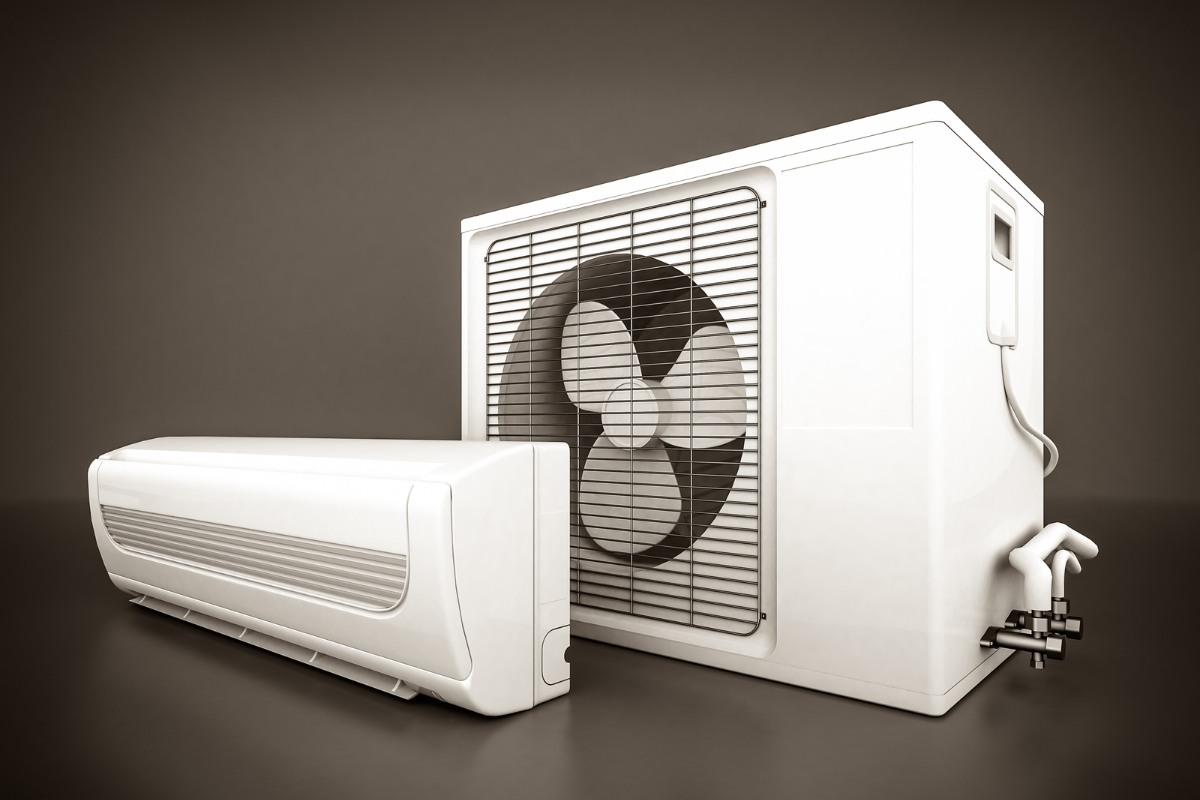
The question of who invented the air conditioner is seemingly straightforward, with Willis Carrier often receiving the sole credit. However, for those who delve deeper into the history of climate control, the answer reveals a far more intricate and fascinating story. It’s a tale that spans millennia, encompassing ancient ingenuity, scientific breakthroughs, and a cast of brilliant minds who collectively shaped the technology that revolutionized how we live, work, and interact with our environment.
Pre-Mechanical Cooling: Ancient Methods
Long before the hum of modern air conditioners, civilizations grappled with the challenge of staying cool. In the arid landscapes of ancient Egypt, evaporative cooling techniques emerged as a clever solution. Structures were designed to maximize airflow, and porous earthenware jars filled with water were used to humidify and cool the air. The Romans, known for their engineering prowess, incorporated aqueduct water into the walls of their homes, creating a rudimentary form of radiant cooling. In Persia, ingenious windcatchers, or “badgirs,” were developed to capture prevailing breezes and direct them into buildings, while underground canals called qanats provided a source of cool water for evaporative cooling.
These methods, while effective to a degree, were inherently limited by geography, climate, and scale. They offered localized relief but couldn’t provide the precise and widespread temperature control that would eventually become synonymous with modern air conditioning. Yet, they laid the groundwork for future innovations, demonstrating the enduring human desire to master the thermal environment.
Refrigeration’s Rise: Technologies Before Air Conditioning
The journey toward mechanical cooling truly began with the scientific revolution of the 17th and 18th centuries. As scientists began to unravel the mysteries of heat, temperature, and the states of matter, the foundation for artificial refrigeration was laid. In 1748, Scottish physician William Cullen achieved a significant milestone by demonstrating artificial refrigeration through the evaporation of ether under a partial vacuum. This marked a pivotal moment, proving that artificial cooling was scientifically possible.
Later, in the early 19th century, Michael Faraday’s experiments with the liquefaction of gases, particularly ammonia, further advanced the understanding of refrigeration principles. Building upon this knowledge, American inventor Jacob Perkins patented the first vapor-compression refrigeration system in 1834. Perkins’ system, which used ether as a refrigerant, was a groundbreaking achievement, demonstrating the feasibility of a continuous cooling cycle.
هل تبحث عن حلول لتوفير الطاقة تعمل بالحركة؟
تواصل معنا للحصول على أجهزة استشعار الحركة PIR بالكامل، والمنتجات الموفرة للطاقة والتي تعمل بالحركة، ومفاتيح أجهزة استشعار الحركة، والحلول التجارية للإشغال/الشاغر.
These early refrigeration systems were primarily used for ice production and food preservation. However, they faced numerous challenges, including the development of efficient and reliable compressors, the selection of suitable refrigerants, and the overall complexity of the systems. Despite these hurdles, the stage was set for the next leap forward: controlling not just temperature, but also humidity and air quality.
Willis Carrier: The “Apparatus for Treating Air”
Enter Willis Carrier, a young engineer working for the Buffalo Forge Company in the early 20th century. In 1902, Carrier was tasked with solving a vexing problem at the Sackett-Wilhelms Lithographing & Publishing Company in Brooklyn. Fluctuations in temperature and humidity were causing the printing paper to expand and contract, resulting in misaligned colors and poor print quality.
Carrier recognized that controlling humidity was just as crucial as controlling temperature. He embarked on a quest to develop a system that could precisely regulate both. His ingenious solution, patented in 1906 as the “Apparatus for Treating Air,” was the world’s first truly modern air conditioning system. Carrier’s invention utilized chilled coils to cool the air, but its true innovation lay in its ability to control humidity by adjusting the dew point temperature. He developed spray nozzles to create a fine mist of water, allowing for precise control over the moisture content of the air. Furthermore, he incorporated fans and filters to ensure proper air circulation and cleanliness.
Carrier’s system was a marvel of engineering, and its impact on the printing industry was immediate and profound. But its significance extended far beyond printing. Carrier had established the four fundamental functions of modern air conditioning: temperature control, humidity control, air circulation, and ventilation. His development of psychrometric charts, which graphically represented the relationships between temperature, humidity, and other air properties, provided a scientific basis for air conditioning design and became an indispensable tool for engineers.
While Carrier’s early systems were large, expensive, and relied on toxic refrigerants like ammonia, they marked the dawn of a new era in climate control. He had not only solved a specific industrial problem but had also laid the foundation for an industry that would transform the world.
Beyond Carrier: Other Innovators and Approaches
While Willis Carrier rightfully deserves recognition as a pivotal figure in the history of air conditioning, it’s crucial to acknowledge that he was not alone in this endeavor. A constellation of other inventors and engineers contributed to the development and refinement of air conditioning technology, often pursuing alternative approaches and pushing the boundaries of what was possible.
Stuart Cramer, a textile engineer, is credited with coining the term “air conditioning” in 1906. He recognized the importance of controlling both temperature and humidity in textile mills to improve product quality and worker comfort. Frederick Jones, a prolific African American inventor, developed the first practical portable air conditioning unit in the 1930s. His invention revolutionized the transportation of perishable goods, enabling the long-haul trucking industry to flourish.
Robert Sherman, in the late 1940s, invented the first mass-produced window air conditioner, making air conditioning more accessible to homeowners. Meanwhile, companies like General Electric and Frigidaire played a significant role in advancing air conditioning technology, developing more efficient compressors, and introducing new refrigerants.
The development of absorption refrigeration, which uses heat rather than mechanical energy to drive the cooling cycle, offered an alternative to the dominant vapor-compression technology. While absorption systems were less efficient in many applications, they found niche uses, particularly in areas with abundant waste heat or where electricity was scarce.
قد تكون مهتمًا بـ

- الجهد الكهربائي: بطاريتان AAA
- وضع النهار/الليل
- التأخير الزمني: 15 دقيقة، 30 دقيقة، ساعة واحدة (افتراضي)، ساعتان

- مستشعر إشغال PIR للسقف مع مخرج مرحل اتصال جاف
- مصدر إمداد بالطاقة منخفض الجهد 12/24VDC أو 12/24VAC
- ملامسات مرحل معزولة (COM وNO وNC) لمدخلات التحكم في أنظمة إدارة الطاقة (EMS) والتدفئة والتهوية وتكييف الهواء (HVAC) وإدارة المباني

- مفتاح مستشعر الحركة بالموجات الدقيقة بجهد منخفض من التيار المستمر (DC) للتركيب الغاطس في السقف
- دخل 12 VDC / 24 VDC مع نطاق من 10 إلى 30 VDC
- تيار تشغيل أقصى 10A مع تأخير زمني قابل للتعديل، وعتبة إضاءة (Lux)، وحساسية قابلة للضبط
- مفتاح مستشعر الحركة بالموجات الدقيقة للأحمال العالية للتركيب الغاطس في السقف
- دخل جهد الخط 100-265 VAC، طراز 10A
- استشعار بالموجات الدقيقة بتردد 5.8 GHz مع تأخير زمني قابل للتعديل، وعتبة إضاءة (Lux)، وحساسية قابلة للضبط
- مفتاح مستشعر الحركة بالموجات الدقيقة للتركيب الغاطس في السقف
- دخل جهد الخط 100-265 VAC، طراز 5A
- استشعار بالموجات الدقيقة بتردد 5.8 GHz مع تأخير زمني قابل للتعديل، وعتبة إضاءة (Lux)، وحساسية قابلة للضبط
- خافض إضاءة بمستشعر الإشغال RZ037 PIR للتركيب السقفي بقدرة جهد 220V
- تيار تشغيل أقصى 3A مع حمل مقدر يبلغ 660W
- زر LUX للتحكم في تشغيل/إيقاف مستشعر الضوء ومستوى سطوع خفت الإضاءة المحدد من قبل المستخدم
- خافض إضاءة بمستشعر الإشغال RZ037 PIR للتركيب السقفي بقدرة جهد 110V
- تيار تشغيل أقصى 3A مع حمل مقدر يبلغ 330W
- زر LUX للتحكم في تشغيل/إيقاف مستشعر الضوء ومستوى سطوع خفت الإضاءة المحدد من قبل المستخدم

- مفتاح مستشعر حركة ميكروويف لسقف، يعمل بالتيار المستمر منخفض الجهد
- دخل 12 VDC / 24 VDC مع نطاق من 10 إلى 30 VDC
- تيار تشغيل أقصى 10A مع تأخير زمني قابل للتعديل، وعتبة إضاءة (Lux)، وحساسية قابلة للضبط
- مفتاح مستشعر حركة ميكروويف لسقف ذو حمل أعلى
- دخل جهد الخط 100-265 VAC، طراز 10A
- استشعار بالموجات الدقيقة بتردد 5.8 GHz مع تأخير زمني قابل للتعديل، وعتبة إضاءة (Lux)، وحساسية قابلة للضبط
- مفتاح مستشعر حركة ميكروويف لسقف
- دخل جهد الخط 100-265 VAC، طراز 5A
- استشعار بالموجات الدقيقة بتردد 5.8 GHz مع تأخير زمني قابل للتعديل، وعتبة إضاءة (Lux)، وحساسية قابلة للضبط

- مفتاح حساس الحركة للأشعة تحت الحمراء PIR المدمج للسقف يعمل بالتيار المستمر منخفض الجهد
- دخل 12 VDC / 24 VDC مع نطاق من 10 إلى 30 VDC
- أقصى تيار تشغيل 10A مع تأخير زمني قابل للتعديل وعتبة إضاءة (Lux) وحساسية قابلتين للتعديل

- مفتاح حساس الحركة للأشعة تحت الحمراء PIR المدمج للسقف للأحمال العالية
- دخل جهد الخط 100-265 VAC، طراز 10A
- كشف بزاوية 360 درجة مع تأخير زمني قابل للتعديل وعتبة إضاءة (Lux) وحساسية قابلتين للتعديل
- مفتاح حساس الحركة للأشعة تحت الحمراء PIR المدمج للسقف
- دخل جهد الخط 100-265 VAC، طراز 5A
- كشف بزاوية 360 درجة مع تأخير زمني قابل للتعديل وعتبة إضاءة (Lux) وحساسية قابلتين للتعديل

- طقم مفتاح ومستقبل لاسلكي للتحكم في تشغيل وإيقاف الإضاءة الداخلية
- مستقبل 100-230VAC، 50/60Hz بتيار مقدر 5A
- مفتاح لاسلكي يعمل ببطارية CR2032 مع اتصال بتردد 2.4GHz
- مستشعر شغور (تشغيل تلقائي/إيقاف تلقائي)
- 12–24V DC (10–30VDC)، حتى 10A
- تغطية 360 درجة، بقطر 8–12 م
- تأخير زمني من 15 ثانية إلى 30 دقيقة
- مستشعر إضاءة: إيقاف/15/25/35 لوكس
- حساسية عالية/منخفضة
- وضع الشغور بتشغيل تلقائي/إيقاف تلقائي
- 100–265V AC، 10A (يتطلب خط محايد)
- تغطية 360 درجة؛ قطر الكشف 8–12 م
- تأخير زمني من 15 ثانية إلى 30 دقيقة؛ شدة الإضاءة: إيقاف/15/25/35 لوكس؛ الحساسية: عالية/منخفضة
- وضع الشغور بتشغيل تلقائي/إيقاف تلقائي
- 100–265V AC, 5A (neutral required)
- تغطية 360 درجة؛ قطر الكشف 8–12 م
- تأخير زمني من 15 ثانية إلى 30 دقيقة؛ شدة الإضاءة: إيقاف/15/25/35 لوكس؛ الحساسية: عالية/منخفضة
The early decades of the air conditioning industry were marked by intense competition and a flurry of innovation. Patent disputes were common, and companies jostled for market share, driving down prices and improving the performance of their systems. This dynamic environment fostered rapid technological advancement, leading to smaller, more efficient, and more affordable air conditioners.
Air Conditioning’s Impact: Society, Economy, Architecture
The widespread adoption of air conditioning in the mid-20th century triggered a cascade of transformative changes across society, the economy, and the built environment. Industries that were once constrained by climate, such as manufacturing, pharmaceuticals, and data processing, could now operate year-round with unprecedented precision and efficiency. Air conditioning improved worker productivity, reduced spoilage, and enabled the development of new products and processes.
Perhaps the most visible impact of air conditioning was on demographics and urban development. The availability of affordable and reliable cooling spurred a massive migration to previously inhospitable regions, particularly in the American South and Southwest. Cities like Phoenix, Las Vegas, and Houston experienced explosive growth, transforming from sleepy towns into bustling metropolises.
Air conditioning also revolutionized architecture. Traditional building designs, which often incorporated features like high ceilings, cross-ventilation, and shading to mitigate heat, were gradually replaced by sealed, climate-controlled structures. The advent of the glass-and-steel skyscraper, a symbol of modernism, was made possible in part by the ability to artificially regulate indoor temperatures.
Beyond the physical changes, air conditioning profoundly altered social behavior and daily life. Homes became more comfortable year-round, leading to changes in clothing styles, leisure activities, and sleep patterns. Public spaces, such as theaters, restaurants, and shopping malls, became oases of cool comfort, attracting crowds and transforming the social landscape.
Air conditioning also played a crucial role in public health, particularly in reducing heat-related illnesses and deaths. Hospitals and healthcare facilities benefited from the ability to maintain sterile and temperature-controlled environments, improving patient outcomes.
Air Conditioning and the Environment: Present and Future
While the benefits of air conditioning are undeniable, its widespread use has also raised significant environmental concerns. Air conditioning systems are major consumers of energy, contributing to greenhouse gas emissions and exacerbating climate change. The refrigerants used in many systems, particularly older models, have been found to deplete the ozone layer or have high global warming potential.
The environmental impact of air conditioning is a complex issue that demands careful consideration. As the global population grows and developing countries experience rising living standards, the demand for air conditioning is projected to soar in the coming decades. This presents a formidable challenge: how to provide the benefits of cooling while minimizing its environmental footprint.
Fortunately, the air conditioning industry is responding to this challenge with a wave of innovation. Energy efficiency standards for air conditioners have become increasingly stringent, driving manufacturers to develop more efficient compressors, motors, and heat exchangers. The development of new refrigerants with lower global warming potential is also underway, although the transition to these alternatives is a gradual process.
Beyond technological improvements, there’s a growing recognition of the importance of sustainable cooling strategies. Passive cooling techniques, such as natural ventilation, shading, and thermal mass, are being rediscovered and integrated into building designs. Solar air conditioning, which uses solar energy to power the cooling cycle, is gaining traction in some regions.
One simple yet effective way individuals can contribute to a more sustainable future is by minimizing their AC energy waste. Products like the RZ050 Air Conditioner Motion Sensor offer a practical solution for automatically turning off AC units in unoccupied rooms, reducing energy consumption without sacrificing comfort.
احصل على الإلهام من محفظة منتجات مستشعرات الحركة Rayzeek.
لم تجد ما تبحث عنه؟ لا تقلق، فهناك دائمًا طرق بديلة لحل مشكلاتك. ربما تكون إحدى محافظ منتجاتنا هي الحل المناسب.
RZ050 Air Conditioner Motion Sensor
Go Green with Smart AC Control.
- Reduce your AC’s environmental impact.
- Automatically turns off your AC when the room is empty.
- Night mode ensures uninterrupted sleep.
The future of air conditioning will likely involve a combination of technological advancements, policy interventions, and behavioral changes. Smart thermostats, demand-response programs, and building automation systems can help optimize energy use and reduce peak demand. Public awareness campaigns can encourage consumers to adopt more energy-conscious cooling practices.
In conclusion, the invention of the air conditioner was not a singular event but rather a complex and multifaceted process involving numerous individuals and technological breakthroughs. While Willis Carrier’s contributions were undoubtedly pivotal, the full story encompasses a rich tapestry of scientific discovery, engineering ingenuity, and societal transformation. As we navigate the challenges of a warming world, understanding the history and evolution of air conditioning is essential to developing sustainable cooling solutions that can provide comfort and well-being for all while safeguarding the planet’s future.







