What is ELV Dimming
ELV Dimming (Electronic Low Voltage Dimming) is a dimming technology utilized in the lighting industry for light fixtures that employ electronic transformers. Unlike traditional or multi-location dimmers that adjust voltage levels using rheostats, ELV dimmers employ pulse-width modulation (PWM) to precisely control the power delivered to the light fixture, resulting in a smoother and more accurate dimming experience.
ELV dimming operates by turning off the electrical load at the trailing edge or end of the AC waveform. Also known as electronic or trailing edge dimmers, these dimmers control the power to the load by manipulating the ratio of on/off time, known as the “duty cycle,” in conjunction with the voltage related to the load. This level of control allows for precise adjustment of the luminosity of LED lights.
Inspire-se com os portfólios de sensores de movimento da Rayzeek.
Não encontra o que pretende? Não se preocupe. Existem sempre formas alternativas de resolver os seus problemas. Talvez um dos nossos portfólios possa ajudar.
ELV dimming offers several advantages, including compatibility with both resistive and capacitive loads, making it suitable for LED technology. LED drivers often require dimmers capable of effectively regulating the power supplied to the LEDs, and ELV dimmers have a proven track record of enhancing energy conservation while delivering functional and sustainable lighting. Furthermore, ELV dimming prevents excessive voltage influx, mitigating the risk of sudden current surges. Additionally, these dimmers eliminate the buzzing sound commonly associated with dimming, making them aesthetically preferable.
Procura Soluções de Poupança de Energia Ativadas por Movimento?
Contacte-nos para soluções completas de sensores de movimento PIR, produtos de poupança de energia ativados por movimento, interruptores com sensor de movimento e soluções comerciais de ocupação/vacância.
When selecting an LED lighting system, it is crucial to consider the required dimming technology. ELV dimming ensures optimal energy efficiency and prevents unnecessary expenditure. While not all LED applications necessitate dimming, the ability to adjust light output proves advantageous in many scenarios. To ensure quality and compatibility, it is advisable to procure LEDs and associated electrical accessories from reputable suppliers with expertise in electricity. Investing in the appropriate dimming technology can significantly enhance the performance and lifespan of LED lighting systems.
Perguntas frequentes
Do I Need a Low Voltage Dimmer
If you have low voltage lights that run on a reduced supply of either 12V or 24V, you will require a dimmer that is compatible with the same voltage. However, for line voltage systems that run on the standard voltage supply of 120V, a basic dimmer can be used.
Qual É a Diferença Entre um Regulador Normal e um Regulador ELV?
Um regulador ELV é concebido especificamente para regular a fonte de alimentação eletrónica de uma luz de halogéneo de baixa tensão. Ao contrário de um regulador comum, um regulador ELV faz o corte no fim de fase ("trailing edge") da onda de potência de modo a reduzir o zumbido. Assim, ELV, Fim de Fase ("Trailing Edge") e Fase Inversa ("Reverse Phase") referem-se todos à mesma funcionalidade.
As luzes LED precisam de um regulador de intensidade ELV
Embora a maioria dos LEDs integrados necessite da utilização de um regulador de intensidade ELV, existem certas marcas europeias que utilizam o sistema de 0-10 volts.
Quantas Lâmpadas LED Podem Estar Ligadas a um Único Regulador de Intensidade
A Varilight sugere que o ideal é ter no máximo 10 lâmpadas LED ligadas a um módulo regulador. No entanto, se tiver um painel regulador de três secções (three gang), pode ter um total de trinta lâmpadas LED no painel, com dez lâmpadas ligadas a cada módulo.
O Que Acontece se Utilizar um Regulador Específico para Luzes LED
Assim que instalar um regulador de intensidade concebido especificamente para luzes LED, irá melhorar a sua experiência de iluminação. Este regulador moderno foi desenvolvido para controlar de forma eficiente o fluxo de eletricidade para as lâmpadas LED, permitindo-lhe ajustar facilmente os níveis de brilho e criar o ambiente desejado no seu espaço.
What Happens if You Put a Regular Bulb in a Dimmer Switch
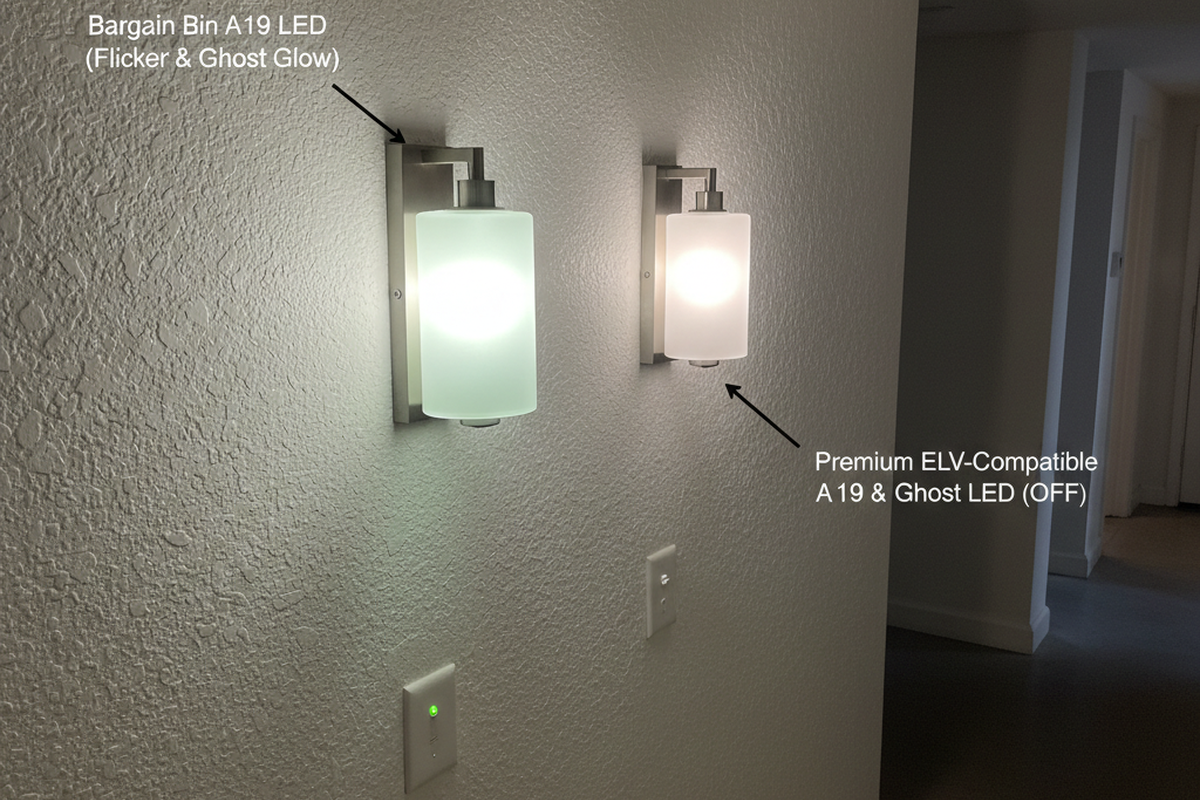
Yes, it is important to note that using regular light bulbs with dimmer switches is not recommended. If you do so, the performance of the light will be affected. Initially, it may seem fine, but over time, you will begin to notice a difference in the light intensity.
Why Do LED Bulbs Require a Special Dimmer Switch
Because LED bulbs have a lower wattage compared to incandescent bulbs, they may not work properly with older dimmer switches that are designed for higher wattage bulbs.
Que tipo de regulador de intensidade deve ter um balastro regulável
Para lâmpadas fluorescentes, é necessário um balastro regulável. A Lutron, uma empresa que introduziu o primeiro balastro eletrónico regulável há três décadas, disponibiliza agora uma vasta gama de balastros reguláveis e controlos para lâmpadas fluorescentes, com o objetivo de suportar os seus abrangentes sistemas de regulação para iluminação fluorescente.
What Is the Best Method of Dimming LED Lights
Phase-cut dimming, also referred to as triac dimming, is widely considered the most effective technique for dimming LED lights. By selectively removing a portion of the AC waveform, the power delivered to the LED is reduced, resulting in the desired dimming effect. Originally designed for incandescent bulbs, this method has been modified and successfully applied to LED lights.
Qual é a principal causa de problemas ao regular lâmpadas LED
Geralmente, os problemas com a regulação de lâmpadas LED surgem devido à falta de sincronização entre as lâmpadas LED e os controlos ou interruptores reguladores de intensidade. Para regular com sucesso as lâmpadas LED, é crucial garantir um emparelhamento adequado entre a lâmpada e os controlos.