
What is Smart Lighting
Smart lighting, also known as adaptive lighting, is a technology that integrates intelligence and logic into lamps or luminaires, enabling communication and interaction with the surrounding environment, occupants of a building, and other devices in an automated manner. This innovative lighting solution brings flexibility and automation to lighting infrastructure, allowing for control over various lighting features, ranging from simple on/off switching to complex adaptive lighting.
The primary objective of smart lighting is to provide an intelligent translation of the lighting needs and preferences of the environment and its occupants with minimal human intervention. It aims to maximize energy savings in commercial facilities and enhance convenience for users in private residences. Smart lighting systems can be implemented at different scales, from individual luminaires with a point-to-point connection structure to a network of interconnected luminaires forming a mesh network. These systems are designed to work across projects of all sizes and can communicate using a wide range of protocols over various communication channels.
Ces produits pourraient vous intéresser

- Détecteur de présence PIR pour montage au plafond avec sortie relais à contact sec
- Alimentation basse tension 12/24VDC ou 12/24VAC
- Contacts de relais isolés COM, NO et NC pour les entrées de gestion technique des bâtiments (GTB), de CVC et de contrôle des bâtiments

- Interrupteur détecteur de mouvement à micro-ondes basse tension DC encastrable au plafond
- Entrée 12 VDC / 24 VDC avec une plage de 10-30 VDC
- Courant de fonctionnement max de 10A avec temporisation, seuil Lux et sensibilité réglables
- Interrupteur détecteur de mouvement à micro-ondes encastrable au plafond pour charges plus élevées
- Entrée de tension secteur 100-265 VAC, modèle 10A
- Détection micro-ondes 5,8 GHz avec temporisation, seuil Lux et sensibilité réglables
- Interrupteur détecteur de mouvement à micro-ondes encastrable au plafond
- Entrée de tension secteur 100-265 VAC, modèle 5A
- Détection micro-ondes 5,8 GHz avec temporisation, seuil Lux et sensibilité réglables
- Variateur détecteur de présence PIR RZ037 pour montage au plafond pour alimentation 220V
- Courant de fonctionnement maximum de 3A avec charge nominale de 660W
- Le bouton LUX contrôle l'activation/désactivation du capteur de lumière et la luminosité de variation définie par l'utilisateur
- Variateur détecteur de présence PIR RZ037 pour montage au plafond pour alimentation 110V
- Courant de fonctionnement maximum de 3A avec charge nominale de 330W
- Le bouton LUX contrôle l'activation/désactivation du capteur de lumière et la luminosité de variation définie par l'utilisateur

- Interrupteur de détecteur de mouvement à micro-ondes pour montage au plafond, CC basse tension
- Entrée 12 VDC / 24 VDC avec une plage de 10-30 VDC
- Courant de fonctionnement max de 10A avec temporisation, seuil Lux et sensibilité réglables
- Interrupteur de détecteur de mouvement à micro-ondes pour montage au plafond à charge plus élevée
- Entrée de tension secteur 100-265 VAC, modèle 10A
- Détection micro-ondes 5,8 GHz avec temporisation, seuil Lux et sensibilité réglables
- Interrupteur de détecteur de mouvement à micro-ondes pour montage au plafond
- Entrée de tension secteur 100-265 VAC, modèle 5A
- Détection micro-ondes 5,8 GHz avec temporisation, seuil Lux et sensibilité réglables

- Interrupteur de détecteur de mouvement PIR encastré au plafond, CC basse tension
- Entrée 12 VDC / 24 VDC avec une plage de 10-30 VDC
- Courant de fonctionnement max. 10A avec temporisation, seuil Lux et sensibilité réglables

- Interrupteur de détecteur de mouvement PIR encastré au plafond à charge plus élevée
- Entrée de tension secteur 100-265 VAC, modèle 10A
- Détection à 360 degrés avec temporisation, seuil Lux et sensibilité réglables
- Interrupteur de détecteur de mouvement PIR encastré au plafond
- Entrée de tension secteur 100-265 VAC, modèle 5A
- Détection à 360 degrés avec temporisation, seuil Lux et sensibilité réglables

- Kit d'interrupteur et récepteur sans fil pour le contrôle de l'éclairage intérieur ON/OFF
- Récepteur 100-230VAC, 50/60Hz avec courant nominal de 5A
- Interrupteur sans fil alimenté par pile CR2032 avec communication 2.4GHz
- Mode d'occupation (Auto-ON/Auto-OFF)
- 12–24V DC (10–30VDC), jusqu'à 10A
- Couverture à 360°, diamètre de 8–12 m
- Temporisation de 15 s à 30 min
- Capteur de lumière Désactivé/15/25/35 Lux
- Sensibilité Haute/Basse
- Mode d'occupation Auto-ON/Auto-OFF
- 100–265V AC, 10A (neutre requis)
- Couverture à 360° ; diamètre de détection de 8–12 m
- Temporisation de 15 s à 30 min ; Lux DÉSACTIVÉ/15/25/35 ; Sensibilité Haute/Basse
- Mode d'occupation Auto-ON/Auto-OFF
- 100–265V AC, 5A (neutre requis)
- Couverture à 360° ; diamètre de détection de 8–12 m
- Temporisation de 15 s à 30 min ; Lux DÉSACTIVÉ/15/25/35 ; Sensibilité Haute/Basse
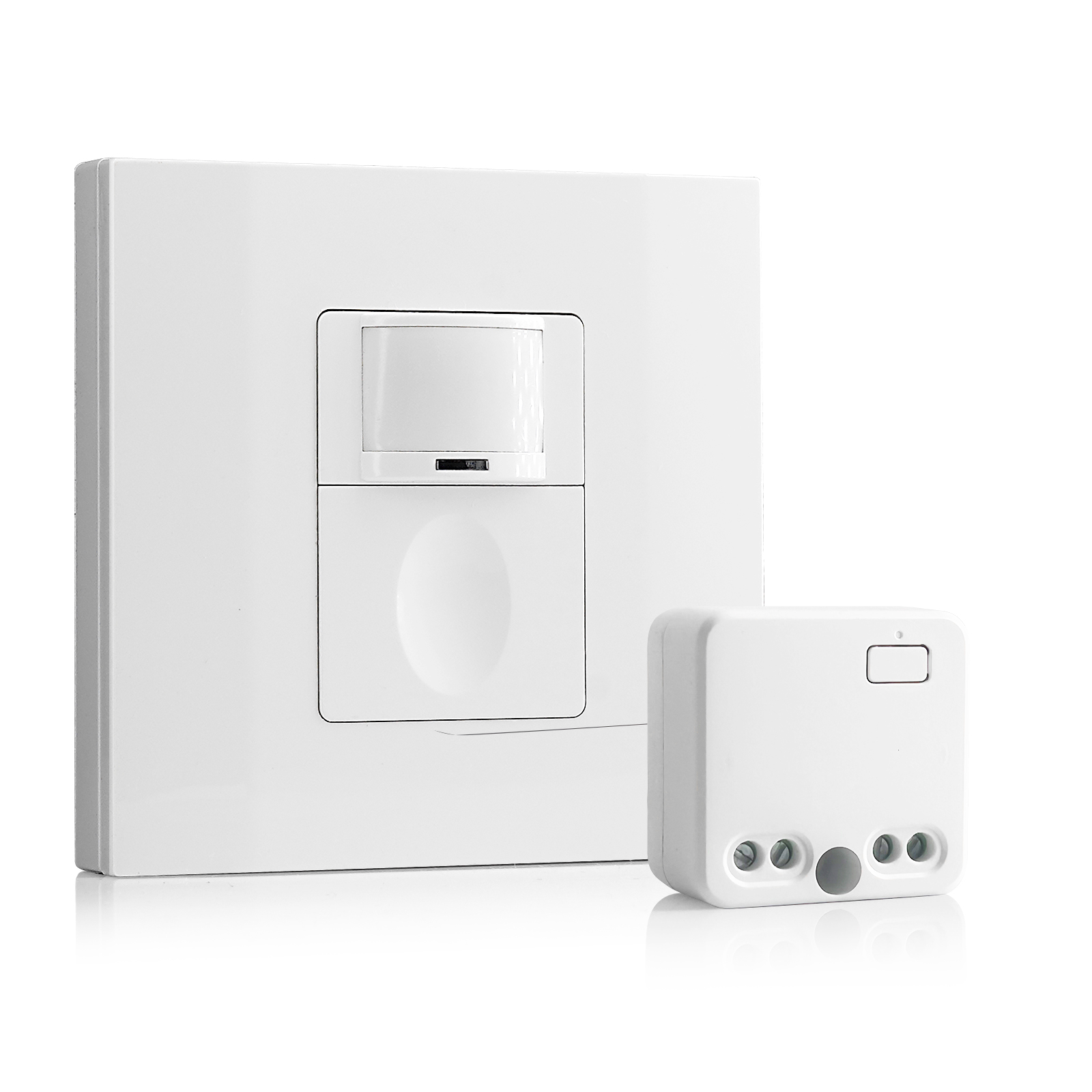
- 100V-230VAC
- Distance de transmission : jusqu'à 20m
- Détecteur de mouvement sans fil
- Contrôle filaire
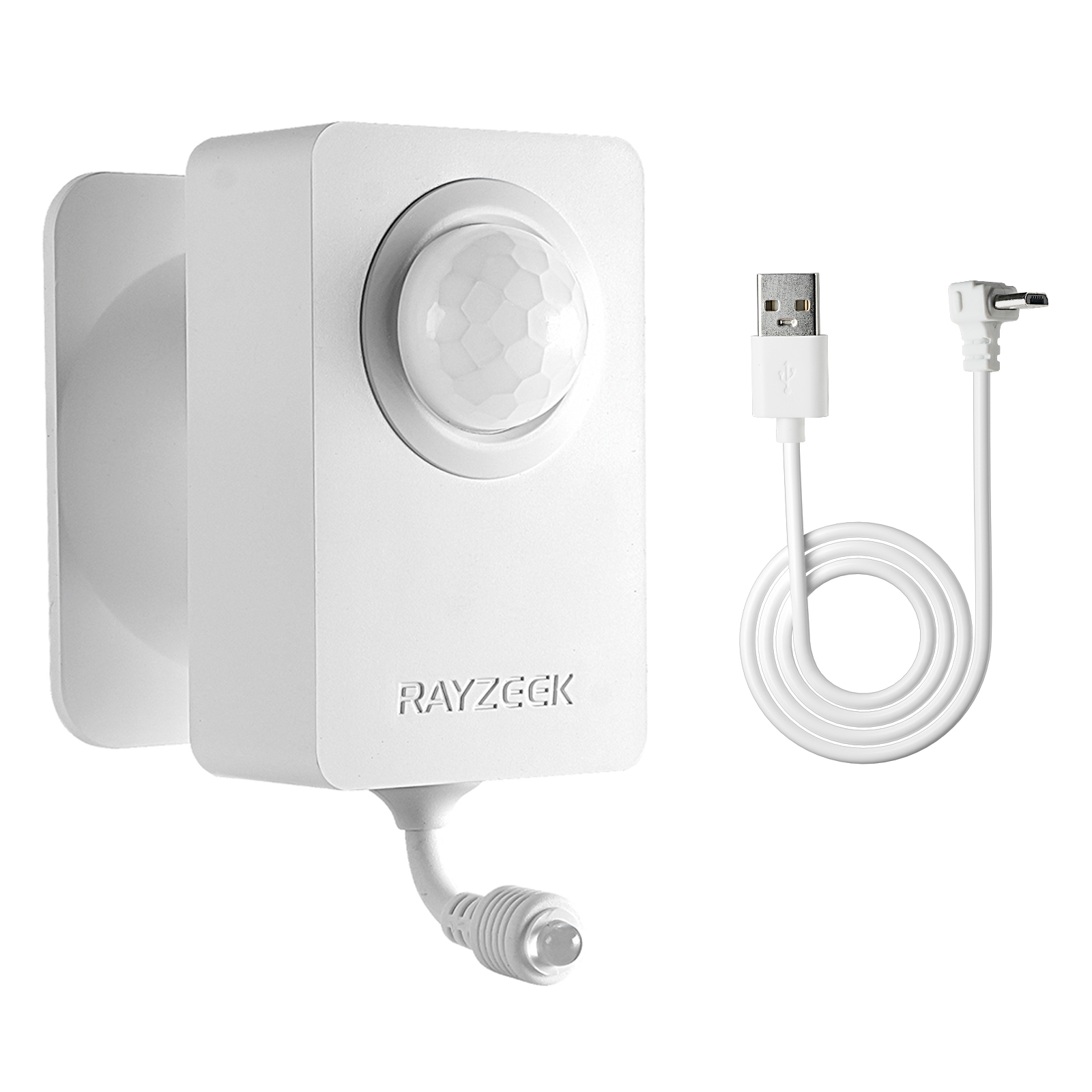
- Tension : 2x piles AAA / 5V DC (Micro USB)
- Mode Jour/Nuit
- Temporisation : 15min, 30min, 1h (par défaut), 2h
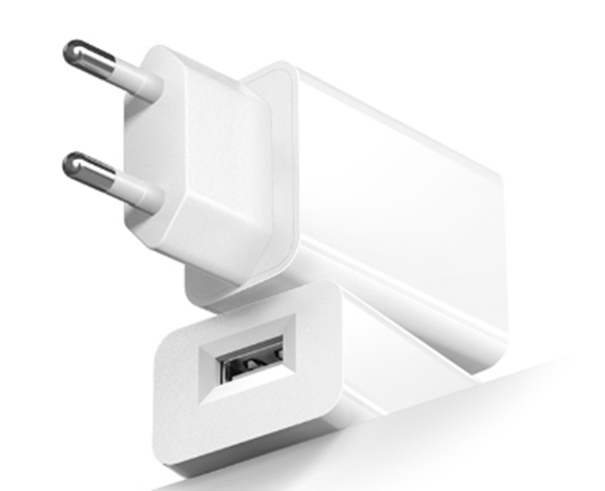
- Adaptateur secteur prise UE
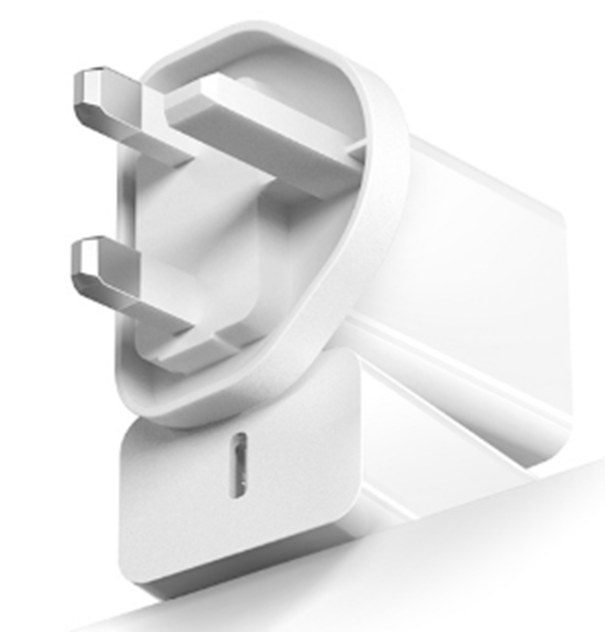
- Adaptateur secteur prise UK
By incorporating intelligence and connectivity into lighting systems, smart lighting enables a range of advanced functionalities. These functionalities include energy efficiency, personalization, automation, integration with other systems, data collection and analysis, remote control and monitoring, and maintenance and fault detection.
Laissez-vous inspirer par les gammes de capteurs de mouvement Rayzeek.
Vous ne trouvez pas ce que vous cherchez ? Ne vous inquiétez pas. Il existe toujours d'autres solutions pour résoudre vos problèmes. L'une de nos gammes de produits pourra peut-être vous aider.
Frequently Asked Questions
What Is the Difference Between Smart Light and Normal Light
They differ in terms of energy efficiency and lifespan. LED Smart Lights are designed to produce more brightness while consuming less energy compared to regular lights. Additionally, they have a longer lifespan. LED Smart Lights also feature an advanced control system that enables convenient operation through a mobile app or voice commands.
What Are the Benefits of Smart Lighting
Smart lighting offers the advantage of incorporating motion sensors in any room equipped with either a smart light switch or smart light bulb. By programming the bulbs to turn off when a room is unoccupied and only activate when motion is detected, energy conservation is further enhanced, especially when utilizing LED bulbs.
Do Smart Lights Increase Your Electric Bill
Smart lights are more energy-efficient compared to CFL light bulbs and incandescent bulbs. They consume less electricity and produce less heat while maintaining the same level of light quality. Therefore, using smart lights will not increase your electric bill.
Is Smart Lighting Expensive
Ordinary LED bulbs from well-known brands such as GE and Philips typically range in price from $1 to $3. However, when it comes to smart bulbs from these same brands, you’ll notice that their prices begin at $8 per bulb and can reach up to $15. But what is the reason behind the higher cost of smart light bulbs? Let’s delve into why smart lighting tends to be more expensive.
Do Smart Lights Require Wi-Fi
Smart lights do not require Wi-Fi to function. They operate similarly to regular LED lighting and still possess energy-saving features. Additionally, many smart lights are equipped with Bluetooth connectivity, allowing you to control them using your mobile phone, even if the Wi-Fi is unavailable.
Do Smart Lights Have Memory
The power-off memory function allows a smart light to retain information about its light status, color, and color temperature even after it has been turned off.







