
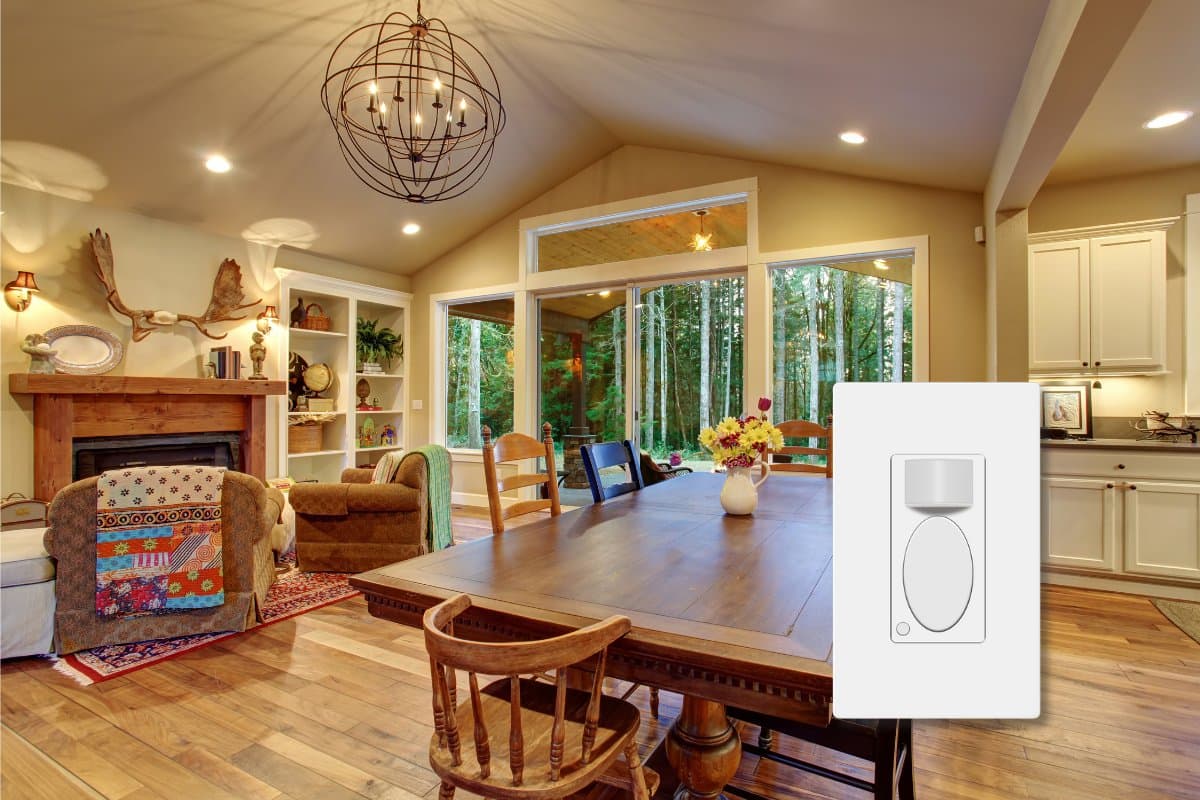
We’ve all been there, right? Walking into a room, the lights blaze on, and then we forget to turn them off when we leave. It’s a small thing, but it adds up. That’s where motion sensor light switches come in. They’re like your personal little energy-saving sidekicks, turning lights on when you need them and off when you don’t. But the question is, do they really save as much energy as they promise?
Contents
- What Is a Motion Sensor Switch and How It Works
- Types of Motion Sensor Switches and Features
- Main Benefits of Using Motion Sensor Switches
- How Much Energy Does It Save
- Are Motion Sensor Light Switches Worth the Investment
What Is a Motion Sensor Switch and How It Works
A motion sensor light switch is a special switch that detects movement in a room and automatically turns on/off the lights. This technology is particularly useful in areas such as bathrooms, staircases, or hallways, especially during nighttime. The beauty of motion sensor light switches is that they can fit in with any home decor style, replace any existing wall switch, and their installation is simple enough for anyone with basic DIY skills.
The working principle of motion sensor lights is relatively straightforward. They use a sensor(there are a variety of them; we’ll talk later) to detect motion and then automatically turn the light on upon detection and automatically turn off the lights when the detecting area is no longer occupied to save energy. Some motion sensor lights are designed to solely turn the lights off once a person leaves the room. The sensitivity of these lights may vary depending on the type of motion sensor light you install. There are also other useful features that make a motion sensor switch an all-around solution.
In addition to lighting, a motion sensor switch, similar to a regular single-pole switch, can also be used to trigger other devices. One of the common examples is ceiling fans. There are also special motion sensor switches that are designed to control lighting and ceiling fans simultaneously. This versatility makes motion sensor light switches a valuable addition to any home or business, providing convenience, energy efficiency, and enhanced security.
Types of Motion Sensor Switches and Features
In the world of motion sensor switches, there are primarily two types — occupancy and vacancy.
Inspire-se nos portfólios de sensores de movimento Rayzeek.
Não encontra o que procura? Não se preocupe. Há sempre formas alternativas de resolver os seus problemas. Talvez um dos nossos portfólios possa ajudar.
Both occupancy and vacancy sensors turn off the lights when people are not in the room. The difference is that occupancy sensors automatically turn on the light upon detection, yet vacancy sensors require you to manually turn on the light.
Occupancy Sensor Switches
An occupancy motion sensor switch automatically turns on the lights when you enter a room. This feature is particularly handy when your hands are full, such as when carrying groceries or a laundry basket. You won’t have to fumble for a switch or navigate a dimly lit room.
However, these switches might turn on the light even when it’s not needed as long as the motion sensor detects a movement. The common solution is to add a light sensor to allow the light to only turn on when it’s dark. They are most useful in areas where you don’t spend a lot of time or where you might not have a free hand to turn on a manual switch, such as your garage.
Vacancy Sensor Switches
Vacancy switches don’t turn the lights on automatically when you enter a room. Instead, you’ll need to turn on the lights manually. These switches only turn off the lights automatically when they don’t detect any movement for a set period. Vacancy switches provide more control over your lighting, preventing unnecessary energy usage if you’re only briefly entering a room or if there’s enough natural light.
While both types of switches have their advantages, many people find occupancy switches to be more convenient as they automatically provide light as soon as you enter a room. However, vacancy switches, mostly required in commercial buildings, offer more control over your lighting, preventing unnecessary energy usage if you’re only briefly entering a room or if there’s sufficient natural light.
In addition to these, there are also different types of motion sensor light switches based on the technology they use:
Passive Infrared Sensor
Passive infrared(PIR) sensors work by sensing changes in heat emitted by warm bodies in the environment. PIR sensors are the standard and most utilized sensor technology. They are cheap, durable, and very energy-efficient as they only passively detect infrared signals in the environment.
They are particularly useful in stairways, garages, and backyards as they minimize the need to navigate in dark places.
Ultrasonic Sensors
Ultrasonic sensors work by emitting ultrasonic sound waves and detecting the reflected sound waves bounced by moving objects in the environment. Ultrasonic sensors have the advantage of being very sensitive and able to detect small and fine motions.
The main disadvantage is that, being an active sensor, ultrasonic sensors need to consume a lot of energy by constantly emitting and receiving ultrasonic soundwaves. This makes them not as energy-friendly as PIR sensors.
Main Benefits of Using Motion Sensor Switches
The main benefits of using motion sensor switches are numerous and can be categorized into these areas:
Safety
Motion sensor switches significantly enhance safety in your home. They illuminate dark areas as soon as movement is detected, helping to prevent accidents such as falling on a staircase or tripping over objects in the entryway. For instance, they can light up a dark staircase or entryway when you come home late.
Security
These switches can deter potential intruders by activating lights when motion is detected. This increased visibility can help to identify and deter suspicious activity. This sudden illumination can startle and discourage burglars, thereby enhancing the security of your home.
Convenience
The convenience offered by motion sensor switches is another significant benefit. They eliminate the need to manually turn on lights when you enter a room or fumble for switches in the dark, providing illumination exactly when and where it’s needed. For instance, they can ensure you never have to navigate a dark bathroom or laundry room. This is particularly useful in situations where your hands might be full, such as when carrying groceries.
Savings
One of the most compelling benefits of motion sensor switches is that they contribute to substantial energy savings on your electricity bill. By ensuring lights are only on when needed and automatically turning them off after a certain period of inactivity, these switches help to reduce unnecessary energy consumption, leading to lower electricity bills.
Talvez esteja interessado em

- Sensor de ocupação PIR de montagem no teto com saída de relé de contacto seco
- Alimentação de baixa tensão de 12/24VDC ou 12/24VAC
- Contactos de relé isolados COM, NO e NC para entradas de EMS, AVAC e controlo de edifícios

- Interruptor com sensor de movimento micro-ondas de teto embutido de baixa tensão DC
- Entrada de 12 VDC / 24 VDC com intervalo de 10-30 VDC
- Corrente máxima de funcionamento de 10A com temporizador, limite de Lux e sensibilidade ajustáveis
- Interruptor com sensor de movimento micro-ondas de teto embutido para cargas mais elevadas
- Entrada de tensão de linha de 100-265 VAC, modelo de 10A
- Deteção por micro-ondas de 5.8 GHz com temporizador, limite de Lux e sensibilidade ajustáveis
- Interruptor com sensor de movimento micro-ondas de teto embutido
- Entrada de tensão de linha de 100-265 VAC, modelo de 5A
- Deteção por micro-ondas de 5.8 GHz com temporizador, limite de Lux e sensibilidade ajustáveis
- Regulador de intensidade com sensor de ocupação PIR RZ037 de montagem no teto para alimentação de 220V
- Corrente máxima de funcionamento de 3A com carga nominal de 660W
- O botão LUX controla o LIGAR/DESLIGAR do sensor de luz e o brilho de regulação definido pelo utilizador
- Regulador de intensidade com sensor de ocupação PIR RZ037 de montagem no teto para alimentação de 110V
- Corrente máxima de funcionamento de 3A com carga nominal de 330W
- O botão LUX controla o LIGAR/DESLIGAR do sensor de luz e o brilho de regulação definido pelo utilizador

- Interruptor com sensor de movimento micro-ondas de teto DC de baixa tensão
- Entrada de 12 VDC / 24 VDC com intervalo de 10-30 VDC
- Corrente máxima de funcionamento de 10A com temporizador, limite de Lux e sensibilidade ajustáveis
- Interruptor com sensor de movimento micro-ondas de teto para carga mais alta
- Entrada de tensão de linha de 100-265 VAC, modelo de 10A
- Deteção por micro-ondas de 5.8 GHz com temporizador, limite de Lux e sensibilidade ajustáveis
- Interruptor com sensor de movimento micro-ondas de teto
- Entrada de tensão de linha de 100-265 VAC, modelo de 5A
- Deteção por micro-ondas de 5.8 GHz com temporizador, limite de Lux e sensibilidade ajustáveis

- Interruptor com sensor de movimento PIR de encastrar no teto DC de baixa tensão
- Entrada de 12 VDC / 24 VDC com intervalo de 10-30 VDC
- Corrente máxima de funcionamento de 10A com atraso de tempo, limiar de Lux e sensibilidade ajustáveis

- Interruptor com sensor de movimento PIR de encastrar no teto para carga mais alta
- Entrada de tensão de linha de 100-265 VAC, modelo de 10A
- Deteção de 360 graus com atraso de tempo, limiar de Lux e sensibilidade ajustáveis
- Interruptor com sensor de movimento PIR de encastrar no teto
- Entrada de tensão de linha de 100-265 VAC, modelo de 5A
- Deteção de 360 graus com atraso de tempo, limiar de Lux e sensibilidade ajustáveis

- Kit de interruptor sem fios e recetor para controlo de iluminação ligar/desligar (ON/OFF) em espaços interiores
- Recetor de 100-230VAC, 50/60Hz com corrente nominal de 5A
- Interruptor sem fios alimentado por pilha CR2032 com comunicação de 2.4GHz
- Presença (Ligar automático/Desligar automático)
- 12–24V DC (10–30VDC), até 10A
- Cobertura de 360°, 8–12 m de diâmetro
- Atraso de tempo de 15 s–30 min
- Sensor de luz Desligado/15/25/35 Lux
- Sensibilidade Alta/Baixa
- Modo de presença com Ligar automático/Desligar automático
- 100–265V AC, 10A (necessário neutro)
- Cobertura de 360°; diâmetro de deteção de 8–12 m
- Atraso de tempo de 15 s–30 min; Lux DESLIGADO/15/25/35; Sensibilidade Alta/Baixa
- Modo de presença com Ligar automático/Desligar automático
- 100–265V AC, 5A (neutro necessário)
- Cobertura de 360°; diâmetro de deteção de 8–12 m
- Atraso de tempo de 15 s–30 min; Lux DESLIGADO/15/25/35; Sensibilidade Alta/Baixa
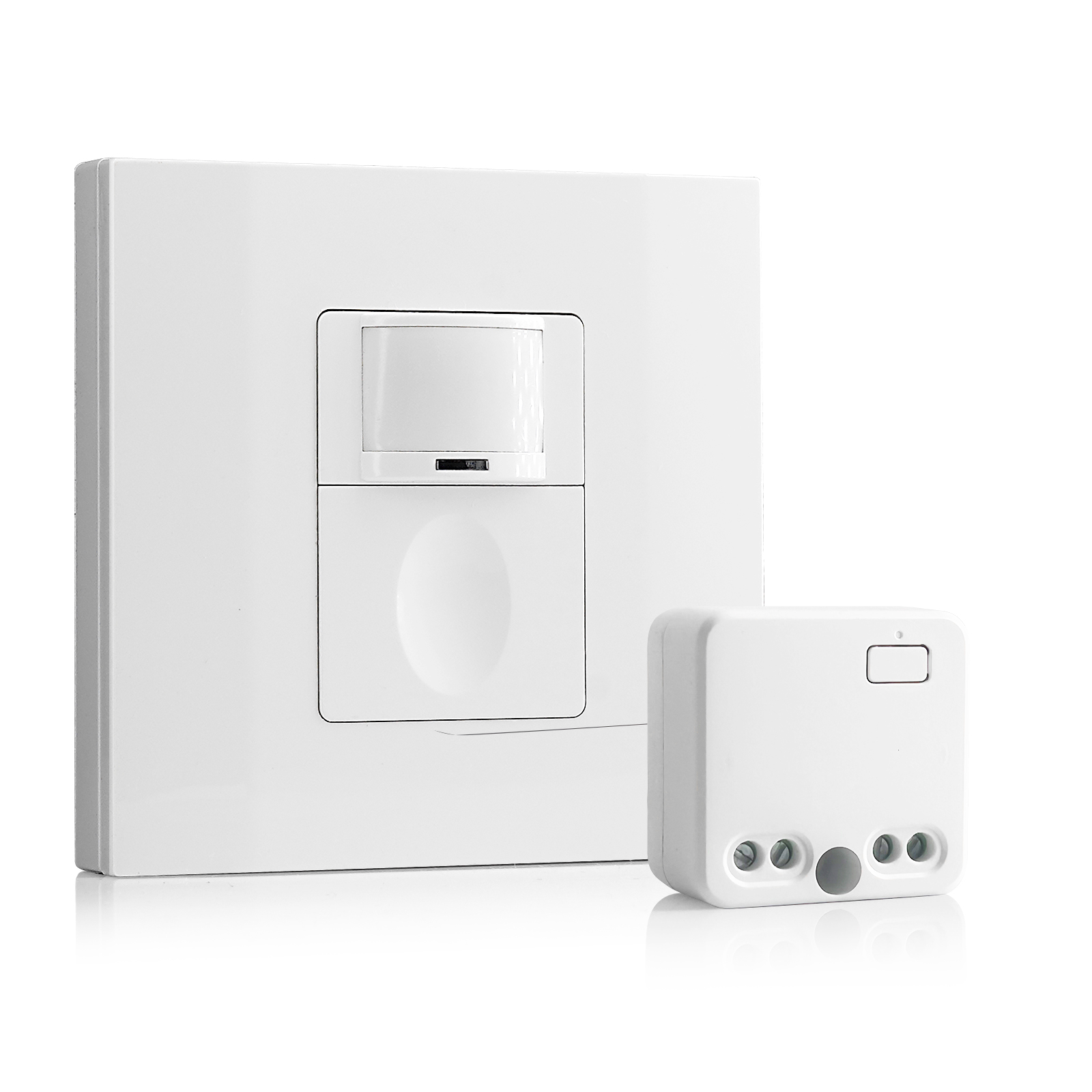
- 100V-230VAC
- Distância de Transmissão: até 20m
- Sensor de movimento sem fios
- Controlo com fios
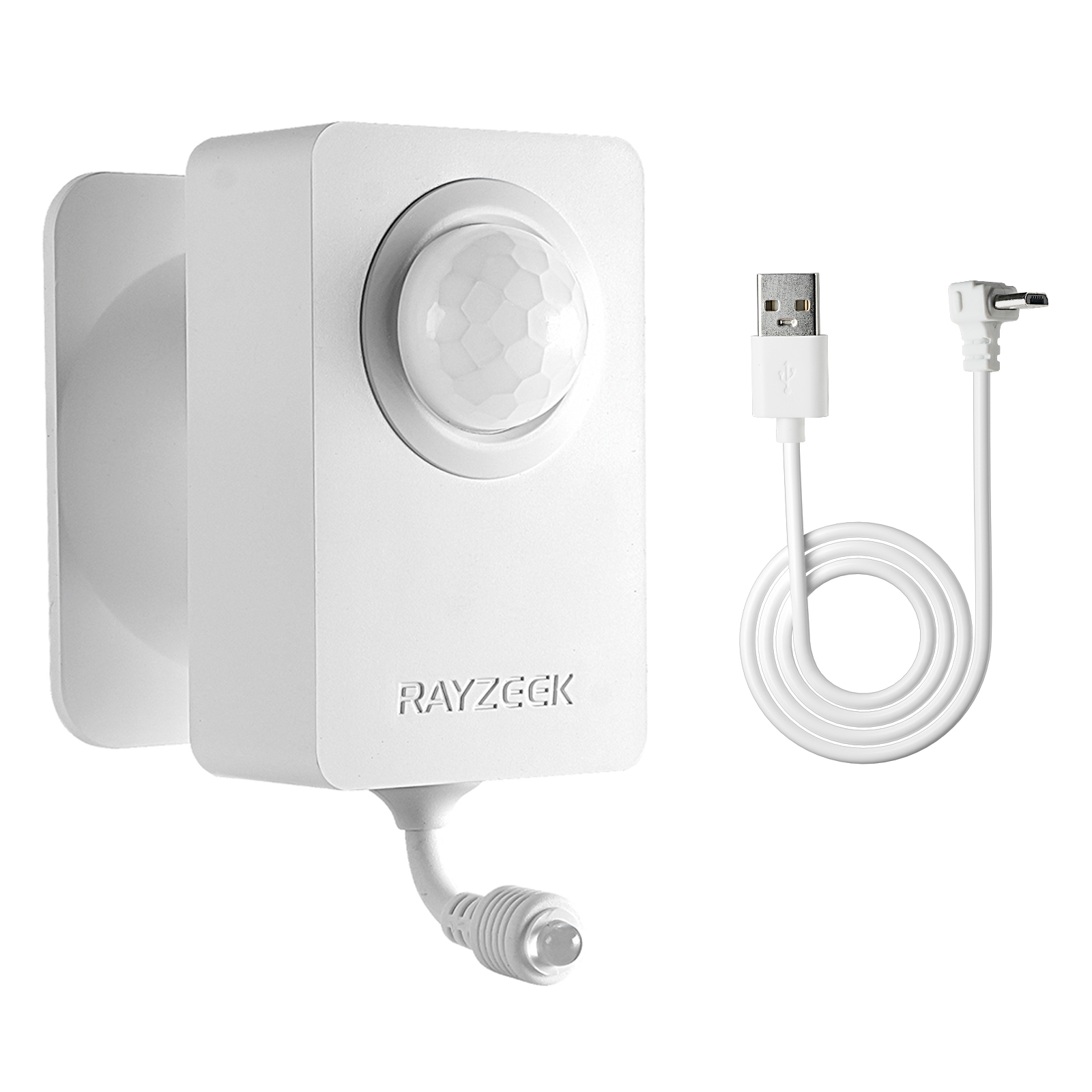
- Tensão: 2x Pilhas AAA / 5V DC (Micro USB)
- Modo Dia/Noite
- Temporização: 15min, 30min, 1h(predefinido), 2h
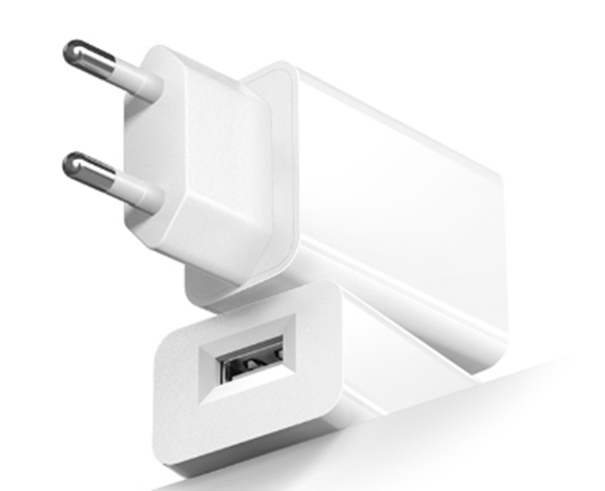
- Adaptador de alimentação com ficha UE
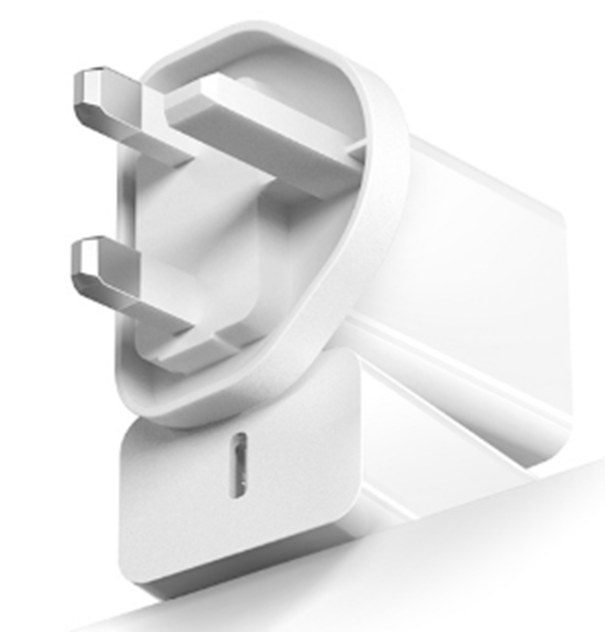
- Adaptador de alimentação com ficha UK
Time Efficiency
Finally, the automatic activation of lights means you no longer need to search for switches in the dark or remember to turn off lights when leaving a room.
In addition to these benefits, motion sensor switches can provide an element of modern sophistication to your home. They can be installed in various locations around your home, including long corridors, dressing rooms, bedrooms, living rooms, bathrooms, staircases, and entrances. This versatility further adds to their appeal.
How Much Energy Does It Save
Motion sensor light switches can indeed save a significant amount of energy, which in turn can lead to a reduction in your electricity bill. They work by automatically turning off the lights when no activity is detected in a room, thus preventing unnecessary energy consumption.
According to a study by the Environmental Protection Agency, businesses that use motion sensor switches can achieve an average of 30% ~ 60% energy savings. Another study conducted on a university campus found that installing wired occupancy sensors to control lighting in more than 200 rooms in 10 buildings provided an annual cost savings of about $14,000.
In terms of specific areas, studies have shown that installing occupancy sensors can reduce lighting energy use by 10% to 90% or more, depending on the type of space in which the motion sensors are installed. Here are some estimates of potential energy savings for different types of rooms: For instance, you can expect to save about 29% in a break room, 40-46% in a classroom, 45% in a conference room, 30-80% in a corridor, 13-50% in a private office, 10% in an open office, 30-90% in a restroom, 45-80% in a storage area, and 35-54% in a warehouse.
However, the savings also depend on the habits of the individuals in the space. If lights are often left on unnecessarily, then the savings will be greater. On the other hand, in high-traffic areas where lights are frequently in use, the savings might be less.
The Hidden Cost
Though motion sensor switches have some idle power usage for detecting movement on standby mode, it’s a relatively small cost. Let’s do math.
PIR motion sensors have a standby idle power consumption(from efficient to normal) from 0.1W to 1W. For 24 hours a day, 365 days a year. That’s 0.876KWh to 8.760KWh per year.
As of February 2023, the average residential electricity rate in the U.S. is about 23 cents per kilowatt-hour (kWh). So, a motion sensor switch itself, in standby mode, will cost $0.2 to $2 per year.
Given a common LED power consumption of 10 watts per hour, using a motion sensor switch a year is equivalent to forgetting an LED light on for 87.6 to 876 hours, that’s 14 mins to 2.4 hours per day.
Some manufacturers, like Lutron, Wattsstopper, and Leviton, claim much smaller idle current consumption than the example above. We can safely come to the conclusion that if you ever forget to turn off an LED for 14 minutes per day for a whole year, the motion sensor light switch is definitely worth it.
Are Motion Sensor Light Switches Worth the Investment
The final question is straightforward yet simple: are motion sensor light switches worth the investment?
The initial cost of a motion sensor light switch is relatively higher than that of a common wall switch. Let’s have a look at the motion sensor switches sold currently on Amazon. The price range is from $10 to $20. Let’s take $15 as an average.
From the above, we know that, on average, a motion sensor light switch itself will consume idle power, which is nearly $0.2 to $2 per year.
Let’s say, on average, you forget to turn off the light for 1 hour per day. That’s 10W/1000 X 1 hour X $0.23 kWh X 365 days = $0.8395 waste of lighting per year. The pure cost-saving minus the motion sensor’s own power consumption is $0.8395-$0.2 = $0.64 per year.
You will get your ROI in 23 years. Seems too long, right?
But that’s only for a 10W bulb. In reality, for a 150-square-foot dining room, you will need 40 watts of LED bulbs; for a 300-square-foot living room, you would need 85 watts of LED bulbs. Also, we are assuming the PIR idle power is 0.1 W. In reality, many sensor switch manufacturers claim much lower idle power costs.
Procura Soluções de Poupança de Energia Ativadas por Movimento?
Contacte-nos para sensores de movimento PIR completos, produtos de poupança de energia ativados por movimento, interruptores com sensor de movimento e soluções comerciais de Ocupação/Ausência.
So you will probably get your investment back in a few years and then only profit from the investment.
Don’t worry about the installation cost, either. Installing a motion sensor switch and/or replacing your existing switch is a DIY-level job. You don’t need to call an electrician to do it for you.







