
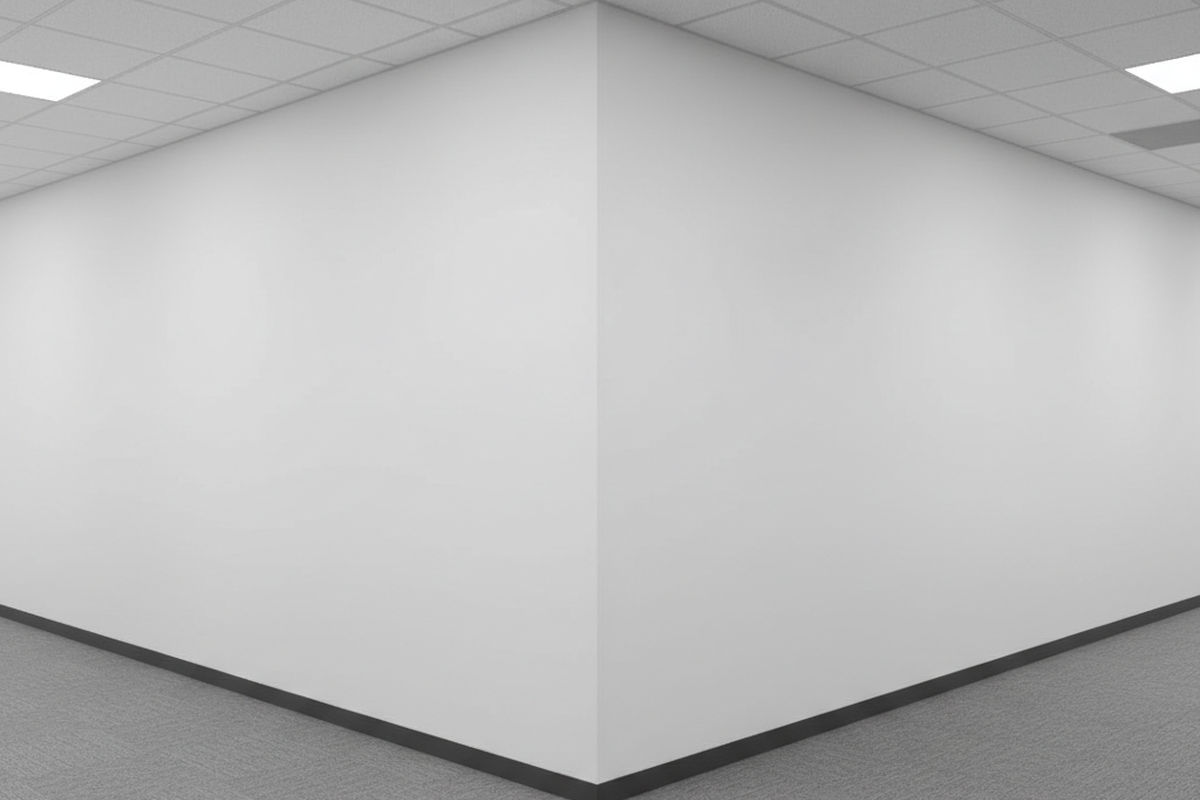
In commercial retrofits, the L-shaped corridor is the graveyard of “good enough” sensor placement. It’s the scenario where standard install-and-walk-away tactics consistently fail, usually resulting in a frantic wave of arms from someone plunged into darkness halfway to the break room.
A common assumption is that a high-end sensor with a 360-degree view and a massive detection radius can simply sit near the corner and cover both legs of the hallway. That assumption is expensive. It leads to callbacks, complaints about “haunted” lights, and eventually, a facility manager demanding the system be ripped out entirely.
The failure here is rarely a defect in the hardware itself. A Rayzeek ceiling mount or similar commercial-grade PIR (Passive Infrared) sensor will perform exactly as the laws of physics dictate. The problem is that the installer is asking the sensor to do something impossible: see through a wall, or detect motion that is effectively invisible to its lens. When a user rounds a blind corner, they enter a dead zone that a single vertex-mounted sensor often cannot resolve until it’s too late. The coffee spills, the shin bangs against a cart, and the lighting control system gets blamed for what is ultimately a failure of geometry.
The Physics of the “Blind” Sensor
To solve the L-shape, you have to stop thinking of a motion sensor as a camera. It doesn’t “see” people; it detects the movement of heat across a grid. Inside the white plastic dome of a PIR sensor sits a Fresnel lens—a faceted piece of optical plastic that slices the room into wedge-shaped detection zones. The sensor triggers when a heat source (a human body) crosses the boundary between these zones.
This mechanism creates a critical weakness often buried in product manuals: the difference between tangential and radial motion.
Tangential motion is movement 가로질러 the sensor’s field of view. This cuts through multiple detection wedges rapidly, creating a strong, unmistakable signal. It is the best-case scenario for PIR.
Radial motion, however, is movement directly 걸어올 때는 또는 away from the sensor. When a person walks straight at a sensor, they essentially stay within a single wedge for a longer duration. They present a static heat signature that grows slightly larger but doesn’t “move” across the grid. The sensor is nearly blind to this approach.
Rayzeek 동작 센서 포트폴리오에서 영감을 얻어보세요.
원하는 제품을 찾지 못하셨나요? 걱정하지 마세요. 문제를 해결할 수 있는 대안은 언제나 있습니다. 저희 포트폴리오 중 하나가 도움이 될 수 있습니다.
In a long corridor, a person walking down the center line is moving radially relative to a sensor placed at the far end. They might walk twenty feet before the sensor registers enough differential to trigger. Now, consider the L-shape. If you place a single sensor at the corner, users approaching from either leg of the L are moving radially—directly at the sensor. They remain in the blind spot until they are practically underneath the device.
You might be tempted to solve this with dual-technology sensors (combining PIR with Ultrasonic or Microwave detection) to fill the room with active waves. While technically true that Ultrasonic is more sensitive to minor motion, it introduces a new set of liabilities in a hallway. Ultrasonic waves bounce off hard surfaces and can penetrate drywall and glass. In a retrofit, this means the hallway lights trigger every time someone shifts in their chair in an adjacent office or walks past a closed door. For corridors, PIR remains the superior tool for stability, provided the layout respects the limitations of the lens.
The Vertex Strategy: Two Eyes on the Turn

The only way to guarantee a reliable calibration in an L-shaped corridor is to abandon the single-sensor economy. You cannot place one eye at the vertex and expect it to see effectively down both paths. The professional approach requires a dedicated sensor for each leg of the L, positioned to create an overlapping “kill zone” at the turn.
Instead of mounting one unit in the center of the intersection, push two sensors out away from the corner:
- Sensor A in the North leg, perhaps 10 to 15 feet back from the turn, looking South toward the intersection.
- Sensor B in the East leg, looking West toward the intersection.
The exact distance depends on the ceiling height and the coverage pattern of the specific Rayzeek model, but the intent is geometric: you want Sensor A to catch the person in the East leg moving tangentially (across its view) before they even reach the turn.
This creates a scenario where the sensors watch each other’s blind spots. The person walking down the North hallway is moving radially toward Sensor A (weak detection) but tangentially across the field of view of Sensor B (strong detection). By the time they reach the critical decision point—the corner—both sensors have had ample opportunity to register a tangential crossing. The lights are on before the user pivots.
This layout also demands physical tuning beyond simple placement. In complex layouts where a sensor might see through an open doorway into a conference room or stairwell, lens masking is non-negotiable. Most commercial sensors come with opaque sticker strips or plastic inserts. These aren’t packaging waste; they are essential tools for shaping the detection cone to match the corridor walls, ensuring the system ignores movement outside the hallway.
The Invisible Enemy: Airflow and Heat
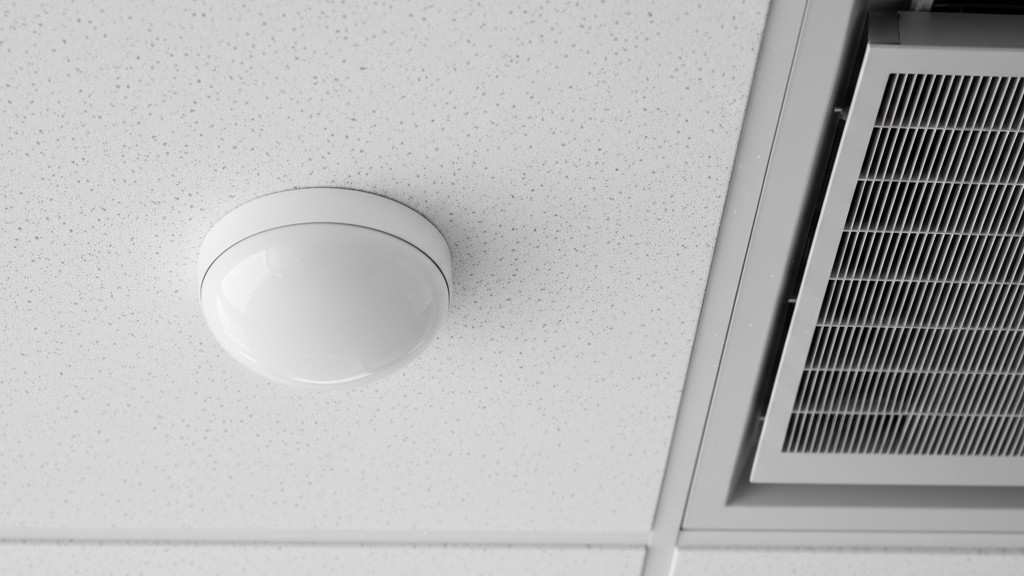
Even with perfect geometric placement, a sensor can be defeated by the environment. In the trade, we call these “ghost switches”—lights that cycle on and off all night with no humans present. In almost every case, the sensor isn’t faulty. It’s just losing a fight with the HVAC system.
어쩌면 다음 제품에도 관심이 있으실 수 있습니다

- 무전압 접점(dry-contact) 릴레이 출력을 갖춘 천장 장착형 PIR 재실 감지 센서
- 12/24VDC 또는 12/24VAC 저전압 전원 공급
- EMS, HVAC 및 빌딩 제어 입력을 위한 COM, NO, NC 절연 릴레이 접점

- 저전압 DC 천장 매립형 마이크로웨이브 모션 센서 스위치
- 10-30 VDC 범위의 12 VDC / 24 VDC 입력
- 시간 지연, 조도(Lux) 임계값 및 감도 조절이 가능한 최대 10A 작동 전류
- 고부하용 천장 매립형 마이크로웨이브 모션 센서 스위치
- 100-265 VAC 상용전압 입력, 10A 모델
- 시간 지연, 조도(Lux) 임계값 및 감도 조절이 가능한 5.8 GHz 마이크로웨이브 감지
- 천장 매립형 마이크로웨이브 모션 센서 스위치
- 100-265 VAC 상용전압 입력, 5A model
- 시간 지연, 조도(Lux) 임계값 및 감도 조절이 가능한 5.8 GHz 마이크로웨이브 감지
- 220V 전원용 천장 장착형 RZ037 PIR 재실 감지 센서 디머
- 정격 부하 660W, 최대 작동 전류 3A
- 조도 센서 켜짐/꺼짐(ON/OFF) 및 사용자 설정 디밍 밝기를 제어하는 LUX 버튼
- 110V 전원용 천장 장착형 RZ037 PIR 재실 감지 센서 디머
- 정격 부하 330W, 최대 작동 전류 3A
- 조도 센서 켜짐/꺼짐(ON/OFF) 및 사용자 설정 디밍 밝기를 제어하는 LUX 버튼

- 저전압 DC 천장 매립형 마이크로웨이브 모션 센서 스위치
- 10-30 VDC 범위의 12 VDC / 24 VDC 입력
- 시간 지연, 조도(Lux) 임계값 및 감도 조절이 가능한 최대 10A 작동 전류
- 고부하 천장 매립형 마이크로웨이브 모션 센서 스위치
- 100-265 VAC 상용전압 입력, 10A 모델
- 시간 지연, 조도(Lux) 임계값 및 감도 조절이 가능한 5.8 GHz 마이크로웨이브 감지
- 천장 매립형 마이크로웨이브 모션 센서 스위치
- 100-265 VAC 상용전압 입력, 5A model
- 시간 지연, 조도(Lux) 임계값 및 감도 조절이 가능한 5.8 GHz 마이크로웨이브 감지

- 저전압 DC 매립형 천장 장착 PIR 모션 센서 스위치
- 10-30 VDC 범위의 12 VDC / 24 VDC 입력
- 최대 작동 전류 10A (시간 지연, 조도 값, 감도 조절 가능)

- 고부하 매립형 천장 장착 PIR 모션 센서 스위치
- 100-265 VAC 상용전압 입력, 10A 모델
- 360도 감지 (시간 지연, 조도 값, 감도 조절 가능)
- 매립형 천장 장착 PIR 모션 센서 스위치
- 100-265 VAC 상용전압 입력, 5A model
- 360도 감지 (시간 지연, 조도 값, 감도 조절 가능)

- 실내 조명 ON/OFF 제어용 무선 스위치 및 수신기 키트
- 100-230VAC, 50/60Hz 수신기 (정격 전류 5A)
- CR2032 배터리 구동 무선 스위치 (2.4GHz 통신)
- 재실 감지 (Auto-ON/Auto-OFF)
- 12–24V DC (10–30VDC), 최대 10A
- 360° 감지 범위, 직경 8–12 m
- 시간 지연 15초–30분
- 조도 센서 Off/15/25/35 Lux
- 감도 높음/낮음
- Auto-ON/Auto-OFF 재실 모드
- 100–265V AC, 10A (중성선 필수)
- 360° 감지 범위, 감지 직경 8–12 m
- 시간 지연 15초–30분, 조도 OFF/15/25/35, 감도 높음/낮음
- Auto-ON/Auto-OFF 재실 모드
- 100–265V AC, 5A (중성선 필요)
- 360° 감지 범위, 감지 직경 8–12 m
- 시간 지연 15초–30분, 조도 OFF/15/25/35, 감도 높음/낮음

- 100V-230VAC
- 전송 거리: 최대 20m
- 무선 모션 센서
- 유선 제어

- 전압: AAA 배터리 2개 / 5V DC (Micro USB)
- 주간/야간 모드
- 시간 지연: 15분, 30분, 1시간(기본값), 2시간

- EU 플러그 전원 어댑터

- UK 플러그 전원 어댑터
PIR sensors detect heat differentials. A sudden blast of hot air from a ceiling supply vent during the winter morning warm-up cycle looks exactly like a person to a PIR element. If a sensor is mounted within four to six feet of a supply diffuser, the turbulence and temperature spike will trigger false positives. This is particularly common in commercial office parks where the “unoccupied” temperature setback is aggressive, leading to intense bursts of conditioning when the system wakes up.
If the layout forces a sensor near a vent, the sensitivity dial is not the solution. Turning down the sensitivity to ignore the HVAC usually makes the sensor too dull to pick up a person walking quietly. The solution is physical: move the sensor, or aggressively mask the lens segments facing the airflow. A piece of electrical tape on the interior lens can blind the sensor to the vent while keeping it sensitive to the floor below.
Wiring and Commissioning Logic
When implementing the two-sensor strategy for an L-turn, installers usually ask about the wiring architecture. Can two sensors control the same load? For standard commercial PIR units (like the Rayzeek RZ021 series), the answer is yes—provided they are wired in parallel.
In a parallel configuration, the sensors act as independent switches sharing a common line and load. If 어느 한쪽 sensor closes its relay (detects motion), the circuit completes, and the lights turn on. The lights will only turn off when 두 가지 sensors see vacancy and their respective time delays expire. This is the “OR” logic required for full coverage.
Critical Warning: Ensure both sensors are fed from the same branch circuit phase. Crossing phases in a shared junction box is a code violation and a safety hazard that will result in a direct short if the relays close simultaneously.
Once wired, the temptation is to set the time delay to 15 or 30 minutes to prevent complaints. This is a crutch. A 30-minute timeout on a corridor sensor masks poor coverage; it simply keeps the lights on long enough that nobody notices the sensor missed the re-trigger. In a transient space like a hallway, a properly placed sensor system should reliably hold the lights with a 5-minute timeout. If the lights drop out at 5 minutes while people are still present, don’t extend the timer. Fix the sensor position or orientation.
Regarding sensitivity settings: leave them at roughly 75-80%. Maxing out sensitivity is a rookie move that invites interference from electrical noise and distant heat sources. It is far better to rely on the strong tangential signal created by the two-sensor layout than to run a single sensor at 100% sensitivity on a hair-trigger.
모션 감지 에너지 절약 솔루션을 찾고 계신가요?
완제품 PIR 모션 센서, 모션 감지 에너지 절약 제품, 모션 센서 스위치 및 상업용 재실/공실(Occupancy/Vacancy) 솔루션에 대해 문의해 주세요.
The Walk Test
The job isn’t done when the wire nuts are twisted. The final step is the verification walk, and it must be adversarial. Do not walk down the center of the hall waving your arms. Walk the “creep” path—hug the wall, move slowly, and carry nothing. Approach the corner from the blindest angle possible.
If you can round the corner into the L-intersection and take two steps into the dark before the lights strike, the system has failed. The lights must strike 전에 the body pivots at the vertex. If they don’t, adjust the angle of the sensors or widen the mask opening. The goal is a seamless handoff, where the user never thinks about the sensor, the switch, or the darkness—only the path ahead.







