Restrooms
Explore our energy-saving guide for restrooms, designed to help you understand and implement occupancy sensor solutions for efficient lighting control in compliance with US Energy Codes.
Maximize Energy Efficiency in Restrooms with Occupancy Sensors
Restrooms in commercial buildings are frequently used spaces that often remain lit even when unoccupied, leading to significant energy wastage. These spaces typically use high-intensity lighting fixtures that consume substantial amounts of energy. The sporadic and unpredictable nature of restroom usage further exacerbates this issue, as lights are often left on unnecessarily during periods of non-use.
Given these factors, the potential for energy savings in restrooms is substantial. By implementing occupancy sensor solutions, commercial facilities can significantly reduce their lighting energy consumption. Occupancy sensors detect the presence or absence of people and automatically control the lighting accordingly, ensuring lights are only on when needed. This not only saves energy but also extends the lifespan of lighting fixtures, leading to additional cost savings.
에너지 코드 준수하기

국제 에너지 보존 코드(IECC)는 국제 코드 위원회(ICC)에서 개발한 모델 코드로, 건물의 에너지 효율을 위한 최소 설계 및 시공 요구 사항을 설정합니다. IECC는 최신 에너지 보존 관행과 기술을 통합하기 위해 3년마다 업데이트됩니다.
IECC, 왜 중요한지
IECC는 미국 전역의 주 및 지방 자치단체에서 광범위하게 채택되고 있습니다. IECC는 건물 외피(벽, 지붕, 창문), 난방 및 냉방 시스템, 조명 시스템을 포함한 에너지 사용의 다양한 측면을 다룹니다.
IECC는 다양한 구역의 미사용 공간에서 에너지 낭비를 최소화하기 위해 재실 센서와 같은 특정 조명 제어를 의무화합니다.

ANSI/ASHRAE/IES 표준 90.1, 저층 주거 건물 외의 현장 및 건물 에너지 표준은 미국 냉난방 공학회(ASHRAE)에서 발표한 널리 인정받는 에너지 표준입니다.
ASHRAE 90.1, 왜 중요한지
ASHRAE 90.1은 미국 전역의 건물 에너지 코드의 기준으로 사용되며, IECC 내에서 건물 외피, HVAC 시스템, 급탕 시스템 및 조명 시스템을 포함한 상업용 건물 구성 요소의 에너지 효율 성능에 대한 최소 요구 사항을 설명하는 규정 준수 경로 역할을 합니다.
ASHRAE 90.1 표준은 특정 구역에서의 재실 센서 사용을 포함하여, 최대 허용 조명 밀도 및 최소 조명 제어 요구 사항을 명시합니다.

캘리포니아 건물 기준 코드의 제목 24, 6부는 공식적으로 주거 및 비주거 건물의 건물 에너지 효율 기준으로 알려져 있으며, 캘리포니아 에너지 위원회가 관리하고 새로운 에너지 효율 기술과 방법을 반영하기 위해 정기적으로 업데이트됩니다.
Title 24, 왜 중요한지
Title 24는 엄격한 요구 사항으로 유명하며, 미국 전역의 다른 많은 에너지 코드보다 더 엄격한 것으로 간주됩니다. Title 24는 난방, 환기, 공조(HVAC), 급탕 및 조명을 포함한 건물 시공의 모든 측면에 대한 엄격한 에너지 성능 기준을 의무화합니다.
Title 24는 상업용 건물의 특정 구역에서 에너지가 낭비되지 않도록 방의 사용 여부에 따라 조명을 조정하는 재실 센서를 설치하도록 요구합니다.
주별 에너지 코드 채택 현황
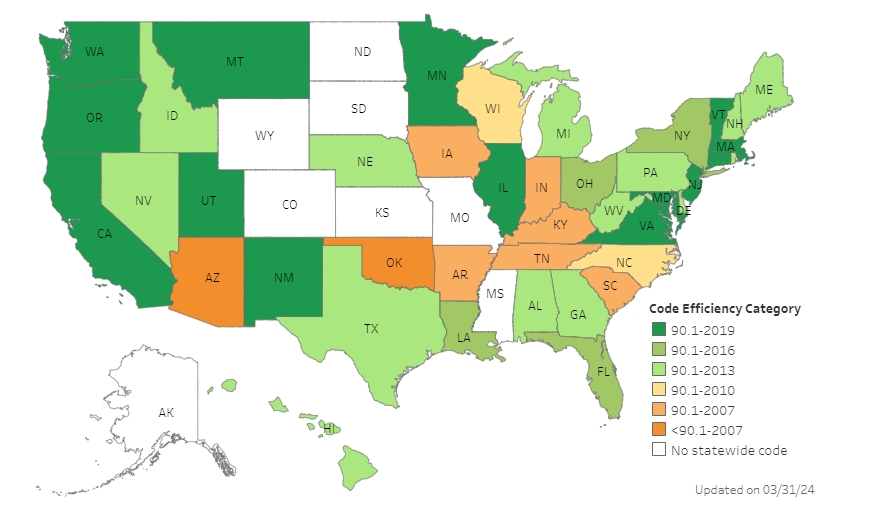
상세 표를 보려면 펼치기 ↓
| 주 | 현재 상업용 코드 | 상업용 코드 효율 등급 |
|---|---|---|
| 앨라배마 | 90.1-2013 | 90.1-2013 |
| 알래스카 | 주 전체 없음 | 주 전체 코드 없음 |
| 애리조나 | 지자체 자치 | <90.1-2007 |
| 아칸소 | 2009 IECC 및 90.1-2007 | 90.1-2007 |
| 캘리포니아 | 2022 건물 에너지 효율 기준 | 90.1-2019 |
| 콜로라도 | 지자체 자치 | 주 전체 코드 없음 |
| 코네티컷 | 2021 IECC 및 90.1-2019 | 90.1-2019 |
| 델라웨어 | 2018 IECC 및 90.1-2016 | 90.1-2013 |
| 컬럼비아 특별구 | 90.1-2013^ | 90.1-2019 |
| 플로리다 | 2021 IECC 및 90.1-2019^ | 90.1-2016 |
| 조지아 | 2015 IECC 및 90.1-2013^ | 90.1-2013 |
| 하와이 | 지자체 자치 | 90.1-2013 |
| 아이다호 | 2018 IECC 및 90.1-2016 | 90.1-2013 |
| 일리노이 | 2021 IECC 및 90.1-2019 | 90.1-2019 |
| 인디애나 | 90.1-2007 | 90.1-2007 |
| 아이오와 | 2012 IECC 및 90.1-2010 | 90.1-2007 |
| 캔자스 | 지자체 자치 | 주 전체 코드 없음 |
| 켄터키 | 2012 IECC 및 90.1-2010 | 90.1-2007 |
| 루이지애나 | 2021 IECC 및 90.1-2019^ | 90.1-2016 |
| 메인 | 2015 IECC 및 90.1-2013 | 90.1-2013 |
| 메릴랜드 | 2021 IECC 및 90.1-2019^ | 90.1-2019 |
| 매사추세츠 | 2018 IECC 및 90.1-2016^ | 90.1-2019 |
| 미시간 | 2015 IECC 및 90.1-2013^ | 90.1-2013 |
| 미네소타 | 90.1-2019^ | 90.1-2019 |
| 미시시피 | 주 전체 없음 | 주 전체 코드 없음 |
| 미주리 | 지자체 자치 | 주 전체 코드 없음 |
| 몬태나 | 2021 IECC 및 90.1-2019 | 90.1-2019 |
| 네브래스카 | 2018 IECC 및 90.1-2016 | 90.1-2013 |
| 네바다 | 2018 IECC 및 90.1-2016 | 90.1-2013 |
| 뉴햄프셔 | 2018 IECC 및 90.1-2016^ | 90.1-2013 |
| 뉴저지 | 90.1-2019 | 90.1-2019 |
| 뉴멕시코 | 2021 IECC 및 90.1-2019^ | 90.1-2019 |
| 뉴욕 | 2018 IECC 및 90.1-2016^ | 90.1-2016 |
| 노스캐롤라이나 | 2015 IECC 및 90.1-2013^ | 90.1-2010 |
| 노스다코타 | 지자체 자치 | 주 전체 코드 없음 |
| 오하이오 | 2021 IECC 및 90.1-2019^ | 90.1-2016 |
| 오클라호마 | 2006 IECC 및 90.1-2004 | <90.1-2007 |
| 오레곤 | 90.1-2019 | 90.1-2019 |
| 펜실베이니아 | 2018 IECC 및 90.1-2016 | 90.1-2013 |
| 로드아일랜드 | 2018 IECC 및 90.1-2016^ | 90.1-2013 |
| 사우스캐롤라이나 | 2009 IECC 및 90.1-2007 | 90.1-2007 |
| 사우스다코타 | 지자체 자치 | 주 전체 코드 없음 |
| 테네시 | 2018 IECC 및 90.1-2013 | 90.1-2007 |
| 텍사스 | 2015 IECC 및 90.1-2013 | 90.1-2013 |
| 유타 | 2021 IECC 및 90.1-2019^ | 90.1-2019 |
| 버몬트 | 2021 IECC 및 90.1-2019^ | 90.1-2019 |
| 버지니아 | 2021 IECC 및 90.1-2019^ | 90.1-2019 |
| 워싱턴 | 2018 워싱턴 주 에너지 코드 | 90.1-2019 |
| 테네시 | 2012 IECC 및 90.1-2010 | 90.1-2007 |
| 텍사스 | 2015 IECC 및 90.1-2013 | 90.1-2013 |
| 유타 | 2021 IECC 및 90.1-2019^ | 90.1-2019 |
| 버몬트 | 2018 IECC 및 90.1-2016^ | 90.1-2019 |
| 버지니아 | 2021 IECC 및 90.1-2019^ | 90.1-2019 |
| 워싱턴 | 2018 워싱턴 주 에너지 코드 | 90.1-2019 |
| 웨스트 버지니아 | 90.1-2013 | 90.1-2013 |
| 위스콘신 | 2015 IECC 및 90.1-2013^ | 90.1-2010 |
| 와이오밍 | 지자체 자치 | 주 전체 코드 없음 |
- ^ 에너지 효율에 영향을 미치는 개정안이 DOE 프로토타입 빌딩 모델을 사용하여 정량화될 수 있을 경우, 해당 내용이 분석에 포함되었습니다.
- IECC와 90.1를 동시에 채택한 주의 경우, IECC에 대한 광범위한 개정이 없는 한, 본 연구에서는 IECC 코드를 일반적으로 주의 현재 코드로 분석합니다.
Design Guide Key Concepts for Restrooms
Designing an energy-efficient lighting control solution for restrooms involves strategic placement of occupancy sensors to ensure comprehensive coverage of the space.
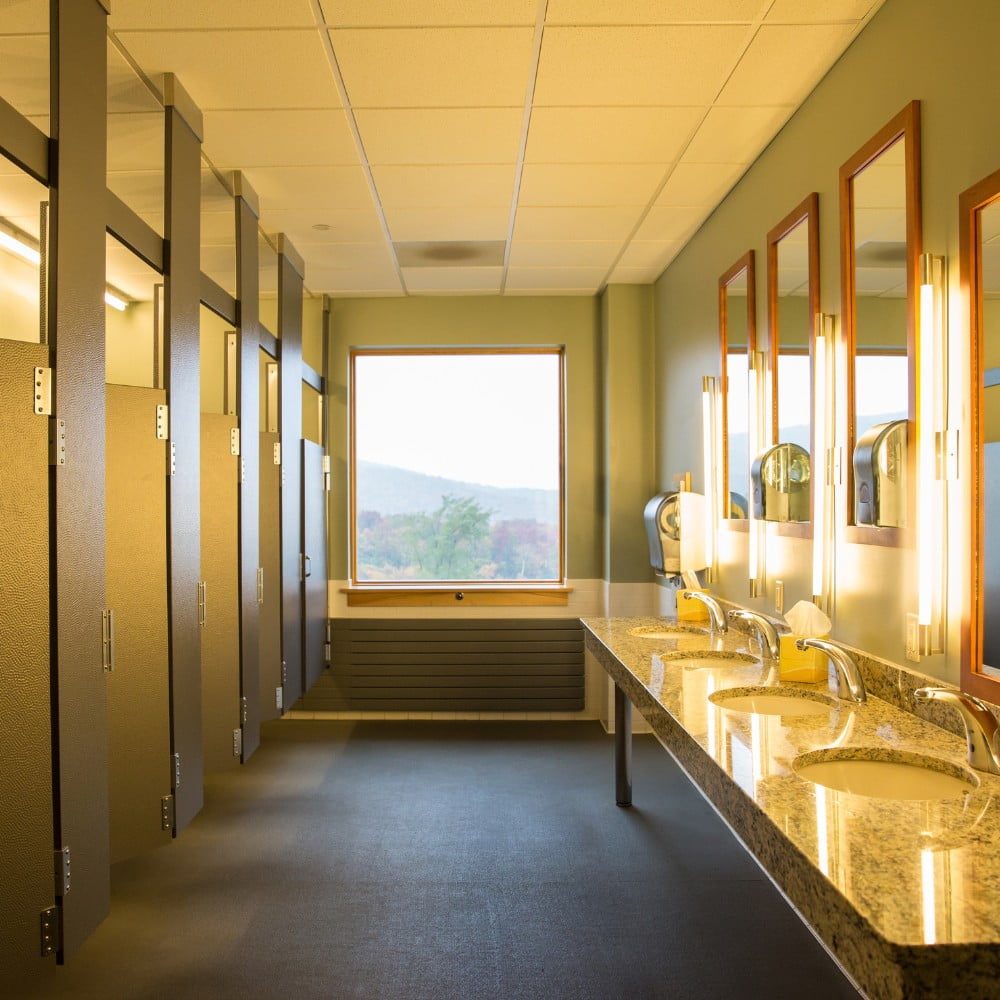
By following these guidelines, businesses can create an energy-efficient lighting control solution for restrooms that reduces energy waste, and lowers maintenance costs:
- Entrance Coverage: Install a wall occupancy sensor near the entrance to detect when someone enters the restroom. This sensor should be positioned high enough to avoid obstructions from the door and should not directly face the entrance to avoid false triggers from movement outside the restroom.
- Stall Coverage: Depending on customer preference for privacy, stalls can either be covered by a sensor or not. If stalls are not covered by a sensor, program a longer timeout (15 or 20 minutes) to prevent lights from turning off when someone is in the stall. If individual stall sensors are used, they should be installed in such a way that they do not detect movement outside the stall to avoid false triggers.
- Sink and Mirror Area: Install a ceiling occupancy sensor above the sink and mirror area. This sensor should be positioned to cover the entire area, ensuring that lights remain on when someone is using the sink or mirror.
- Avoidance of Air Vents: Do not mount sensors close to air vents, as the vibration and air flow can reduce the effectiveness of the sensor. PIR sensors should not be within 4ft of an air vent, and ultrasonic sensors should not be within 6ft of an air vent.
- 수동 제어: Integrate manual control to turn ON/OFF all lighting with our occupancy/vacancy sensors. This allows for manual override of the lighting system if necessary.
추천 제품 및 솔루션
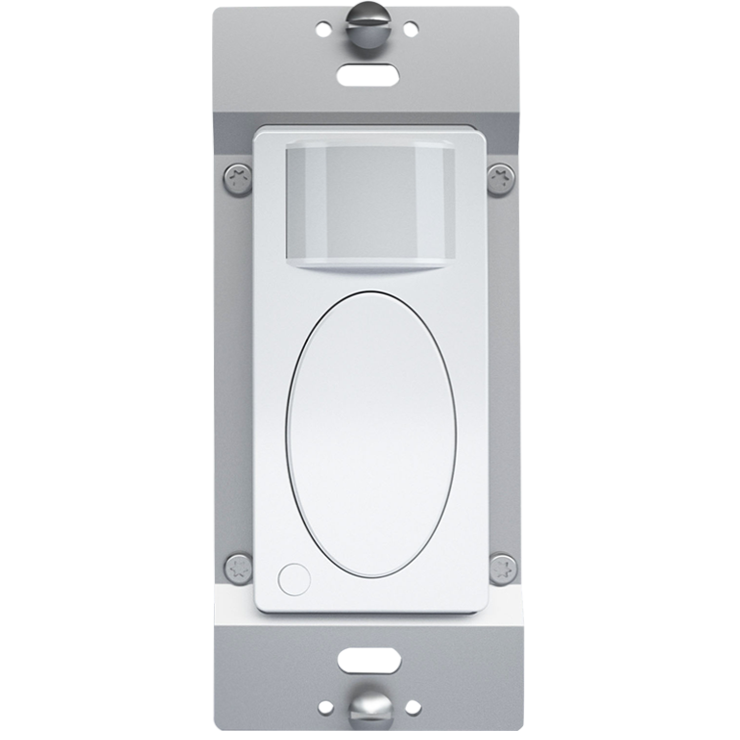
벽면 센서 스위치
RZ020/021 모션 센서 스위치
- 2와이어, 3와이어, 4와이어 배선 옵션
- 인체 감지, 공실 감지, 수동 켜기/끄기
- 조정 가능한 시간 지연 및 주변광 제어
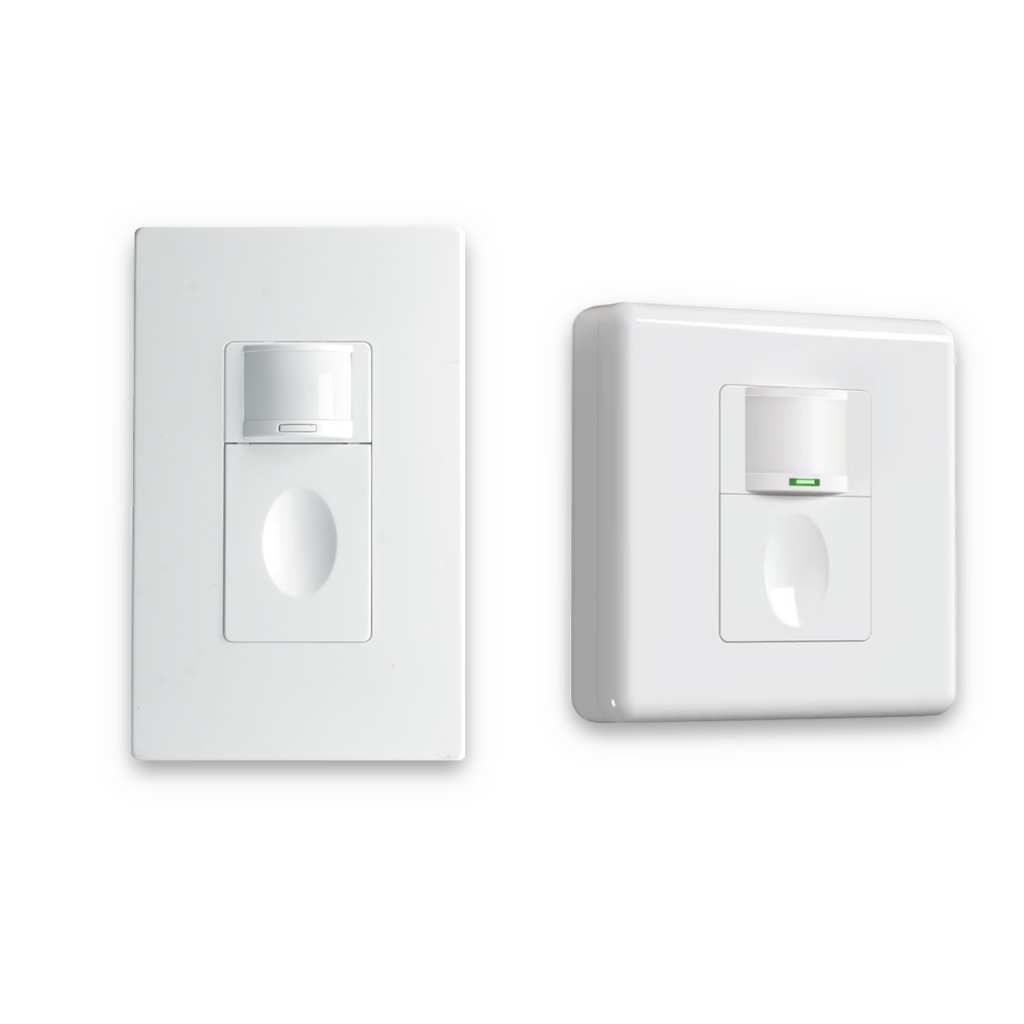
다중 위치 무선 벽면 센서
RZ020A/021A + RZ022W 키트
- 유선 RZ021A/022A 인체 감지 센서 스위치
- 무선 동반 스위치 (RZ022W) – 다중 위치 제어용

천장 재실 센서
RZ036
- 유선 재실 센서
- 자동 ON, 자동 OFF
- 라인 전압 및 저전압 사용 가능
핵심 기능 포함:
- 모든 조명에 대한 통합 수동 ON/OFF 제어
- 공실 센서 (수동 ON 전용): 조명은 수동으로만 켜야 합니다
- 조절 가능한 시간 지연, 15분 후 조명이 자동으로 완전히 꺼집니다
- 추가 사항: 재배선 없이 제어 범위를 확장할 수 있는 다중 위치 무선 키트
- 추가 사항: 신축 및 리etrofit 프로젝트 모두에 사용할 수 있는 다양한 배선 옵션.
의무 조항 충족
IECC – 2011
C405.2.1 재실 센서 제어
해당 공간의 조명을 제어하기 위해 재실 센서를 설치해야 합니다.
C405.2.1.1 재실 센서 제어 기능
- 수동으로 켜거나 50% 전력 이하로 부분적으로 켜기.
- 모든 점유자가 공간을 떠난 후 20분 이내에 완전히 꺼짐
- 조명을 끄기 위한 수동 제어.
**Full automatic-on controls with no manual control are permitted in restrooms where manual operation would endanger occupant safety or security.
ASHRAE 90.1 – 2022
Restrooms shall also be controlled by occupant sensors.
9.4.1.1 H 자동 전원 차단 제어
공간 내 모든 점유자가 공간을 떠난 후 20분 이내에 모든 조명이 자동으로 꺼져야 합니다.
Title 24 – 2022
130.1 (a) 수동 구역 제어.
천장 높이의 칸막이로 둘러싸인 각 구역은 해당 구역의 조명을 수동으로 켜고 끌 수 있는 조명 제어 장치를 제공해야 합니다.
** Restrooms having two or more stalls may use a manual control not accessible to unauthorized personnel.
130.1 (c) 전원 차단 제어.
조명은 제어 구역이 비워진 후 20분 이내에 모든 조명을 자동으로 차단하는 점유 감지 제어로 제어해야 하며, 다음 기능을 수행해야 합니다.
- A. 점유 감지 제어 (130.1(b)에 의해 다단계 조명 제어가 요구되지 않는 경우); 또는
- B. 부분 켜기 점유 감지 제어, 또는
- C. 공실 감지 제어, 모든 조명이 수동 켜기 신호에만 응답하는 경우
여러분의 의견을 들려주세요.
Rayzeek가 여러분을 위해 맞춤형 절약형 조명 솔루션을 설계하고 제공할 수 있도록 도와드리겠습니다.