
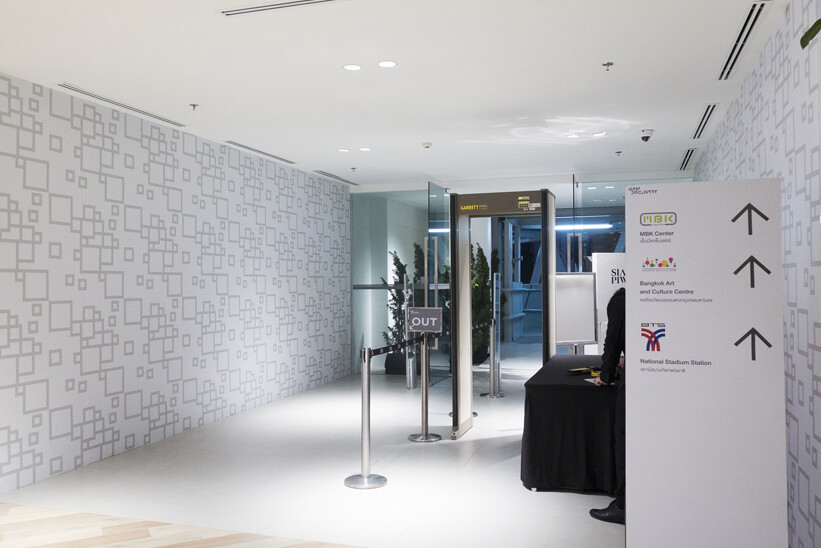
Have you ever wondered why most lights are on at full brightness during the day even when there is plenty of daylight available?
Contents
- What is Daylight Dimming (also called Daylight Harvesting)?
- Things to consider when implementing a daylight dimming / daylight harvesting system
- Allocating the daylight control intelligence
- Cost and Comfort determine the application
- Daylight Dimming – An Attractive feature for luminaire OEMS
Imagine the following situations:
- In the morning, you walk into your bathroom and the light switches on automatically. When you leave, they will switch off automatically after a selectable delay time.
- You will never have to worry again about leaving your lights on.
- Same thing in the office. Our occupancy sensors are so sensitive that they register the slightest movement (e.g. when you are working at your computer, the movement of your mouse is sufficient). Gone are the times when the lights go off and you needed to “wave” so that they come on again.
- When there is enough daylight in your office, there will be no need to turn off the artificial light. Instead, our controls will dim down the artificial light depending on the daylight level and adapt constantly and very gradually to the current situation. On your working area (desk) a constant light level will be kept.
- Artificial lighting can go down to 10% and eventually will be switched off, depending on daylight level and switch on again later when there is less daylight.
- No need to switch off the lights manually and then switch them on again later when there is less daylight (e.g. dark clouds, dawn, etc.)
- When everybody has gone home and the room is unoccupied, lights will be turned off automatically.
- Forget your light switches! And enjoy those savings.
What is Daylight Dimming (also called Daylight Harvesting)?
Daylight Harvesting controls regulate the artificial light depending on the available daylight. When enough daylight is available, the artificial light dimms own according to how much light is available. A guaranteed light level (depending on the work area and task) is maintained at all times as the result of artificial and ambient light.
Laissez-vous inspirer par les gammes de capteurs de mouvement Rayzeek.
Vous ne trouvez pas ce que vous cherchez ? Ne vous inquiétez pas. Il existe toujours d'autres solutions pour résoudre vos problèmes. L'une de nos gammes de produits pourra peut-être vous aider.
Things to consider when implementing a daylight dimming / daylight harvesting system
Daylight harvesting systems can be realised with many different types of lamps. At the moment, the most popular application is fluorescent lighting. However, all systems have one thing in common: In any good (that means comfortable and stable) daylight harvesting system, there are three major components:
- A photosensor which generates the input signal depending on the ambient light
- the actual daylight dimming intelligence which generates the output signal
- some control hardware that generates the output to the lamp
Especially the daylight dimming control logic is important – this needs to be included into either the sensor component or the control (which could be an electronic dimmable ballast). The point is, it needs to be somewhere.
We strongly advise against using a “dumb” photosensor directly on a “dumb” dimmable electronic ballast. This will not work properly. In combination with other control systems (e.g. other daylight dimming ballasts) such a system can oscillate.
Allocating the daylight control intelligence
There are two main possibilities for allocating the daylight control logic. It can be added to the sensor element or to the control hardware. Both have their pros and cons and it depends on the specific application which option is the most suitable.
Option 1: Daylight dimming intelligence in the sensor
This is the case with occupancy motion and light sensors. They have a built-in logic which takes the light sensor input signal and creates the appropriate output signal which can be fed to an electronic dimmable ballast. This enables to control several luminaires with one sensor. However, adding the logic into the sensor makes the sensor much larger and also significantly more expensive.
Option 2: Simple sensor, intelligence is in the control hardware
This is a very attractive option if many individual daylight dimming systems are required. A perfect example is high-quality office lighting applications in which each work area should be controlled individually. This generates by far the best comfort.
Vous recherchez des solutions d'économie d'énergie activées par le mouvement ?
Contactez-nous pour obtenir des détecteurs de mouvement RPT complets, des produits d'économie d'énergie activés par le mouvement, des interrupteurs à détecteur de mouvement et des solutions commerciales de présence/absence.
In these applications, light sensors typically are integrated into luminaires. Luminaire manufacturers put a lot of effort into making their fixtures look elegant, and in most cases, they are not very happy about integrating a bulky sensor into their fixtures.
It makes sense to use a very small and cheap light sensor and integrate the logic into the electronic ballast for these cases. This is exactly the way we chose for our photosensor dimming ballasts. We believe that this is the most elegant way to integrate daylight dimming into a lighting system.
Not only is this suitable for demanding light fixture OEMS, it can also be used for very quick and elegant retrofits. We supply a wide range of accessories for this.
Cost and Comfort determine the application
By giving you a choice between the two options illustrated above, we enable a wide range of possible applications. Depending on your specific project, we can work out which solution works best for you. In many instances using the cheap light sensor and the slightly more expensive daylight controlled ballasts beats other solutions in overall costs (and comfort).
Ces produits pourraient vous intéresser

- Détecteur de présence PIR pour montage au plafond avec sortie relais à contact sec
- Alimentation basse tension 12/24VDC ou 12/24VAC
- Contacts de relais isolés COM, NO et NC pour les entrées de gestion technique des bâtiments (GTB), de CVC et de contrôle des bâtiments

- Interrupteur détecteur de mouvement à micro-ondes basse tension DC encastrable au plafond
- Entrée 12 VDC / 24 VDC avec une plage de 10-30 VDC
- Courant de fonctionnement max de 10A avec temporisation, seuil Lux et sensibilité réglables
- Interrupteur détecteur de mouvement à micro-ondes encastrable au plafond pour charges plus élevées
- Entrée de tension secteur 100-265 VAC, modèle 10A
- Détection micro-ondes 5,8 GHz avec temporisation, seuil Lux et sensibilité réglables
- Interrupteur détecteur de mouvement à micro-ondes encastrable au plafond
- Entrée de tension secteur 100-265 VAC, modèle 5A
- Détection micro-ondes 5,8 GHz avec temporisation, seuil Lux et sensibilité réglables
- Variateur détecteur de présence PIR RZ037 pour montage au plafond pour alimentation 220V
- Courant de fonctionnement maximum de 3A avec charge nominale de 660W
- Le bouton LUX contrôle l'activation/désactivation du capteur de lumière et la luminosité de variation définie par l'utilisateur
- Variateur détecteur de présence PIR RZ037 pour montage au plafond pour alimentation 110V
- Courant de fonctionnement maximum de 3A avec charge nominale de 330W
- Le bouton LUX contrôle l'activation/désactivation du capteur de lumière et la luminosité de variation définie par l'utilisateur

- Interrupteur de détecteur de mouvement à micro-ondes pour montage au plafond, CC basse tension
- Entrée 12 VDC / 24 VDC avec une plage de 10-30 VDC
- Courant de fonctionnement max de 10A avec temporisation, seuil Lux et sensibilité réglables
- Interrupteur de détecteur de mouvement à micro-ondes pour montage au plafond à charge plus élevée
- Entrée de tension secteur 100-265 VAC, modèle 10A
- Détection micro-ondes 5,8 GHz avec temporisation, seuil Lux et sensibilité réglables
- Interrupteur de détecteur de mouvement à micro-ondes pour montage au plafond
- Entrée de tension secteur 100-265 VAC, modèle 5A
- Détection micro-ondes 5,8 GHz avec temporisation, seuil Lux et sensibilité réglables

- Interrupteur de détecteur de mouvement PIR encastré au plafond, CC basse tension
- Entrée 12 VDC / 24 VDC avec une plage de 10-30 VDC
- Courant de fonctionnement max. 10A avec temporisation, seuil Lux et sensibilité réglables

- Interrupteur de détecteur de mouvement PIR encastré au plafond à charge plus élevée
- Entrée de tension secteur 100-265 VAC, modèle 10A
- Détection à 360 degrés avec temporisation, seuil Lux et sensibilité réglables
- Interrupteur de détecteur de mouvement PIR encastré au plafond
- Entrée de tension secteur 100-265 VAC, modèle 5A
- Détection à 360 degrés avec temporisation, seuil Lux et sensibilité réglables

- Kit d'interrupteur et récepteur sans fil pour le contrôle de l'éclairage intérieur ON/OFF
- Récepteur 100-230VAC, 50/60Hz avec courant nominal de 5A
- Interrupteur sans fil alimenté par pile CR2032 avec communication 2.4GHz
- Mode d'occupation (Auto-ON/Auto-OFF)
- 12–24V DC (10–30VDC), jusqu'à 10A
- Couverture à 360°, diamètre de 8–12 m
- Temporisation de 15 s à 30 min
- Capteur de lumière Désactivé/15/25/35 Lux
- Sensibilité Haute/Basse
- Mode d'occupation Auto-ON/Auto-OFF
- 100–265V AC, 10A (neutre requis)
- Couverture à 360° ; diamètre de détection de 8–12 m
- Temporisation de 15 s à 30 min ; Lux DÉSACTIVÉ/15/25/35 ; Sensibilité Haute/Basse
- Mode d'occupation Auto-ON/Auto-OFF
- 100–265V AC, 5A (neutre requis)
- Couverture à 360° ; diamètre de détection de 8–12 m
- Temporisation de 15 s à 30 min ; Lux DÉSACTIVÉ/15/25/35 ; Sensibilité Haute/Basse
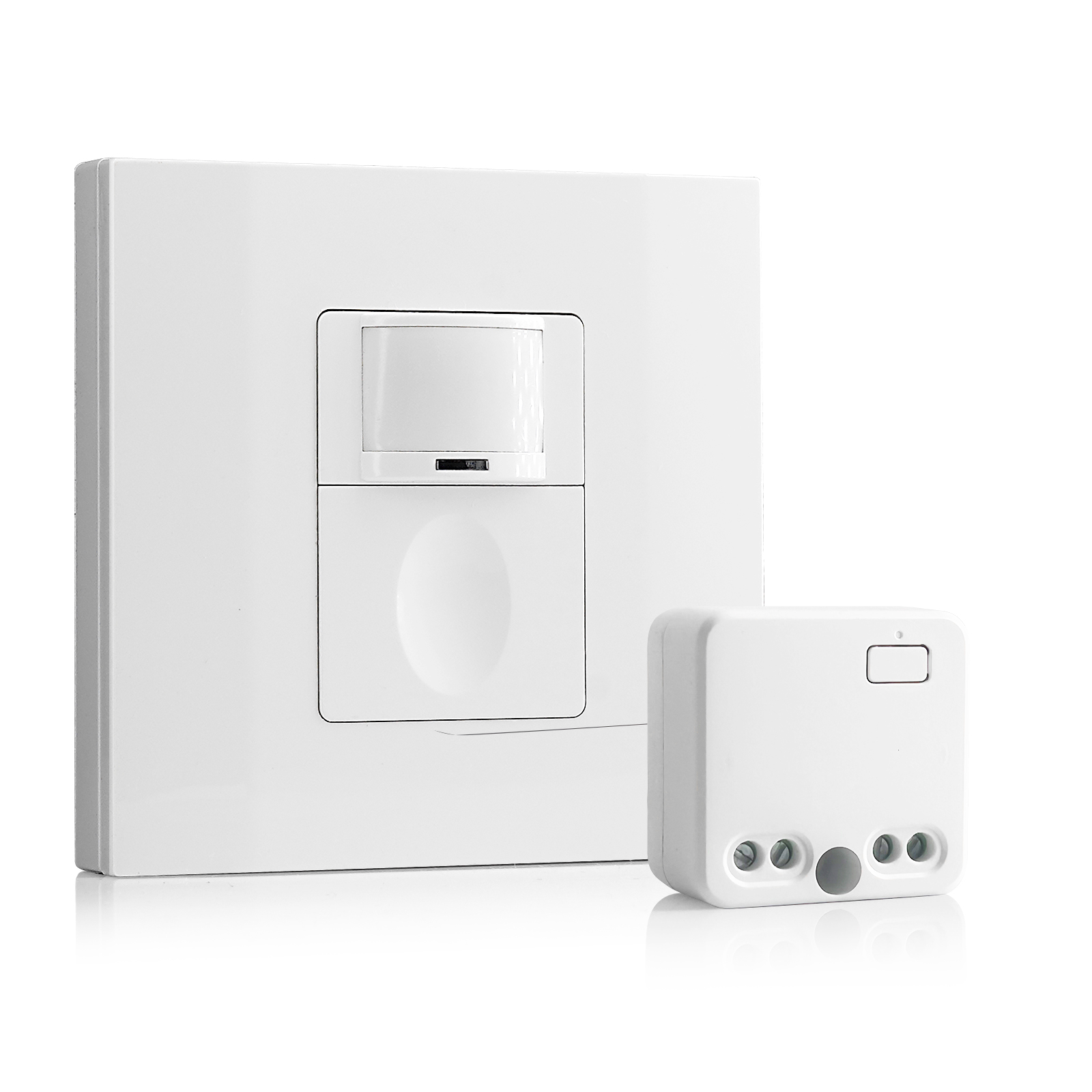
- 100V-230VAC
- Distance de transmission : jusqu'à 20m
- Détecteur de mouvement sans fil
- Contrôle filaire
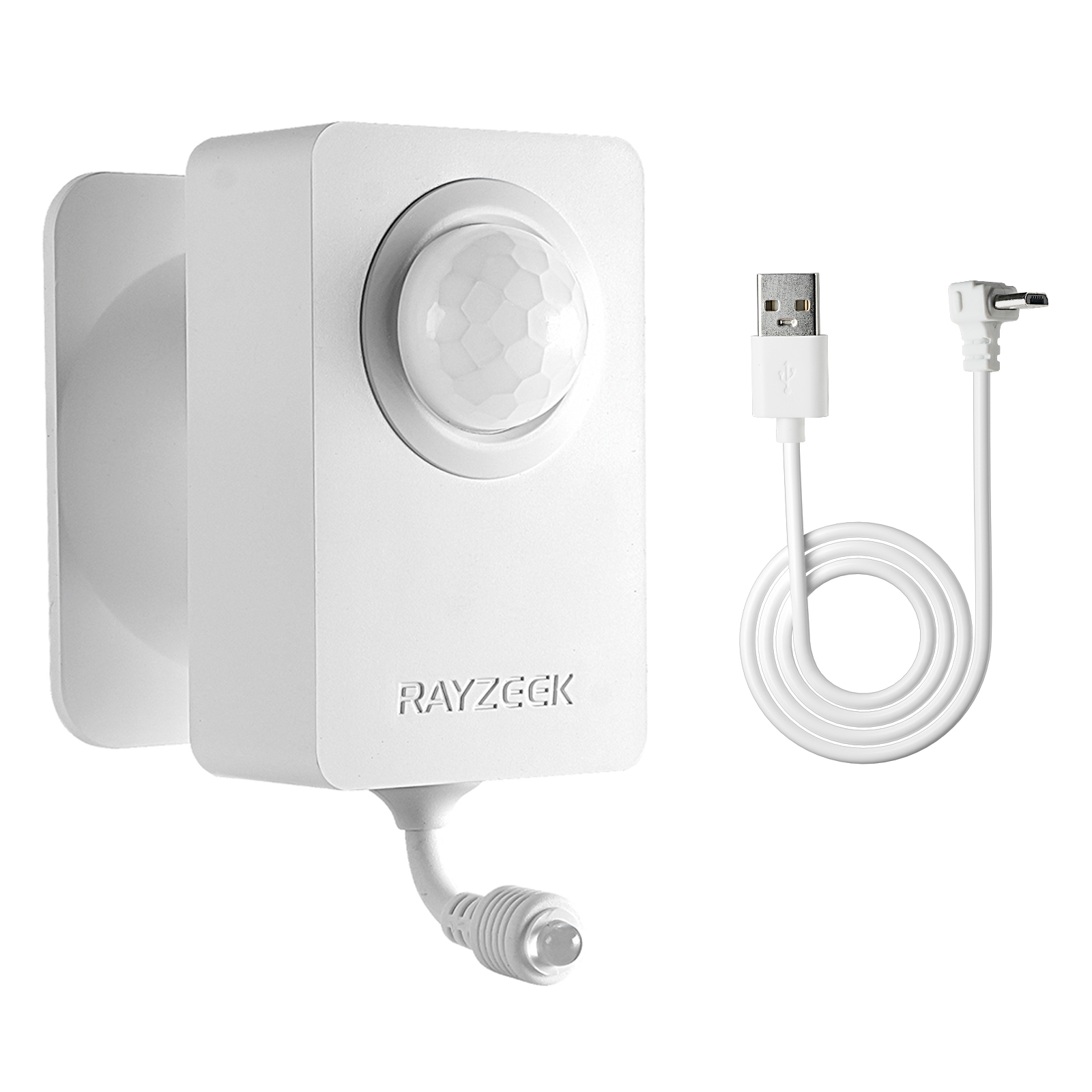
- Tension : 2x piles AAA / 5V DC (Micro USB)
- Mode Jour/Nuit
- Temporisation : 15min, 30min, 1h (par défaut), 2h
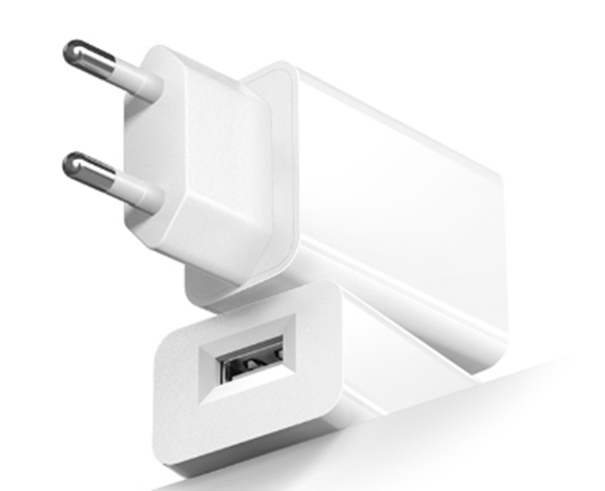
- Adaptateur secteur prise UE
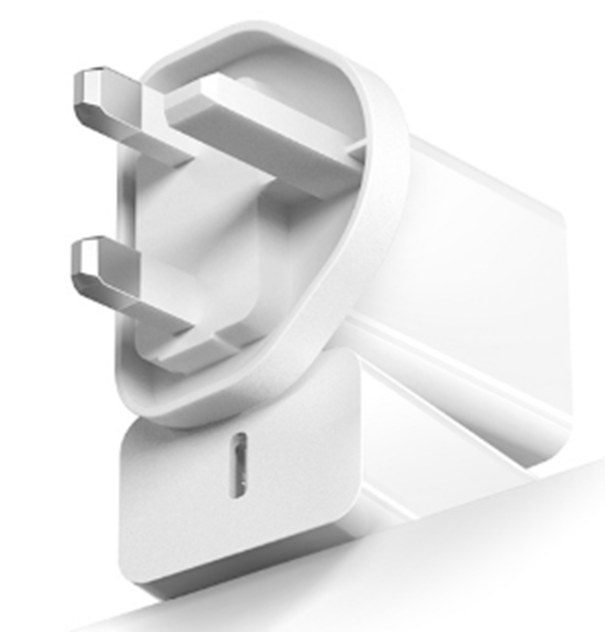
- Adaptateur secteur prise UK
Daylight Dimming – An Attractive feature for luminaire OEMS
Our quite unique Photosensor Dimming Ballasts and small light sensors offer desirable opportunities to luminaire manufacturers who wish to offer very energy efficient and still comfortable fixtures. We believe that our light sensors are small in the market and they certainly are very easy to integrate, so daylight dimming functionality can be added very elegantly into your products without compromising on high design requirements.







