
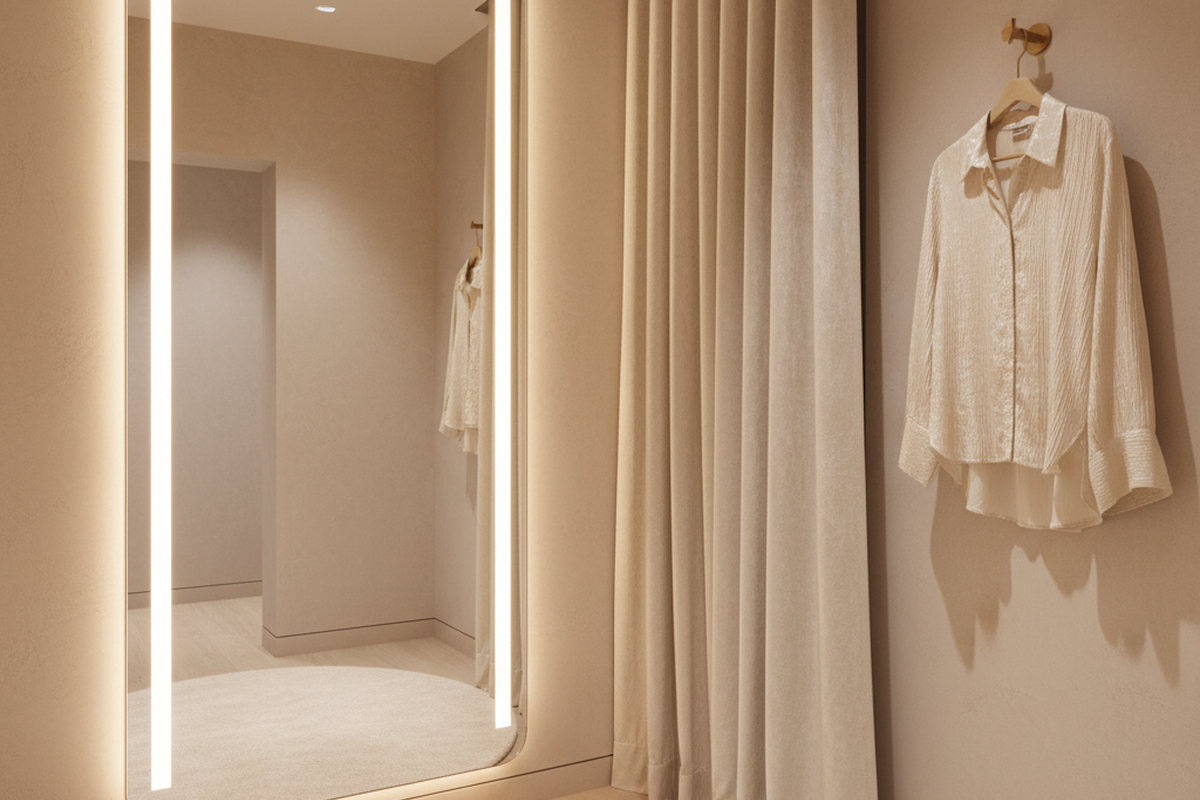
The customer has already done the hard work. They browsed the floor, touched the fabric, checked the price tag, and committed to taking the garment off the hanger. They are standing in your fitting room, semi-naked, vulnerable, and evaluating not just the clothes, but themselves.
And yet, in high-end boutiques across the country, this critical “last mile” of the sale is treated like a utility closet. A single overhead downlight casts deep shadows into their eye sockets. The mirror is cheap glass. The light turns their skin a sickly green. They don’t look like a million bucks; they look tired.
When a customer looks in that mirror and sees every flaw magnified by harsh, cheap lighting, they don’t blame the light bulb. They blame the jeans. They assume the cut is unflattering or the color doesn’t suit them. The garment stays on the hook, the sale is lost, and they leave the store feeling slightly worse about themselves than when they walked in.
You don’t have an inventory problem. You have an empathy problem that physics can solve. If you are spending $50,000 on a renovation and letting a general contractor pick “whatever LEDs are on sale” for the fitting rooms, you are actively sabotaging your revenue.
Stop treating lighting as a line item to be value-engineered. Treat it for what it actually is: emotional manipulation.
The Geometry of Flattery
The most common crime in retail design is the direct overhead downlight. In a fitting room, a single high-output can in the center of the ceiling is disastrous. It creates the “raccoon eye” effect: deep shadows in the orbital sockets. It accentuates every texture on the skin, from cellulite to smile lines. That is interrogation lighting, not a luxury experience.
Αναζητάτε λύσεις εξοικονόμησης ενέργειας με ενεργοποίηση μέσω κίνησης;
Επικοινωνήστε μαζί μας για ολοκληρωμένους αισθητήρες κίνησης PIR, προϊόντα εξοικονόμησης ενέργειας με ενεργοποίηση μέσω κίνησης, διακόπτες αισθητήρων κίνησης και επαγγελματικές λύσεις Occupancy/Vacancy.
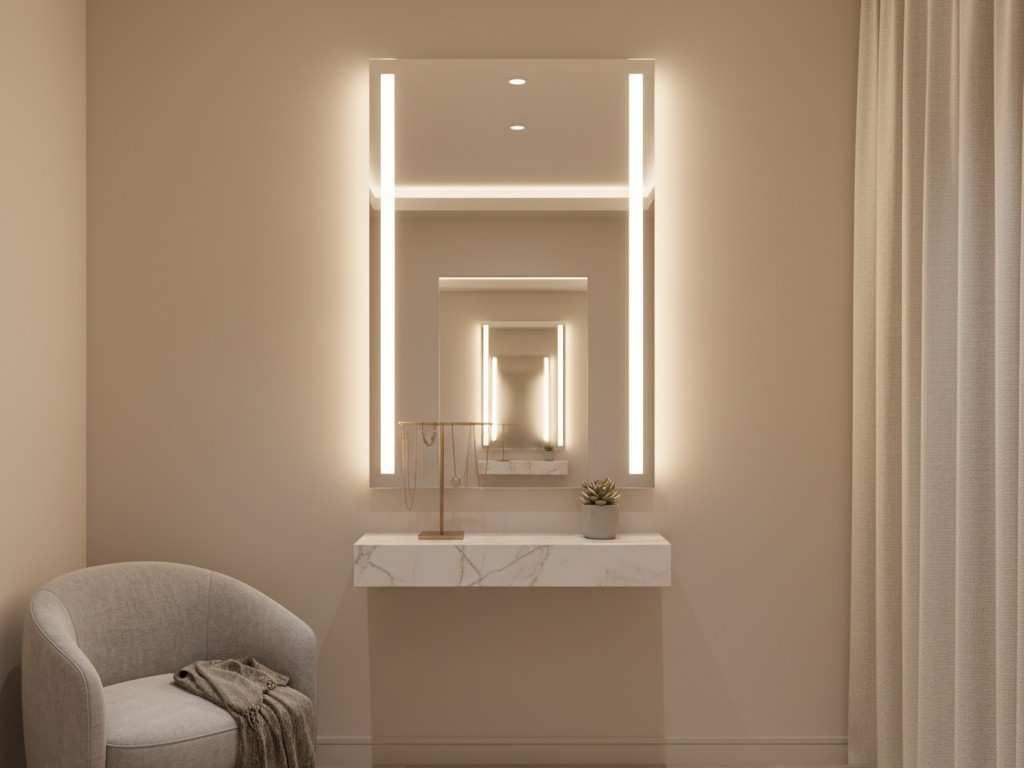
To sell clothing, you must light the face first, then the body, and finally the product. If the customer likes how they look in the mirror, the clothes are halfway sold.
You need vertical illumination. The goal is to bathe the customer in soft, wrapping light that fills in shadows rather than creating them. This principle is stolen directly from cinematography; think of the difference between a harsh news crew spotlight and the flattering, diffused glow of a film set using china balls and silk diffusion.
In a retail context, this means linear light sources integrated into the sides of the mirror or wall sconces set at face height. The light source must be diffused—if you can see the individual diodes of the LED tape, it’s too harsh. You want a glow that feels like a cloudy day, wrapping around the form and smoothing out imperfections.
Then there is functional comfort. We often see tiny fitting rooms fitted with high-wattage halogens or cheap, inefficient LEDs that dump heat into the space. A customer trying on a winter coat or layers in a 4×4 box will overheat in minutes if the lighting load is wrong. When a customer starts sweating, the “get me out of here” instinct kicks in, and the browsing session ends. Modern, high-quality LED fixtures run cool, allowing you to pump in enough lumens to make the space feel bright and energetic without turning it into a sauna.
Color Science Is Sales Science
Shadows are step one. Spectrum is step two. Most people buy light bulbs based on color temperature—2700K for “warm,” 3000K for “crisp white.” But in retail, the temperature matters less than the Color Rendering Index (CRI).
Standard commercial LEDs often have a CRI of 80. That is acceptable for a hallway but fatal for a fitting room. A low CRI light source is missing parts of the color spectrum, usually in the red and cyan wavelengths. This makes denim look muddy instead of rich indigo, and it makes complex fabrics look flat.
But you cannot just trust the “CRI 90+” sticker on the box. You have to look deeper at the R9 value. R9 measures how well a light source renders saturated red. Cheap LEDs, even those claiming high CRI, often have negative R9 values.
Ίσως σας ενδιαφέρει επίσης

- Τάση: 2 Μπαταρίες AAA
- Λειτουργία Ημέρας/Νύχτας
- Καθυστέρηση χρόνου: 15min, 30min, 1h(προεπιλογή), 2h

- Ανιχνευτής πληρότητας PIR οροφής με έξοδο ξηρής επαφής ρελέ
- Τροφοδοσία χαμηλής τάσης 12/24VDC ή 12/24VAC
- Απομονωμένες επαφές ρελέ COM, NO και NC για εισόδους συστημάτων EMS, HVAC και ελέγχου κτιρίων

- Χωνευτός διακόπτης ανιχνευτή κίνησης μικροκυμάτων οροφής χαμηλής τάσης DC
- Είσοδος 12 VDC / 24 VDC με εύρος 10-30 VDC
- Μέγιστο ρεύμα λειτουργίας 10A με ρυθμιζόμενη καθυστέρηση χρόνου, ουδός Lux και ευαισθησία
- Χωνευτός διακόπτης ανιχνευτή κίνησης μικροκυμάτων οροφής για υψηλότερα φορτία
- Είσοδος τάσης δικτύου 100-265 VAC, μοντέλο 10A
- Ανίχνευση μικροκυμάτων 5.8 GHz με ρυθμιζόμενη καθυστέρηση χρόνου, κατώφλι Lux και ευαισθησία
- Χωνευτός διακόπτης αισθητήρα κίνησης μικροκυμάτων τοποθέτησης σε οροφή
- Είσοδος τάσης γραμμής 100-265 VAC, μοντέλο 5A
- Ανίχνευση μικροκυμάτων 5.8 GHz με ρυθμιζόμενη καθυστέρηση χρόνου, κατώφλι Lux και ευαισθησία
- Ροοστάτης αισθητήρα πληρότητας PIR οροφής RZ037 για τροφοδοσία 220V
- Μέγιστο ρεύμα λειτουργίας 3A με ονομαστικό φορτίο 660W
- Το κουμπί LUX ελέγχει την ενεργοποίηση/απενεργοποίηση (ON/OFF) του αισθητήρα φωτός και τη φωτεινότητα ρύθμισης έντασης που ορίζει ο χρήστης
- Ροοστάτης αισθητήρα πληρότητας PIR οροφής RZ037 για τροφοδοσία 110V
- Μέγιστο ρεύμα λειτουργίας 3A με ονομαστικό φορτίο 330W
- Το κουμπί LUX ελέγχει την ενεργοποίηση/απενεργοποίηση (ON/OFF) του αισθητήρα φωτός και τη φωτεινότητα ρύθμισης έντασης που ορίζει ο χρήστης

- Διακόπτης αισθητήρα κίνησης μικροκυμάτων τοποθέτησης οροφής χαμηλής τάσης DC
- Είσοδος 12 VDC / 24 VDC με εύρος 10-30 VDC
- Μέγιστο ρεύμα λειτουργίας 10A με ρυθμιζόμενη καθυστέρηση χρόνου, ουδός Lux και ευαισθησία
- Διακόπτης αισθητήρα κίνησης μικροκυμάτων οροφής για υψηλότερα φορτία
- Είσοδος τάσης δικτύου 100-265 VAC, μοντέλο 10A
- Ανίχνευση μικροκυμάτων 5.8 GHz με ρυθμιζόμενη καθυστέρηση χρόνου, κατώφλι Lux και ευαισθησία
- Διακόπτης αισθητήρα κίνησης μικροκυμάτων τοποθέτησης σε οροφή
- Είσοδος τάσης γραμμής 100-265 VAC, μοντέλο 5A
- Ανίχνευση μικροκυμάτων 5.8 GHz με ρυθμιζόμενη καθυστέρηση χρόνου, κατώφλι Lux και ευαισθησία

- Διακόπτης αισθητήρα κίνησης PIR χωνευτής τοποθέτησης οροφής χαμηλής τάσης DC
- Είσοδος 12 VDC / 24 VDC με εύρος 10-30 VDC
- Μέγιστο ρεύμα λειτουργίας 10A με ρυθμιζόμενη καθυστέρηση χρόνου, κατώφλι Lux και ευαισθησία

- Διακόπτης αισθητήρα κίνησης PIR χωνευτής τοποθέτησης οροφής για υψηλότερο φορτίο
- Είσοδος τάσης δικτύου 100-265 VAC, μοντέλο 10A
- Ανίχνευση 360 μοιρών με ρυθμιζόμενη καθυστέρηση χρόνου, κατώφλι Lux και ευαισθησία
- Διακόπτης αισθητήρα κίνησης PIR χωνευτής τοποθέτησης οροφής
- Είσοδος τάσης γραμμής 100-265 VAC, μοντέλο 5A
- Ανίχνευση 360 μοιρών με ρυθμιζόμενη καθυστέρηση χρόνου, κατώφλι Lux και ευαισθησία

- Κιτ ασύρματου διακόπτη και δέκτη για έλεγχο φωτισμού ON/OFF εσωτερικού χώρου
- Δέκτης 100-230VAC, 50/60Hz με ονομαστικό ρεύμα 5A
- Ασύρματος διακόπτης τροφοδοτούμενος από μπαταρία CR2032 με επικοινωνία 2.4GHz
- Πληρότητα (Auto-ON/Auto-OFF)
- 12–24V DC (10–30VDC), έως 10A
- Κάλυψη 360°, διάμετρος 8–12 m
- Καθυστέρηση χρόνου 15 s–30 min
- Αισθητήρας φωτός Off/15/25/35 Lux
- Υψηλή/Χαμηλή ευαισθησία
- Function Auto-ON/Auto-OFF (Αυτόματη Ενεργοποίηση/Απενεργοποίηση) λειτουργία παρουσίας
- 100–265V AC, 10A (απαιτείται ουδέτερος)
- Κάλυψη 360°, διάμετρος ανίχνευσης 8–12 m
- Χρονοκαθυστέρηση 15 s–30 min, Lux OFF/15/25/35, Ευαισθησία Υψηλή/Χαμηλή
- Function Auto-ON/Auto-OFF (Αυτόματη Ενεργοποίηση/Απενεργοποίηση) λειτουργία παρουσίας
- 100–265V AC, 5A (απαιτείται ουδέτερος)
- Κάλυψη 360°, διάμετρος ανίχνευσης 8–12 m
- Χρονοκαθυστέρηση 15 s–30 min, Lux OFF/15/25/35, Ευαισθησία Υψηλή/Χαμηλή
Why does this matter? Because human skin is full of blood. If your light source has a low R9 value, skin tones look gray, green, or cadaverous. If you are selling high-end cosmetics or evening wear, this is non-negotiable. A customer wearing full makeup who steps into a room with poor red rendering will see their foundation turn orange or their blush disappear. When the light renders red correctly—look for an R9 of at least 50, ideally higher—skin looks healthy, vibrant, and alive.
A warning on color temperature: avoid the “Daylight” 5000K trap. Unless you are selling technical sporting goods or medical scrubs, 5000K is too blue and clinical for a boutique environment. It feels like a hospital. Stick to 3000K or 3500K for a balance that feels clean but welcoming. There is a movement toward “Tunable White” systems like Ketra that shift the color temperature based on the time of day, but for most independent boutiques, a high-quality static 3000K with a high R9 is the sweet spot.
The Invisible Hand of Automation
Nothing kills a premium vibe faster than the lights going out while a customer is half-naked. We have all done the “arm-waving dance” in a dressing room because the motion sensor decided the room was empty. This induces immediate panic and rage. It signals to the customer that they are taking too long, or worse, that the store is too cheap to keep the lights on for them.
Automation in a fitting room must be invisible or nonexistent. If you are forced by energy codes (like Title 24 in California) to use vacancy sensors, the settings must be aggressive on sensitivity and generous on time. Use sensors that detect “micro-phonics” or small movements, not just walking. Set the timeout to 20 minutes, not five.
Crucially, program the system to “fade to dim” rather than cutting to black. A Lutron Maestro system can be set to give a 30-second warning by dimming to 50% before turning off, giving the customer a gentle nudge rather than a heart attack.
The Social Currency

We have to acknowledge the secondary use of the fitting room: the content studio. Customers are going to take selfies. If they feel they look good, they will snap a photo and send it to a friend for approval or post it to Instagram. This is free marketing, but only if the lighting cooperates.
If you have positioned your lights correctly—vertical, face-level, diffused—you have essentially built a ring-light into the architecture. The phone camera loves this light. It removes the shadows under the eyes and evens out the skin tone. If you rely on overhead cans, the phone will cast a shadow of the device itself across the customer’s face, ruining the shot.
Retailers often ask for “selfie mirrors” with built-in lights; this is a valid request, but the whole room should pass the selfie test. If a customer takes a photo and the background looks dingy or their skin looks green, that photo gets deleted, and your brand loses a micro-impression.
Αντλήστε έμπνευση από τα χαρτοφυλάκια αισθητήρων κίνησης της Rayzeek.
Δεν βρίσκετε αυτό που ψάχνετε; Μην ανησυχείτε. Υπάρχουν πάντα εναλλακτικοί τρόποι για την επίλυση των ζητημάτων σας. Ίσως κάποιο από τα χαρτοφυλάκια προϊόντων μας να μπορεί να βοηθήσει.
The False Economy
There is always a moment in the design process where the budget gets tight. The contractor suggests swapping the specified architectural lighting for generic wafers from the supply house. “They’re both LEDs,” they will say. “You’ll save $2,000 and the energy bill will be lower.”
This is a trap. The energy savings between a premium LED downlight and a cheap one are negligible—we are talking about pennies a month. But the difference in light quality is massive. Cheap LEDs flicker (often imperceptibly to the eye but visible to phone cameras), they drift in color over time (so one room looks pink and the next looks green), and they fail to render color accurately.
Saving $2,000 on fixtures is a false economy if it lowers your conversion rate by even 1%. Do not value-engineer the one thing that allows your customer to see what they are buying.
Execution
You don’t need to understand the wiring diagrams—that is for your electrician. But you do need to stand firm on the quality of light. Demand to see a sample. Put your hand under it; if your knuckles look gray, reject it. If the shadows are harsh, diffuse it.
Lighting isn’t just about visibility. It is about confidence. When a customer feels confident, they buy. When they feel ugly, they walk. It is that simple.







