

What is Passive Infrared Detection
Passive infrared detection, also known as PIR detection, is a method of motion detection based on changes in infrared radiation. PIR sensors, which are commonly used in lighting systems, detect the infrared radiation emitted by or reflected from objects in their field of view. Unlike active sensors, PIR sensors do not emit energy themselves but rely on detecting existing radiation. This makes them energy-efficient and cost-effective solutions for motion detection.
PIR sensors consist of a detector and a lens that focuses the infrared radiation onto the detector. When a heat source, such as a person or a large animal, moves within the detection range of the sensor, the captured thermal image changes. This change in infrared radiation triggers the detector, which then sends a signal to the lighting system to activate or deactivate the lights accordingly.
Kanske är du intresserad av

- Takmonterad PIR-upptagningssensor med torrkontaktreläutgång
- 12/24VDC eller 12/24VAC lågspänningsmatning
- COM, NO och NC isolerade reläkontakter för EMS, HVAC och byggnadskontrollingångar

- Lågspännings-DC inbyggd takmonterad mikrovågsrörelsesensorbrytare
- 12 VDC / 24 VDC-ingång med 10-30 VDC-område
- 10A max arbetsström med justerbar tidsfördröjning, Lux-tröskel och känslighet
- Högre lastad inbyggd takmonterad mikrovågsrörelsesensorbrytare
- 100-265 VAC nätnivåingång, 10A-modell
- 5.8 GHz mikrovågskänslighet med justerbar tidsfördröjning, Lux-tröskel och känslighet
- Inbyggd takmonterad mikrovågsrörelsesensorbrytare
- 100-265 VAC nätnivåingång, 5A-modell
- 5.8 GHz mikrovågskänslighet med justerbar tidsfördröjning, Lux-tröskel och känslighet
- Takmonterad RZ037 PIR-rörelsesensor med dimmer för 220V
- 3A maximal arbetsström med 660W nominell last
- LUX-knapp styr ljussensor PÅ/AV och användarinställd dimmerljusstyrka
- Takmonterad RZ037 PIR-rörelsesensor med dimmer för 110V
- 3A maximal arbetsström med 330W nominell last
- LUX-knapp styr ljussensor PÅ/AV och användarinställd dimmerljusstyrka

- Lågspännings DC takmonterad mikrovågsrörelsesensor
- 12 VDC / 24 VDC-ingång med 10-30 VDC-område
- 10A max arbetsström med justerbar tidsfördröjning, Lux-tröskel och känslighet
- Högre last takmonterad mikrovågsrörelsesensor
- 100-265 VAC nätnivåingång, 10A-modell
- 5.8 GHz mikrovågskänslighet med justerbar tidsfördröjning, Lux-tröskel och känslighet
- Takmonterad mikrovågsrörelsesensor
- 100-265 VAC nätnivåingång, 5A-modell
- 5.8 GHz mikrovågskänslighet med justerbar tidsfördröjning, Lux-tröskel och känslighet

- Lågspännings DC inbyggd tak-PIR-rörelsesensor
- 12 VDC / 24 VDC-ingång med 10-30 VDC-område
- Max arbetsström 10A med justerbar tidsfördröjning, Lux-tröskel och känslighet

- Högre last inbyggd tak-PIR-rörelsesensor
- 100-265 VAC nätnivåingång, 10A-modell
- 360-graders detektering med justerbar tidsfördröjning, Lux-tröskel och känslighet
- Inbyggd tak-PIR-rörelsesensor
- 100-265 VAC nätnivåingång, 5A-modell
- 360-graders detektering med justerbar tidsfördröjning, Lux-tröskel och känslighet

- Trådlöst strömbrytare- och mottagarkit för inomhus PÅ/AV-belysningskontroll
- 100-230VAC, 50/60Hz mottagare med 5A nominell ström
- CR2032-driven trådlös strömbrytare med 2,4GHz kommunikation
- Ockupation (Auto-ON/Auto-OFF)
- 12–24V DC (10–30VDC), upp till 10A
- 360° täckning, 8–12 m diameter
- Tidsfördröjning 15 s–30 min
- Ljussensor Av/15/25/35 Lux
- Hög/Låg känslighet
- Auto-ON/Auto-OFF ockuperingsläge
- 100–265V AC, 10A (neutral krävs)
- 360° täckning; 8–12 m detekteringsdiameter
- Tidsfördröjning 15 s–30 min; Lux AV/15/25/35; Känslighet Hög/Låg
- Auto-ON/Auto-OFF ockuperingsläge
- 100–265V AC, 5A (neutral krävs)
- 360° täckning; 8–12 m detekteringsdiameter
- Tidsfördröjning 15 s–30 min; Lux AV/15/25/35; Känslighet Hög/Låg
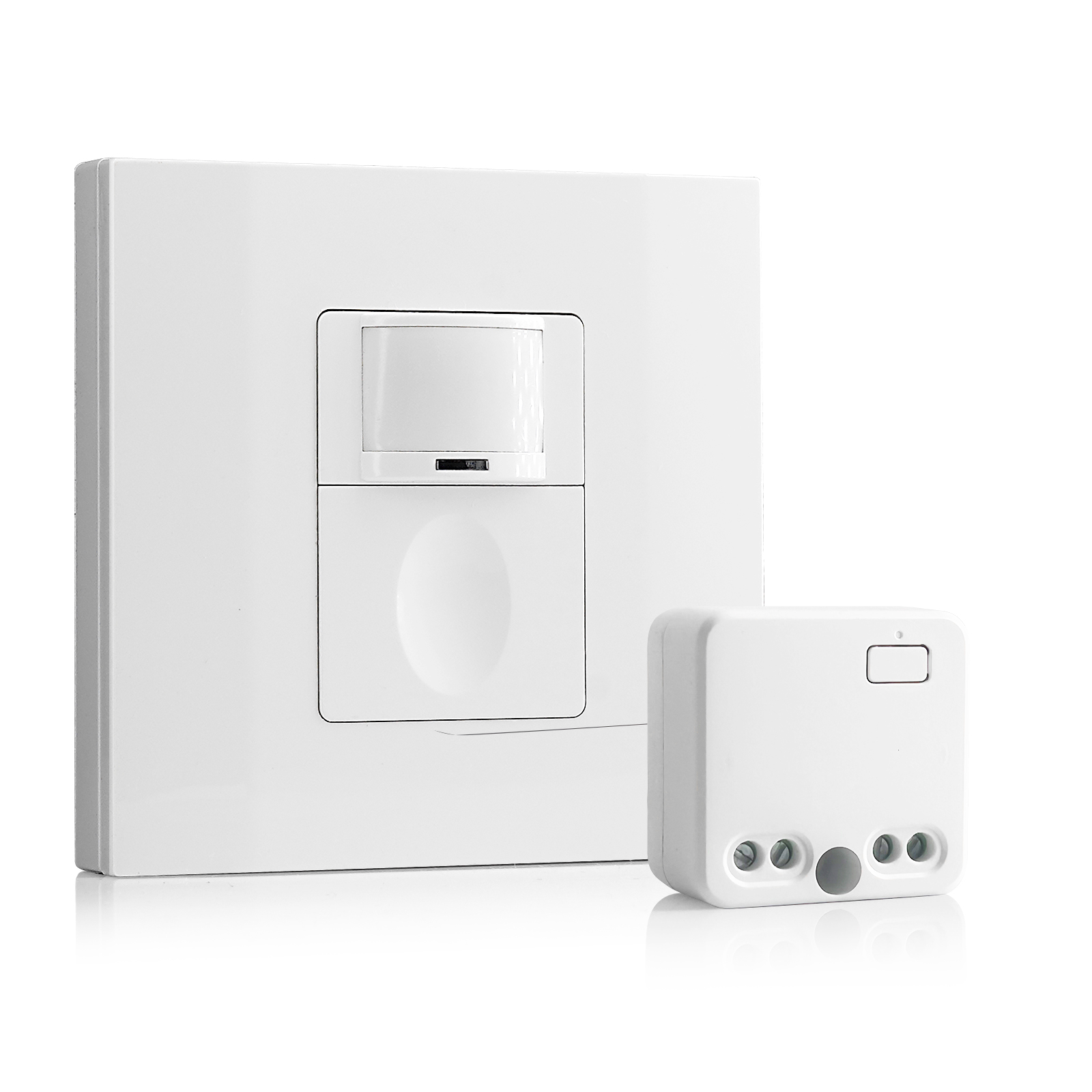
- 100V-230VAC
- Överföringsavstånd: upp till 20m
- Trådlös rörelsesensor
- Hårdtrådad kontroll
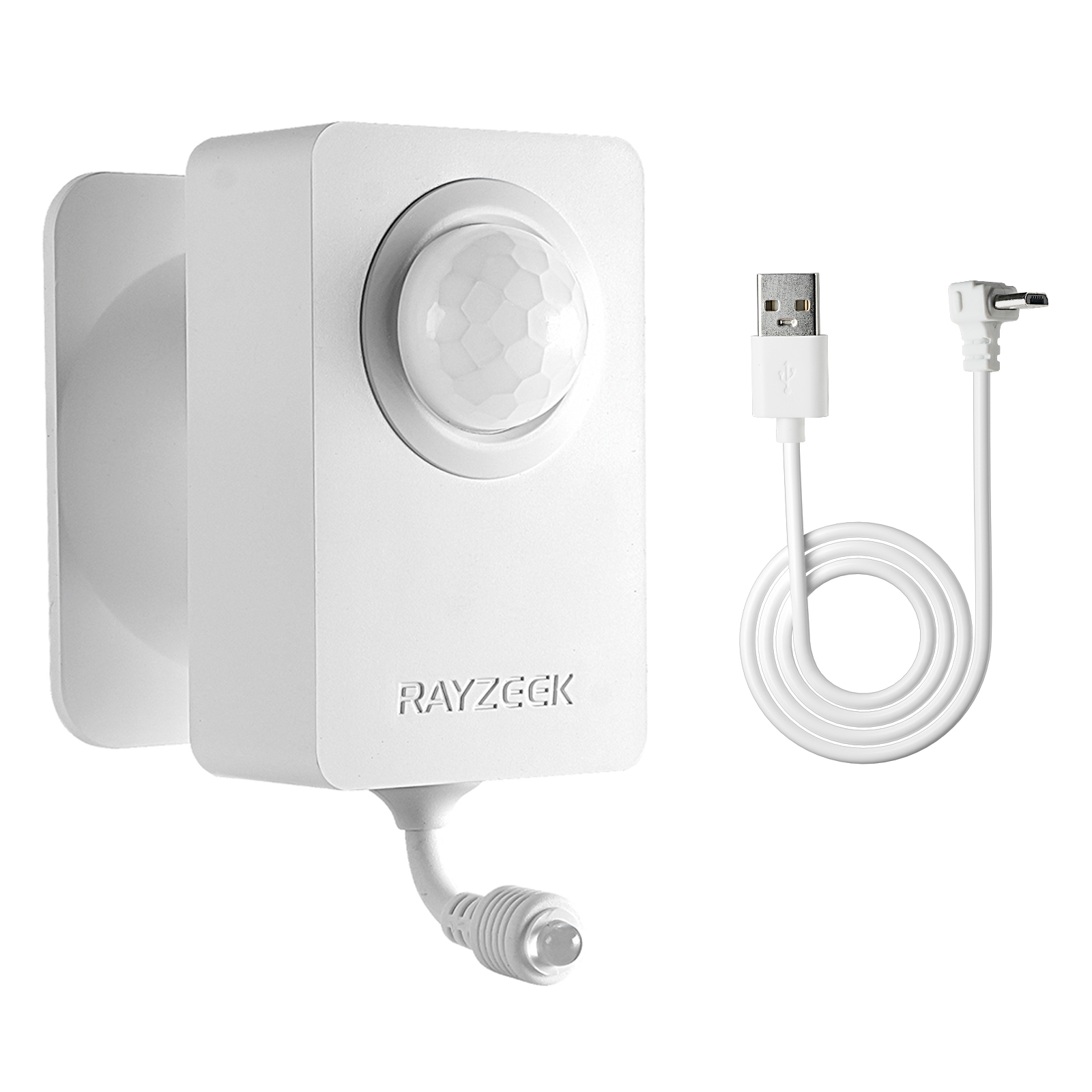
- Spänning: 2x AAA-batterier / 5V DC (Micro USB)
- Dag/Natt-läge
- Tidsfördröjning: 15min, 30min, 1h (standard), 2h
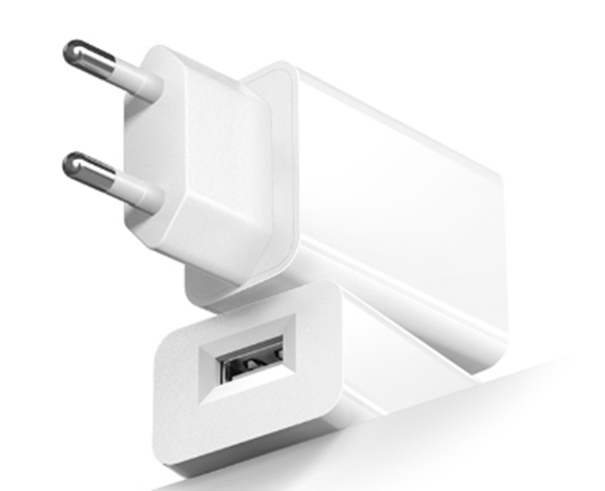
- EU-kontakt strömadapter
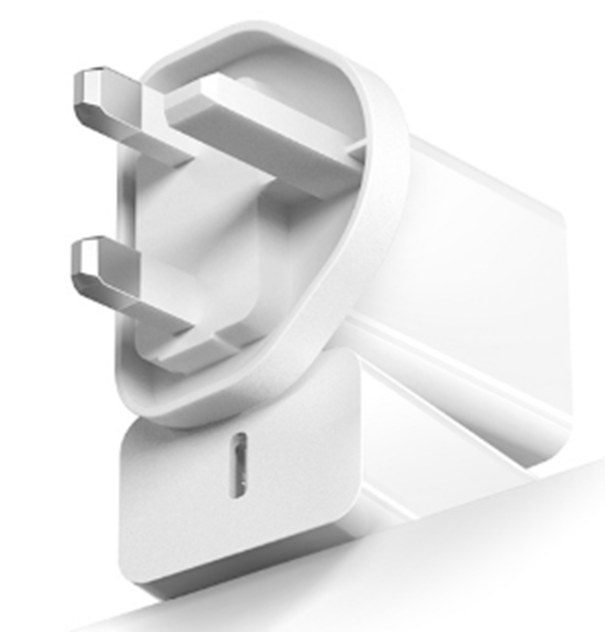
- UK-kontaktströmadapter
One of the advantages of passive infrared detection is its ability to provide reliable and accurate motion detection while minimizing false triggers. PIR sensors are designed to detect the unique pattern of infrared radiation emitted by humans and large animals, making them highly effective in distinguishing between desired and undesired motion. This allows for precise control of lighting, ensuring that lights are only activated when needed, thus saving energy and reducing costs. PIR sensors do not directly measure “heat” but rather detect changes in the infrared radiation emitted by or reflected from objects. They are sensitive to differences in temperature between the moving object and its surroundings, rather than the absolute temperature of the object itself.
Hämta inspiration från Rayzeeks rörelsesensorportföljer.
Hittar du inte det du vill? Oroa dig inte. Det finns alltid alternativa sätt att lösa dina problem. Kanske kan en av våra portföljer hjälpa.
Frequently Asked Questions
What Does PIR Mean in Lighting
A passive infrared sensor (PIR sensor) is an electronic device that detects infrared light emitted by objects within its range. It is commonly used in PIR-based motion detectors, which automatically activate lights when someone walks by.
What Are the Disadvantages of Passive Infrared Sensor
Drawbacks or disadvantages of passive infrared (PIR) sensors include their lower sensitivity and less coverage compared to microwave sensors. PIR sensors are not able to operate at temperatures greater than 35 degrees Celsius. Additionally, they work effectively in line of sight (LOS) but may have issues in corner regions. PIR sensors are also insensitive to very slow motion of objects.
What Is the Difference Between PIR and Infrared
Their main differences lie in the way they function. While infrared (IR) sensors are designed to detect whether the light emitted by a transmitter is coming from an object or a person, PIR sensors, on the other hand, are specifically designed to detect changes in energy levels within a given area.
Does PIR Work in Daylight
While it is commonly believed that motion sensor lights only work at night, it is important to note that they actually remain active during the day as well, as long as they are turned on. This means that if the light is on, it will still detect motion and illuminate, even in broad daylight.
Why Is PIR Sensor the Best
PIR sensors are considered the best because they specifically detect heat signatures, which means they are not easily triggered by inanimate objects being blown across their field of view. This makes them ideal for security lights, as they will not be activated by things like leaves blowing across a path or branches moving in the wind.
What Do PIR Sensors Best Detect
A PIR sensor is primarily designed to detect changes in temperatures, specifically body heat (infrared energy). It is widely utilized as a motion sensor in home security systems.







